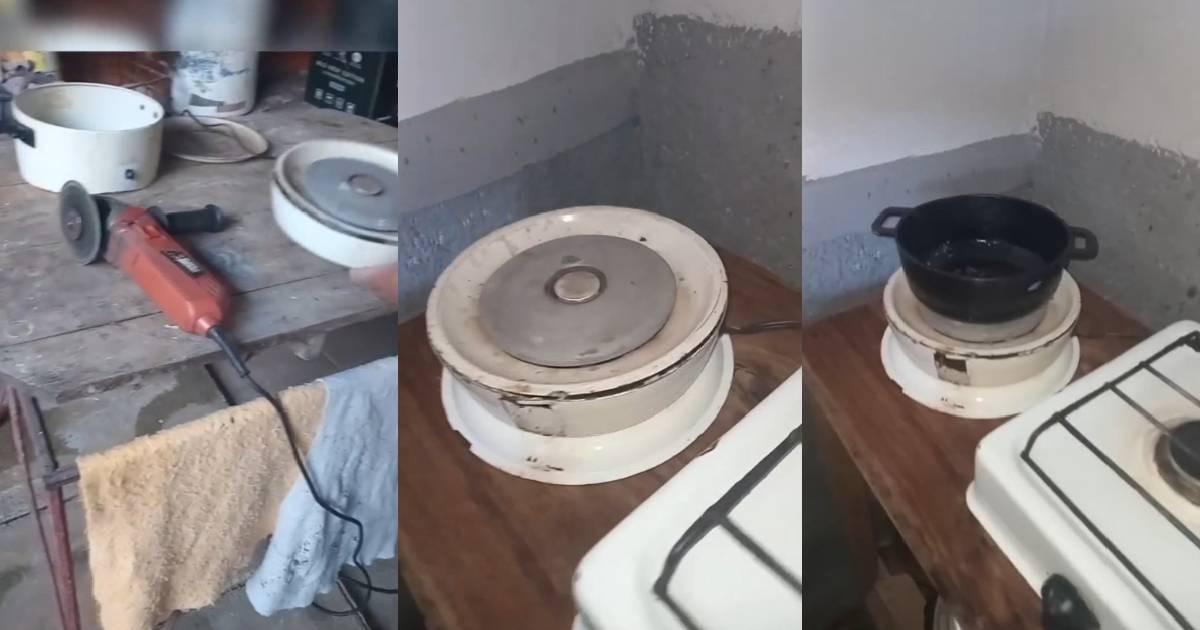
In the midst of Cuba's deepening challenges with food preparation, a viral video highlights how one Cuban ingeniously converted an old rice cooker into a functioning electric stove.
A brief 29-second reel shared on Facebook by El Mundo de Laura has captured over 141,000 views, showcasing a scene that has become increasingly common across Cuba—turning a broken appliance into a practical solution for daily survival amidst widespread scarcity.
The footage depicts a man meticulously dismantling the base of an obsolete electric rice cooker, a staple appliance once widely distributed across the island. After removing parts, adjusting the wiring, and making several internal connections, he successfully transforms the device into a homemade electric stove capable of heating a pot of water.
The video's creator confirmed in the comments that the inventive individual is her father. "Yes, it was mine. My dad got creative and repurposed it. You know, we have to find solutions. Blessings," she wrote.
The responses to the video reflect a blend of admiration, resignation, and pride in the adaptive skills honed over years of shortages. One viewer remarked, "Necessity breeds miracles," while others summed up the situation with comments like "This is survival" and "Cubans never give up, always finding a way."
While the makeshift stove is a testament to creativity, it also serves as a stark symbol of a reality where daily inventiveness strives to make up for a system unable to ensure basic services.
Though this invention has garnered admiration from thousands of users, the trend goes beyond mere technological curiosity. The video is part of a growing movement, as many Cubans have started recycling broken appliances to create alternative cooking methods in response to shortages of electricity, gas, or fuel.
The Rise of Improvised Solutions
In July 2025, a young man from Cumanayagua in Cienfuegos crafted charcoal stoves from discarded rice cookers and empty cans, some of which were intended for elderly members of his community. A few months later, another Cuban demonstrated how she turned a defunct pressure cooker into a charcoal stove, which she claimed helped her endure numerous blackouts.
This wave of DIY inventions includes stoves constructed from empty canisters, repurposed extinguishers, and earth, as well as makeshift ovens built from metal tanks, and even a scooter adapted to run on charcoal.
Energy Crisis and Its Impact
The spread of these homemade solutions is closely tied to the most severe energy crisis Cuba has faced in decades. In May, the Energy and Mines Minister himself admitted that the country was devoid of fuel oil and diesel reserves, while blackouts stretched to 20 to 22 hours daily, even in Havana.
The situation worsened following a reduction in oil supplies from Venezuela and the near cessation of shipments from Mexico. Concurrently, liquefied gas has become unaffordable for many, with prices soaring above 30,000 pesos on the black market, compared to state salaries averaging around 6,930 pesos monthly.
The shortages have also impacted official distribution channels. Since January, the state-run Cupet has halted gas supplies in several eastern provinces, leaving thousands of households struggling to cook regularly.
According to the Food Monitor Program, over nine million Cubans prepare food under precarious conditions, with 35% resorting to wood or charcoal as alternatives.
FAQs on Cuba's Energy Crisis and Innovative Solutions
What prompted Cubans to repurpose appliances like rice cookers?
Amid a severe energy crisis and scarcity of basic resources, many Cubans have turned to creatively repurposing appliances to find alternative cooking solutions.
How have energy shortages affected daily life in Cuba?
Energy shortages have led to extended blackouts, making it difficult for many to cook or perform daily tasks, prompting a rise in homemade solutions for basic needs.
What are some examples of Cuban ingenuity in response to the energy crisis?
Cubans have crafted charcoal stoves from old rice cookers, repurposed pressure cookers, and built stoves using empty canisters and extinguishers, showcasing their resourcefulness.