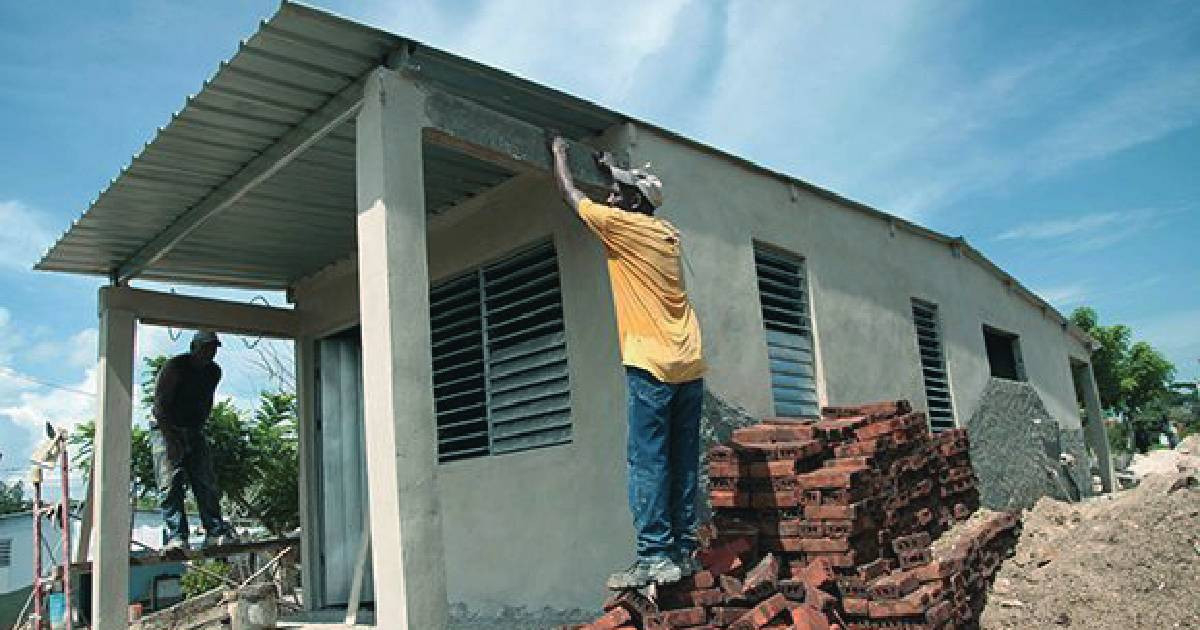
The Provincial Committee Bureau of the Communist Party of Cuba (PCC) in Pinar del Río recently addressed the dire housing situation in the region, acknowledging that over 40,000 families are still waiting for housing solutions, with some having been on the list for three decades.
Yamilé Ramos Cordero, the first secretary of the Party in the province, highlighted the depth of this failure. "We have families that have been without a home for 30 years, spanning multiple generations," she stated during a meeting reported by the official newspaper Guerrillero this past Friday.
The data shared during the discussion paints a grim picture. Out of the 102,288 damages caused by Hurricane Ian, which struck the province in September 2022, only 64,897 (63.45%) had been addressed by the end of April. This represents a mere five percent improvement over the previous year, according to officials.
Unresolved Issues and Systemic Failures
On top of this, there are approximately 5,000 unresolved damages from earlier meteorological events prior to Ian, underscoring the long-standing housing crisis in Pinar del Río.
The Bureau members conceded that the poor outcomes were not solely due to objective challenges but also pointed to management, control, organization, and policy implementation failures.
Efforts to boost local production of building materials have also faltered due to electricity and diesel shortages, which have hampered the extraction of clay and wood, along with the production of plastics and carpentry elements.
Eumelín González Sánchez, the provincial governor, candidly warned, "Amidst the current crisis, additional resources will only come from what we can produce locally."
Legislative and Alternative Solutions
Andrés Martín Carmona, the provincial housing director, noted that new regulations are being introduced ahead of the Housing Law, currently in draft form, which aim to improve certain associated policies.
Nevertheless, the impending housing legislation tightens state control over properties and bans the sale of subsidized homes for the first 15 years after allocation, without addressing the root causes of the deficit.
Ramos also discussed the option of modular homes built from shipping containers but acknowledged their limitations. "The container homes are a good option, but we need to think about what more we can do to improve them, making them less expensive," she contemplated.
The container program, however, has been deemed a failure by the Cuban government itself, with beneficiaries required to pay nearly a million pesos per unit, equivalent to more than a decade of the average salary.
"These are cumbersome processes, but we have an obligation to find a solution for the over 40,000 families currently awaiting housing," the PCC's first secretary in the province concluded, without providing specific timelines or commitments.
The housing collapse in Pinar del Río mirrors a nationwide crisis of historic proportions. The housing deficit in Cuba, alongside the shortage of materials, exceeds 929,000 units, while in 2025, only 5,493 homes were built—a 26% drop from the previous year.
Understanding the Housing Crisis in Pinar del Río
What is the current housing deficit in Pinar del Río?
The housing deficit in Pinar del Río is substantial, with over 40,000 families still waiting for housing solutions, some for as long as 30 years.
What factors contribute to the housing crisis in Pinar del Río?
The crisis is exacerbated by management and organizational failures, along with shortages of materials and resources, which have stalled local production efforts.
How has Hurricane Ian impacted housing recovery in Pinar del Río?
Hurricane Ian caused over 102,000 damages, and as of April, only about 63.45% of these had been resolved, indicating a slow recovery process.