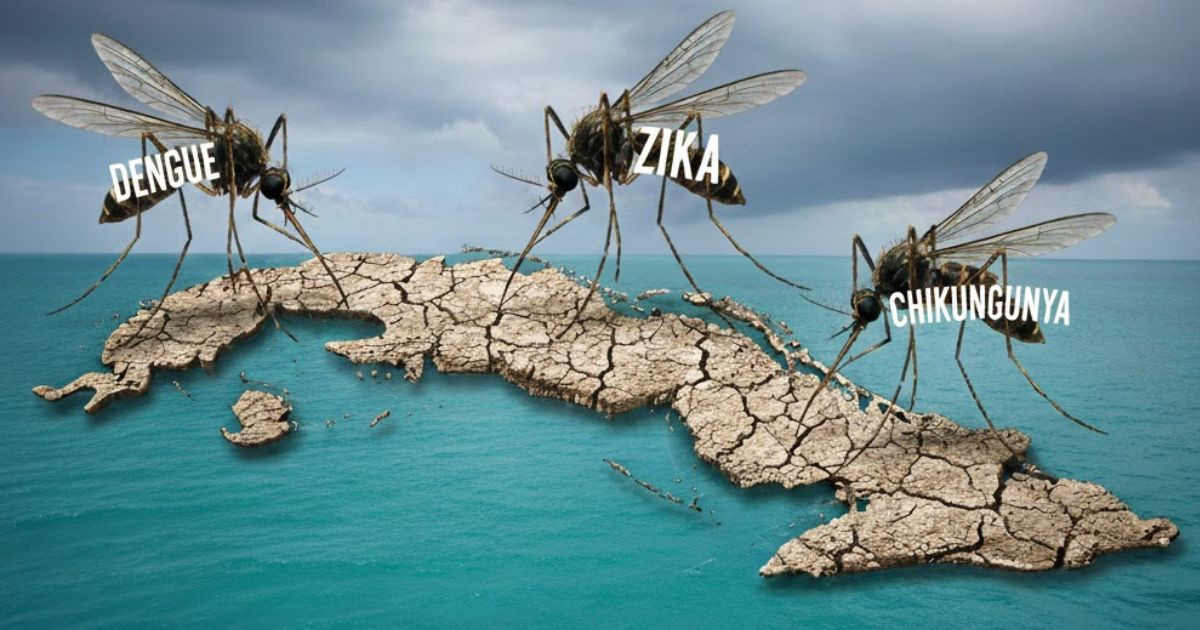
The Cuban Ministry of Public Health has heightened its epidemiological vigilance with the onset of summer, cautioning that Cuba may face a dengue outbreak if it fails to address the conditions that aid the spread of the mosquito responsible for transmission.
During a broadcast on the official television program Mesa Redonda, Deputy Health Minister Carilda Peña warned of the concurrent circulation of all four dengue virus serotypes, escalating the risk of outbreaks and severe complications.
"With all four serotypes circulating, one could become predominant in our health system, leading to localized outbreaks. Without implementing a series of actions, we could see an epidemic," stated Peña.
Mounting Concerns Amid Environmental Challenges
This warning arises amid a particularly troubling context. Health authorities in Matanzas confirmed two initial dengue cases for the 2026 season on Friday, alongside several other suspected cases under epidemiological scrutiny, described as "not negligible."
Despite government efforts in surveillance and vector control, officials have acknowledged persistent environmental issues that facilitate the breeding of Aedes aegypti mosquitoes. These include the accumulation of solid waste and water leaks, increasingly prevalent throughout urban areas.
Infrastructure and Energy Deficiencies Exacerbate Risks
The garbage collection crisis is a constant challenge, especially in Havana, where daily waste generation far exceeds collection capacity due to fuel shortages and deteriorating vehicle fleets. Similar conditions are evident in other provinces, where makeshift dumps, stagnant water, and crumbling sanitation infrastructure are commonplace.
Power outages further exacerbate the situation by disrupting water supply, forcing families to store water in containers that often become mosquito breeding grounds. This issue has worsened with recent extensive power cuts and record-breaking generation shortfalls.
Historical Context of Health Crises
The authorities' concerns are rooted in one of the recent severe epidemiological crises. According to the Pan American Health Organization (PAHO), Cuba ended 2025 with 81,909 dengue and chikungunya cases and 65 deaths related to these diseases. The Ministry of Public Health officially acknowledged a dengue epidemic in November of that year, after months of downplaying the problem's severity.
The viral transmission showed no signs of slowing with the new year. By January 2026, PAHO reported additional chikungunya deaths and over 1,457 active cases, highlighting the ongoing challenge of vector-borne diseases for health authorities.
Wider Health Implications
Adding to this scenario is the spread of other diseases linked to poor hygiene and sanitary conditions. Recently, journalist Gisela García Rivero from Canal Caribe reported cases of hepatitis A across all provinces, with Havana, Matanzas, Santiago de Cuba, Ciego de Ávila, and Camagüey being particularly affected.
As the Ministry of Public Health intensifies epidemiological measures at ports, airports, and primary healthcare systems, the warning of a potential epidemic underscores unresolved structural issues that continue to create an environment conducive to the spread of transmissible diseases on the island.
Understanding the Dengue Threat in Cuba
What factors are contributing to the potential dengue outbreak in Cuba?
The potential dengue outbreak in Cuba is being fueled by environmental issues such as the accumulation of waste, water leaks, and frequent power outages that create ideal breeding grounds for mosquitoes.
How has the Cuban government responded to the dengue threat?
The Cuban government has increased epidemiological surveillance and vector control efforts. However, persistent environmental challenges continue to hinder effective mosquito control.
What past health crises are influencing current concerns?
Concerns are influenced by a significant health crisis in 2025, where Cuba experienced over 81,909 cases of dengue and chikungunya and 65 deaths, highlighting the need for proactive measures.