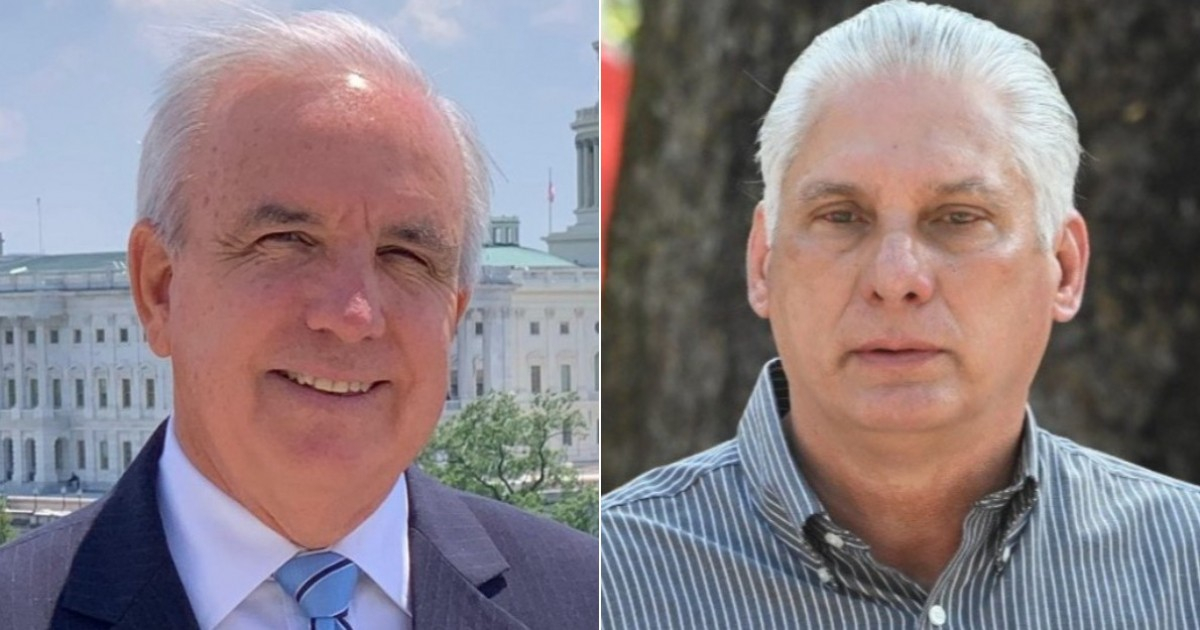
Cuban-American Republican Congressman Carlos Giménez took to the social media platform X this Friday to directly address Cuban President Miguel Díaz-Canel following the leader's complaints about new sanctions by Washington against Cuba’s state oil company, CUPET.
In a straightforward message from his account @RepCarlos, Giménez stated, "No cosmetic changes will save you from what's coming. You’re fooling no one! Your cruelty and gross incompetence have devastated Cuba's economy, forcing its people to live in utter poverty."
The exchange was sparked by the U.S. sanction against CUPET, which was announced on Thursday by Secretary of State Marco Rubio under Executive Order 14404, signed by former President Donald Trump on May 1, 2026.
The sanction freezes CUPET's assets and interests under U.S. jurisdiction, prohibiting transactions with the company unless specifically licensed by the Office of Foreign Assets Control (OFAC).
The Cuban Regime Under Fire
Díaz-Canel reacted with a two-part thread on X, denouncing the action as "unlimited imperial wickedness," accusing Washington of preventing other countries from supplying fuel to Cuba only to then "target CUPET and tighten the oil embargo further."
Born in Havana and having emigrated to the United States in 1960, Giménez has represented Florida's 28th district since 2021. He has consistently taken a hardline stance against the Cuban regime throughout the year.
In February, he labeled the dictatorship as "pathetic" and called for it to be "completely eradicated and consigned to the dustbin of history." By April, he declared, "that revolution needs to vanish," and in May, he described the regime as a "cynical, despotic band of thieves."
Impact of U.S. Sanctions
The sanction against CUPET marks the second significant action under Executive Order 14404, following a prior sanction against the military-business conglomerate GAESA on May 7.
On June 4, Washington also personally sanctioned Díaz-Canel, his wife Lis Cuesta, and Alejandro Castro Espín.
As the entity controlling the entire chain of fuel importation, refining, and distribution in Cuba, CUPET's designation has a direct impact on the supply to a population already facing prolonged power outages and fuel shortages.
A former OFAC advisor clarified that the sanction doesn’t automatically halt all fuel trade with Cuba but subjects any operations to stricter oversight and may require specific licenses from the Treasury Department.
In response to this mounting pressure, Díaz-Canel announced a new package of economic reforms on Friday, which Giménez promptly dismissed on X.
On Thursday, Washington also urged Havana to negotiate "before it's too late," while Rubio emphasized the Trump administration's position, stating, "We will continue to undermine the regime's capabilities."
Understanding U.S. Sanctions on Cuba
What is the impact of the U.S. sanction on CUPET?
The sanction freezes CUPET's assets and interests under U.S. jurisdiction and prohibits transactions with the company unless specifically licensed, impacting Cuba's fuel supply chain.
Why did Carlos Giménez criticize Díaz-Canel?
Giménez criticized Díaz-Canel for his "cruelty and incompetence," holding him responsible for Cuba's economic devastation and the impoverishment of its people.
What is the significance of Executive Order 14404?
Executive Order 14404 allows the U.S. to impose sanctions on entities like CUPET, targeting Cuba's economic capabilities, as part of a broader strategy to pressure the Cuban regime.