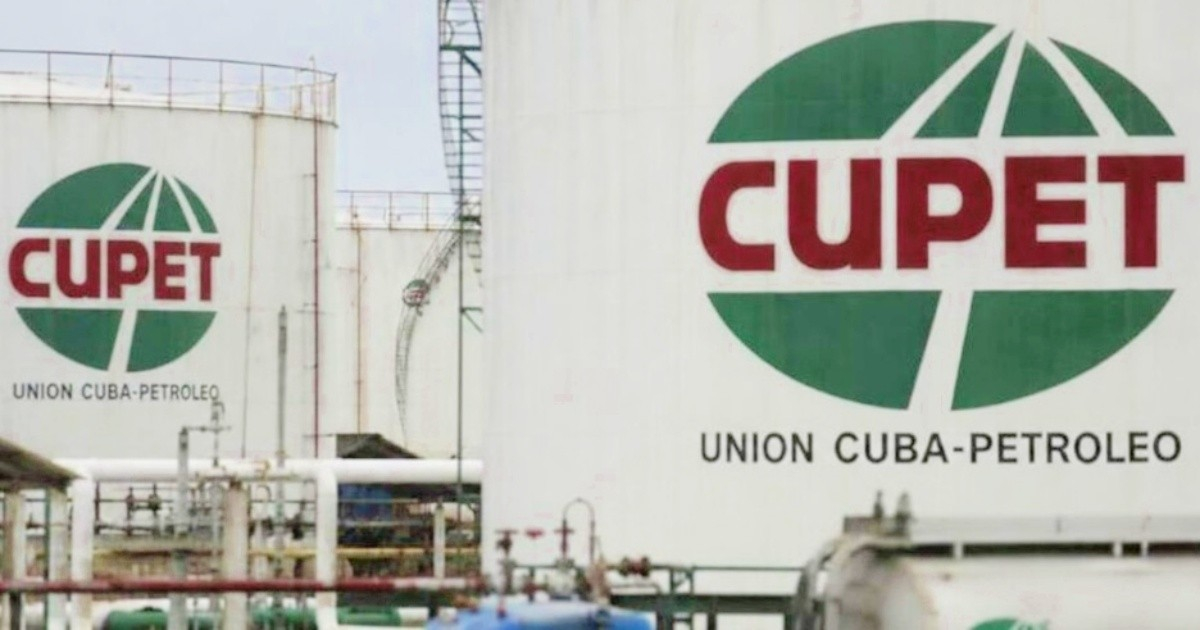
The state-owned company Unión Cuba-Petróleo (CUPET) has issued an official statement firmly rejecting the sanctions announced by the U.S. Department of the Treasury. Washington justified these measures as a response to the Cuban regime's use of energy to finance repression.
Released on CUPET's social media channels, the statement condemns the sanctions as "unjust and arbitrary" and concludes with the revolutionary slogan "¡Patria o Muerte! ¡Venceremos!"
The Detailed Response from CUPET
The state-run oil company argues that the sanctions are intended to directly disrupt their normal operations and target a strategic sector of the nation.
The statement criticizes the measures for not only restricting access to essential financial and technological resources but also for seeking to exacerbate the energy crisis and limit Cuba's economic development.
CUPET asserts that "no external sanction will break the will of our workers or halt our mission to serve Cuba with transparency, responsibility, and discipline."
The company also rallies its employees, stating that "every action taken in wells, plants, and oil facilities contributes directly to the resistance and well-being of the people."
Sanctions Prompting the Response
Secretary of State Marco Rubio announced the designation of CUPET as a sanctioned entity under Executive Order 14404, signed by President Donald Trump on May 1, 2026.
This action freezes all assets and interests of CUPET within the United States and prohibits any transactions with the oil company without a specific license from the Office of Foreign Assets Control (OFAC).
Rubio accused the regime of "hoarding and misappropriating available fuel, using it for the Castro family's private jet, security forces employed to suppress the Cuban people, keeping empty tourist hotels lit, and transporting people for fake protests."
The Secretary of State further warned that the U.S. will continue to target the communist regime's ability to use energy trade as a tool of repression.
The Energy Crisis Surrounding the Sanctions
The imposition of sanctions comes at a time of unprecedented energy challenges in Cuba.
Since January 2026, Venezuelan supply was cut off following the capture of Nicolás Maduro, and Mexico halted its shipments due to fears of U.S. tariffs.
The electric deficit reached a record 2,153 MW on May 13, causing blackouts of up to 22 hours daily in Havana.
Energy Minister Vicente de la O Levy acknowledged that Cuba was entirely out of fuel and diesel, relying only on accompanying gas, with just one fuel ship arriving in April instead of the required eight per month.
Background and Reactions
The designation of CUPET marks the second major action under EO 14404 within five weeks, following sanctions on GAESA on May 7.
The sanction was announced a day after it was revealed that Vanguard Energy, a company based in Coral Gables, Florida, had signed a contract to lease CUPET's facilities and dispatch over 250,000 barrels of fuel per trip. The State Department denied authorizing that operation, and Miami-Dade revoked the company's business license.
Prime Minister Manuel Marrero condemned the measure as a "new assault" exacerbating the "energy blockade," while attorney Luis Carlos Battista described it as a potential "death blow" to the regime by affecting essential services such as water pumping and ambulance use.
Rubio summarized Washington's stance: "President Trump envisions a new future for the Cuban people with greater freedom and economic and political opportunities. Until then, we will continue to target the communist regime's ability to use its energy trade to advance its corrupt agenda and violently oppress the Cuban people."
Understanding the Impact of U.S. Sanctions on CUPET
What are the main reasons for the U.S. sanctions against CUPET?
The U.S. sanctions CUPET in response to the Cuban regime's use of energy resources to fund repression, restricting access to financial and technological resources essential for the industry.
How do the sanctions affect CUPET's operations?
The sanctions disrupt CUPET's normal operations by freezing its assets in the U.S. and prohibiting transactions without specific licenses, impacting its ability to function effectively.
What has been the Cuban government's response to the sanctions?
Cuba's government, through CUPET, has condemned the sanctions as unjust and arbitrary, rallying its workers to continue their mission despite external pressures.