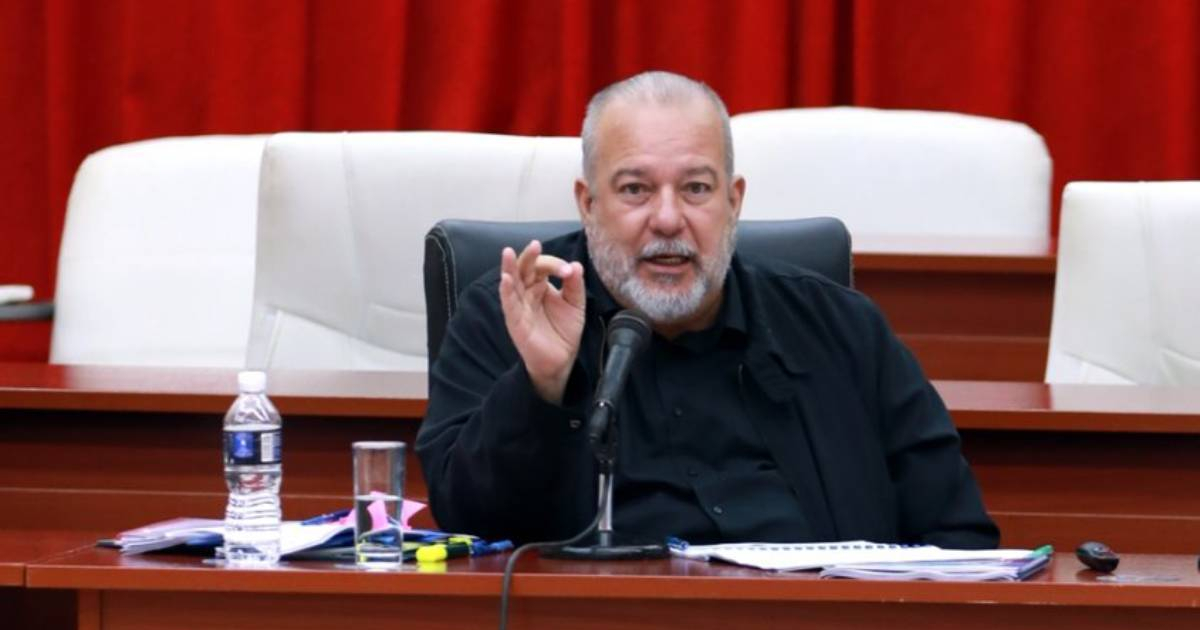
Cuban Prime Minister Manuel Marrero Cruz condemned the recent sanctions against the state-run Union Cuba-Petroleum (CUPET) as a "new attack by the U.S. government on our people." CUPET, which holds a monopoly over the importation, refining, and distribution of fuels on the island, is now facing this latest punitive measure.
The sanction was announced by Secretary of State Marco Rubio under Executive Order 14404, which was signed by President Donald Trump on May 1, 2026. The enforcement of this order is being carried out by the Office of Foreign Assets Control (OFAC).
The Impact of Sanctions on Cuba's Energy Crisis
In a statement shared on social media, Marrero Cruz criticized the sanction as "another turn of the screw on the energy blockade and its harsh impact on essential services and the daily lives of Cuban men and women."
The U.S. designation effectively freezes CUPET's assets under American jurisdiction and bans any transactions involving U.S.-based individuals or companies with the Cuban state oil entity. Furthermore, Washington has cautioned that foreign companies and financial institutions dealing with CUPET may face secondary sanctions over business dealings with the Cuban oil company.
U.S. Justification and Broader Implications
Rubio defended the sanction by accusing Cuban leaders of diverting energy resources for personal gain, while allocating supplies to security and military forces, leaving the general population to endure frequent blackouts. "We will continue to target the regime's ability to maintain its corrupt and oppressive agenda," he declared.
This action against CUPET marks the second significant measure by the Trump administration targeting Cuban entities within a span of less than five weeks. It follows the designation of the Grupo de Administración Empresarial S.A. (GAESA) on May 7, 2026, which also included its CEO Ania Guillermina Lastres Morera and Moa Nickel S.A.
Energy Crisis Deepens Amid Sanctions
This sanction unfolds amid an unprecedented energy crisis in Cuba. In May 2026, the country experienced a record-breaking electricity generation deficit of 2,174 MW, with regions such as Havana and eastern provinces like Granma suffering power outages for over 20 hours daily. On March 16, 2026, a total disconnection of the national power grid occurred, exacerbated by fuel shortages and deteriorating thermoelectric plants.
The announcement coincided with the situation involving Vanguard Energy, a Coral Gables company that had inked a deal to send more than 250,000 barrels of fuel to Cuba. The State Department on Wednesday denied having authorized this deal, and Miami-Dade revoked Vanguard Energy's business license on Thursday, aligning with the CUPET sanction.
A former OFAC advisor noted that the designation changes the legal landscape for any company considering business with the Cuban oil firm, effectively closing any legal loopholes for such operations.
At the end of 2025, Cuban Energy Minister Vicente de la O Levy had projected that "2026 will be difficult, though slightly better than 2025," a forecast now starkly contradicted by recent events.
Key Questions About U.S. Sanctions on Cuba
What prompted the U.S. to sanction CUPET?
The U.S. sanctioned CUPET as part of a broader strategy to weaken the Cuban regime's ability to sustain what it describes as a corrupt and oppressive agenda, accusing leaders of misusing energy resources for personal enrichment while neglecting the general population.
How do these sanctions affect Cuba's energy sector?
The sanctions exacerbate Cuba's ongoing energy crisis by cutting off crucial transactions and partnerships with foreign entities, further straining the country's ability to import and distribute fuel effectively.
What are the potential repercussions for foreign companies dealing with CUPET?
Foreign companies and financial institutions that continue to engage with CUPET risk exposure to secondary U.S. sanctions, which could limit their ability to conduct business with American firms and access U.S. markets.