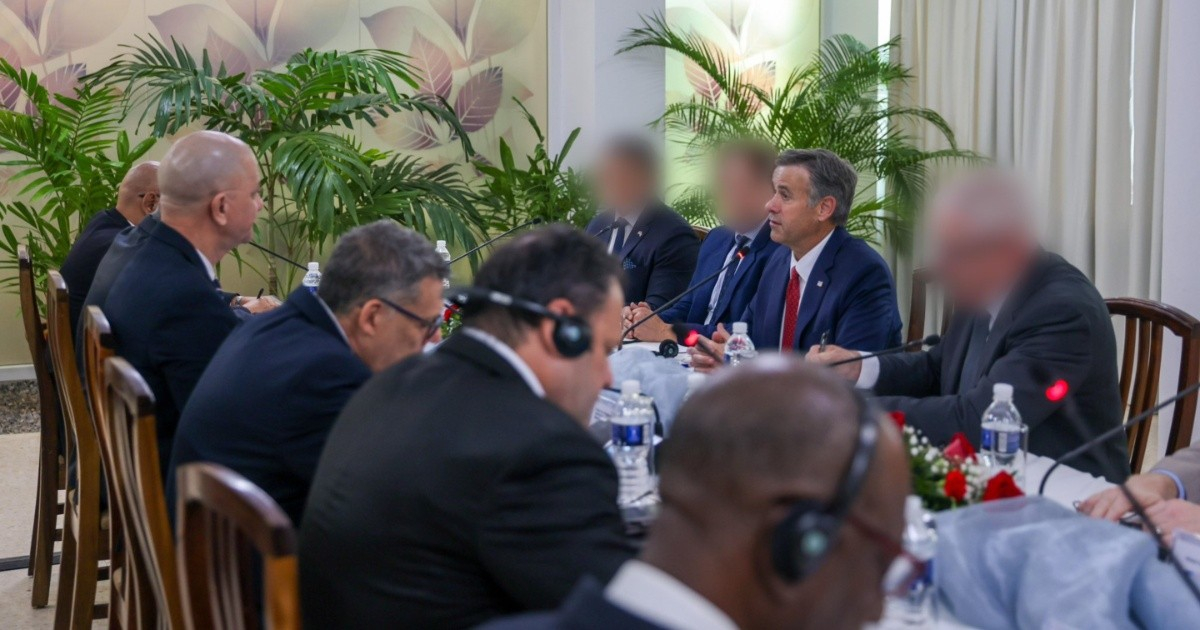
According to CBS News, CIA Director John Ratcliffe brought a paramilitary operative involved in the capture of Nicolás Maduro to a meeting with high-ranking Cuban officials in Havana, as revealed by multiple sources.
Ratcliffe's visit to Havana occurred during the week of May 14, marking a rare trip by the U.S. intelligence chief to the island.
Sources indicated that Ratcliffe intentionally introduced the paramilitary operative to Cuban officials as "the one who killed your people in Venezuela," a gesture interpreted as a deliberate warning.
The significance of this message is substantial: the Cuban government had confirmed that 32 of its military and police personnel died during the U.S. operation to capture Maduro on January 3, 2026, which involved special forces and the CIA.
Before Maduro's arrest, Cuba and Venezuela had maintained a long-standing political, economic, and intelligence alliance. The presence of the paramilitary at the meeting was likely intended to remind the Cuban regime of the potential consequences of this association.
Among the Cuban officials who met with Ratcliffe was Raúl Guillermo Rodríguez Castro, known as "Raulito," the grandson of former President Raúl Castro, as well as the Minister of the Interior, Lázaro Álvarez Casas.
The subsequent chain of events suggests coordinated pressure: less than a week after the meeting, the Department of Justice declassified an indictment against the 94-year-old Raúl Castro for the 1996 downing of two Brothers to the Rescue planes, resulting in the deaths of four American citizens.
Secretary of State Marco Rubio stated that Castro is now "a fugitive from U.S. justice," as reported by this outlet.
Hours after Maduro's capture, Rubio had already warned that Venezuela's intelligence agency was "filled with Cubans" and that if he lived in Havana and were part of the government, "he would be at least a little concerned."
A CIA official clarified that Ratcliffe conveyed the message that the United States is "prepared to seriously engage on economic and security issues, but only if Cuba makes fundamental changes," and that Cuba "can no longer be a safe haven for adversaries in the Western Hemisphere."
Rubio further commented this week that Cuba "not only possesses weapons acquired from Russia and China but also hosts Russian and Chinese intelligence presence on its soil."
Meanwhile, the U.S. intelligence community has been assessing how Cuba might respond to a potential military action, confirming that the island has acquired attack drones.
Cuban President Miguel Díaz-Canel responded by stating that Cuba "poses no threat" to the United States but warned that any military aggression "would lead to a bloodbath of incalculable consequences."
Key Developments in U.S.-Cuba Relations
What was the purpose of John Ratcliffe's visit to Havana?
John Ratcliffe's visit to Havana was intended to deliver a deliberate message to Cuban officials regarding the consequences of their alliance with Venezuela, especially after the capture of Nicolás Maduro.
How did the U.S. respond to Cuba's alliance with Venezuela?
The U.S. responded by declassifying an indictment against Raúl Castro and warning that Cuba must make fundamental changes to avoid being a safe haven for adversaries.
What did Marco Rubio say about Cuba's intelligence presence?
Marco Rubio stated that Cuba hosts Russian and Chinese intelligence presence and possesses weapons from these countries, which adds to the concerns about its role in the region.