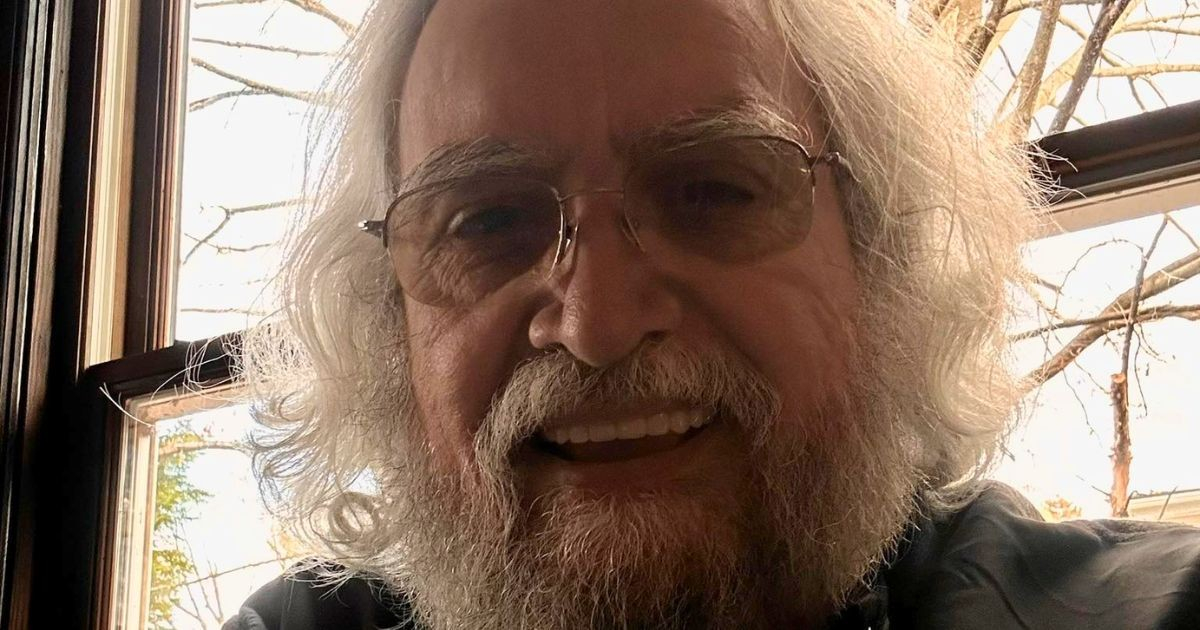
Esteemed Cuban troubadour and poet, Pedro Luis Ferrer Montes, recently shared a compelling poem titled "Majority" on his Facebook page from Florida. The piece serves as a lyrical meditation on the Cuban people as a collective force that, despite ongoing hardships, continues to "bet on itself."
Opening with an anonymous quote that sets the poem's tone, it reads: "When the few, / in their stubborn / minority, / go mad / and proclaim themselves the majority: / they have succumbed to fantasy."
Building on this premise, Ferrer crafts a poetic argument acknowledging the people's suffering while underscoring their significance as historical agents: "The vast majority, / no matter the reason, / upholds the banner. / Beyond the discontent / from merciless hardship, / the multitude is muscle."
The poem does not shy away from harsh realities. The "merciless hardship" Ferrer mentions could very well describe Cuba in 2026, where CEPAL forecasts a 6.5% GDP contraction and the Economist Intelligence Unit predicts a 7.2% decline, in a nation already suffering a 23% economic downturn since 2019.
Economist Pedro Monreal has warned that, in an extreme scenario, the decline could reach 15%, resembling the worst year of the Special Period, as blackouts, fuel shortages, and food scarcity dominate the daily lives of millions of Cubans.
Within this context, Ferrer asserts, "No matter the sieve, / the broader populace / sets the line," saving his sharpest contrast for those who, from outside or within dissent, challenge the legitimacy of this people: "Conversely, the few / despise the slogan / and demand another people."
The poem concludes with an image encapsulating its political and poetic power: "But the people are an enigma / guided by their instinct / —the majority people. / And they bet on themselves."
Ferrer’s voice carries the weight of a storied career, positioning him as a key observer of the tension between the majority and "the few" who demand a different people. Born in Yaguajay, Sancti Spíritus, in 1952, Ferrer is a unique figure in Cuban music: beloved by the public, yet frequently censored by the state cultural apparatus.
Songs like "La Habana está poblada de consignas" from his album "100% Cubano" (1994) circulated underground in the '90s when his presence in official media was virtually erased. Following a trip to Peru, the Ministry of Culture banned him from public performances for two years; his music was removed from radio and TV, and a party directive disparaged him, despite his non-affiliation with the Communist Party.
Ferrer has openly distanced himself from the system. "Nobody is a secret: I don't go along with the design," he declared in March 2020. In February of that year, he likened fidelismo to machismo in public statements.
In August 2023, Ferrer returned to perform in Havana at the Museum of Fine Arts, where his concerts stirred controversy and high demand. "Singing in Cuba helps me be a better artist," he stated. In September, he performed free concerts with his daughter Lena Ferrer, expressing outrage over food prices: "Those without remittances cannot buy."
Thus, "Majority" joins a rich tradition of dissenting work that is neither official propaganda nor opposition manifesto, but rather a poignant and incisive reflection on the complexities of the Cuban populace: a people Ferrer describes as an enigma, as muscle, who, despite everything, continue to bet on themselves.
The Impact of Pedro Luis Ferrer's Work
What themes does Pedro Luis Ferrer explore in his poem "Majority"?
In "Majority," Ferrer explores themes of collective struggle, resilience, and the enduring spirit of the Cuban people, highlighting their role as key historical agents despite significant economic and social challenges.
How does Ferrer's poem reflect the current economic situation in Cuba?
Ferrer alludes to Cuba's economic hardships by mentioning "merciless hardship," mirroring the projected economic decline and the daily struggles faced by the Cuban people due to shortages and blackouts.
Why has Pedro Luis Ferrer faced censorship in Cuba?
Ferrer has faced censorship due to his critical stance towards the Cuban government and his work, which often challenges official narratives and resonates with dissenting voices on the island.