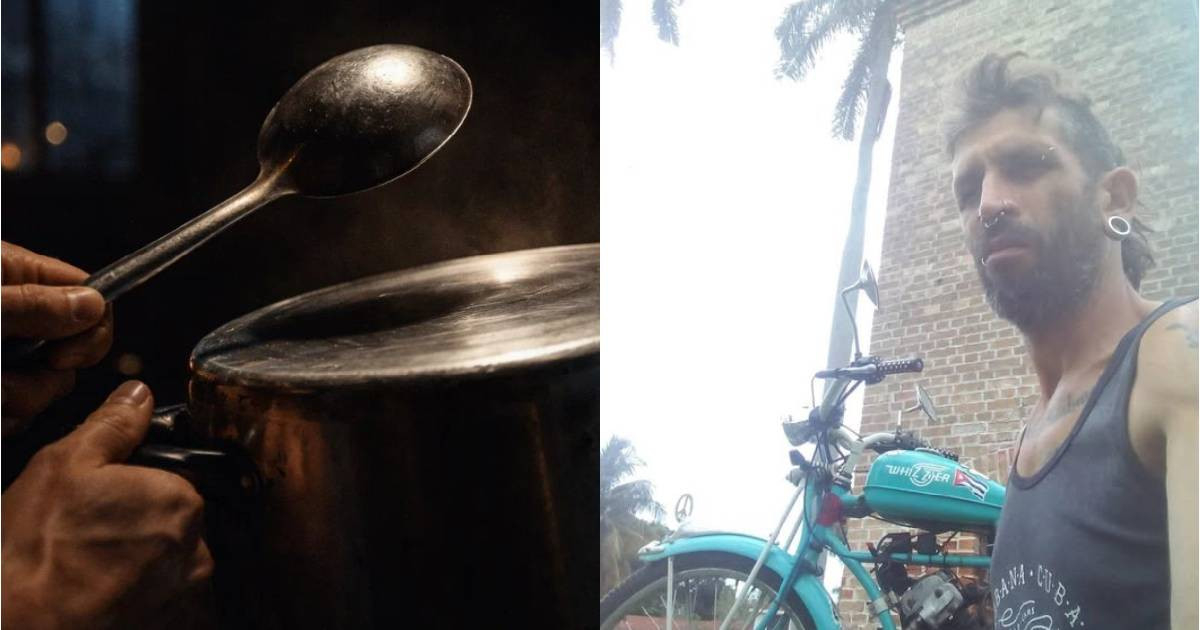
The Revolutionary National Police (PNR) issued threats to entrepreneur Didie Gutiérrez Ledesma, warning him that his business could be shut down and he could be detained if he participated in public protests again. This warning followed an interrogation after Gutiérrez joined a protest on Tuesday in the Siboney neighborhood, part of Havana's Playa district.
Gutiérrez Ledesma, who owns a bar-café located in his home's yard, participated in the protest by banging pots to express dissatisfaction with the country's current situation. This demonstration took place on the corner of 15th and 206th Streets, the same block where Mariela Castro, daughter of former president Raúl Castro and director of CENESEX, resides.
The PNR summoned him for a meeting with Lieutenant Urlens Martínez Gonzant on Thursday, using the euphemism "Interview," as reported by Martí Noticias on Friday.
During the interrogation, authorities made it clear what repercussions he could face for his actions.
"They told me that I couldn't do what I did again, that I wasn't a hero but rather a leader, that I incited neighbors, and that I could be charged with incitement to commit crimes, conspiracy, and disturbing public order," Gutiérrez recounted.
The threat was straightforward, as officers suggested he should focus on his private business, hinting at the possibility of losing it if he continued to protest.
"I responded that I was simply expressing my dissatisfaction with the system, but they said I couldn't do it on the streets anymore or they'd detain me," the entrepreneur stated.
Gutiérrez firmly refused to sign a warning letter that the officers attempted to have him sign at the end of the interrogation.
Before releasing him, the police issued a final warning. "They told me I could leave, but if I did anything in public again, they would detain me," he added.
Unfazed, the entrepreneur invoked a historical reference to explain his stance. "I told them that Carlos Manuel de Céspedes was a wealthy man, a plantation owner, who gave everything for the cause of the nation, and I was prepared to do the same."
The threat to revoke his license illustrates a specific repressive tactic by the regime against the private sector, using the economic vulnerability of entrepreneurs as leverage to deter protests.
In February, the government conducted a price control operation resulting in 17,000 fines, the closure of 300 establishments, and the withdrawal of 196 work projects.
This incident is part of a wave of protests involving banging pots and pans that have affected at least 12 Havana municipalities since May 12, driven by power outages lasting up to 22 hours and severe shortages of food and water.
The Playa district had already seen repression on May 14 when police assaulted protesters during a nighttime demonstration over power outages.
The Cuban Observatory of Conflicts recorded 1,245 protests in March, the highest monthly figure since July 11, 2021, and 1,133 in April, while Cubalex documented at least 14 arrests in Havana related to the protests since March 6.
"I don't bother anyone; I help everyone. I don't believe my neighbors have complaints about me, but I can't be content with the life I'm living or with what's happening to my people, who I sometimes see, including former teachers, eating from the trash," concluded Gutiérrez Ledesma.
Protests and Repression in Havana
What was the reason for Didie Gutiérrez Ledesma's protest?
Didie Gutiérrez Ledesma protested to express dissatisfaction with the current situation in Cuba, including prolonged power outages and severe shortages of food and water.
How did the police respond to the protest?
The police threatened Gutiérrez with the closure of his business and detention if he participated in public protests again. They also accused him of inciting others and disturbing public order.
What actions did the government take in response to recent protests?
The government conducted a price control operation, which resulted in numerous fines, the closure of establishments, and the withdrawal of work projects as part of their response to the protests.