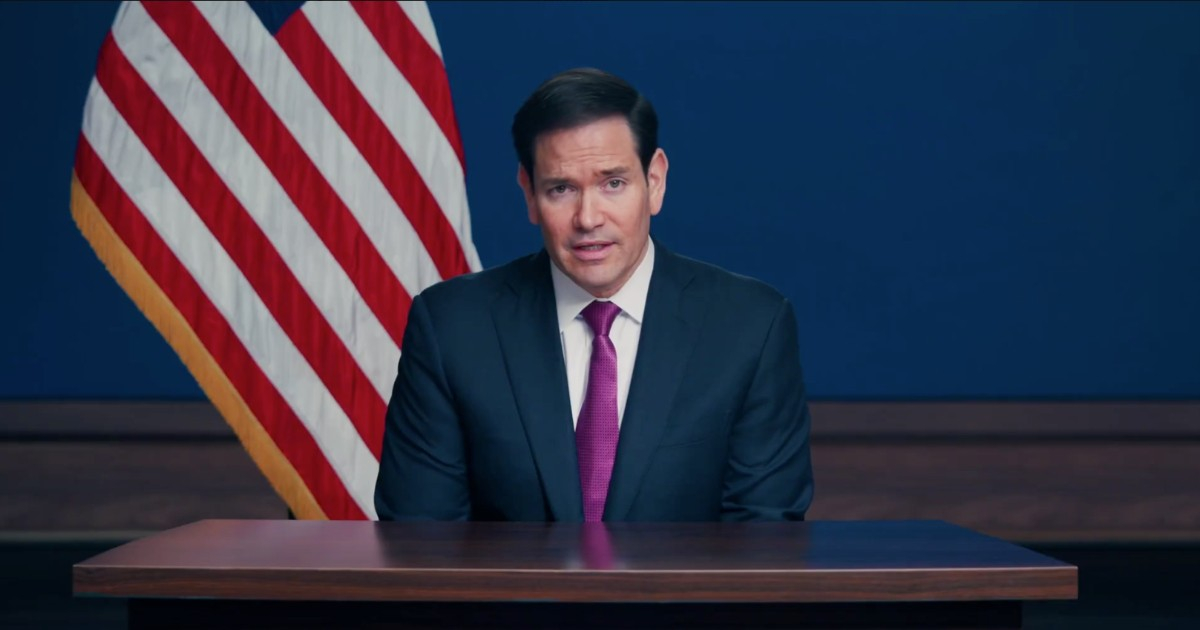
On Thursday, Secretary of State Marco Rubio released an official statement condemning the misuse of GAESA's amassed wealth. He asserted that these riches do not alleviate the suffering of the Cuban populace but are instead used to "enrich Havana's elite" and finance espionage and subversion efforts. This announcement followed the arrest of a Cuban national connected to the top tier of the military conglomerate.
The statement, disseminated by the State Department, came after Rubio revoked the permanent residency of Adys Lastres Morera, the sister of Ania Guillermina Lastres Morera, GAESA's executive president and a brigadier general in Cuba's Revolutionary Armed Forces.
Adys Lastres Morera was detained by the U.S. Immigration and Customs Enforcement (ICE) in Miami, where she had resided since obtaining her permanent residency on January 13, 2023. She remains in federal custody.
Rubio described GAESA as a financial conglomerate dominated by the Cuban military, enabling "a small circle of regime elites to loot the island's remaining resources," amassing up to $20 billion in illicit funds hidden in foreign bank accounts.
The U.S. diplomat highlighted the stark contrast between this immense wealth and the daily hardships faced by ordinary Cubans: "While everyday Cubans endure daily power outages and severe shortages of food, fuel, and medicine, GAESA's ill-gotten gains are not spent on fixing the crumbling power grid, stocking empty pharmacies, or feeding hungry families."
He pointed to Ania Guillermina Lastres Morera as the highest-ranking executive within GAESA responsible for managing these illegal international assets, which are used "not to improve the lives of the Cuban people, but to fund the lavish lifestyles of the Castro family members and other regime elites, as well as to sponsor influence operations abroad."
The arrest of Adys Lastres Morera is part of a broader policy aimed at exerting pressure on the Cuban regime, including sanctions and immigration measures against the families of regime elites residing in the U.S.
On May 7, Washington announced the first designations under Executive Order 14404, signed by President Donald Trump on May 1, which included GAESA, Ania Guillermina Lastres Morera, and the mining company Moa Nickel S.A.
Foreign businesses and financial institutions have until June 5 to cease operations with GAESA to avoid secondary sanctions.
Rubio also criticized past U.S. administrations for allowing families of Cuban military elites and Iranian terrorists to "enjoy luxurious lifestyles in our country funded with stolen blood money, while the people they oppress at home suffer increasingly desperate circumstances."
The Secretary of State warned that this era has ended: "I want to be very clear: if you threaten U.S. national security, there will be no place on this earth—and certainly not in our country—where you and your accomplices can live lavishly. We will find you and hold you accountable."
Rubio concluded his statement with a direct message to the conglomerate's leadership: "To the members of GAESA and the Cuban communist mafia, we send a clear message: complacency with the past is over. Return the funds you have stolen from the Cuban people, implement reforms to improve the lives of everyday Cubans, and allow the Cuban people to enjoy the freedom, opportunities, and dignity they so desperately long for and deserve."
GAESA's Impact on Cuba and U.S. Relations
What is GAESA?
GAESA is a financial conglomerate controlled by the Cuban military, responsible for managing a significant portion of Cuba's economy and resources.
Why was Adys Lastres Morera arrested?
Adys Lastres Morera was arrested due to her connections with the leadership of GAESA and as part of broader measures to exert pressure on the Cuban regime.
What actions has the U.S. taken against GAESA?
The U.S. has implemented sanctions and immigration measures against GAESA and its affiliates, including designations under Executive Order 14404.
How does GAESA's wealth affect ordinary Cubans?
GAESA's wealth, instead of being used to alleviate hardships in Cuba, funds the lavish lifestyles of regime elites, leaving ordinary Cubans to face severe resource shortages.