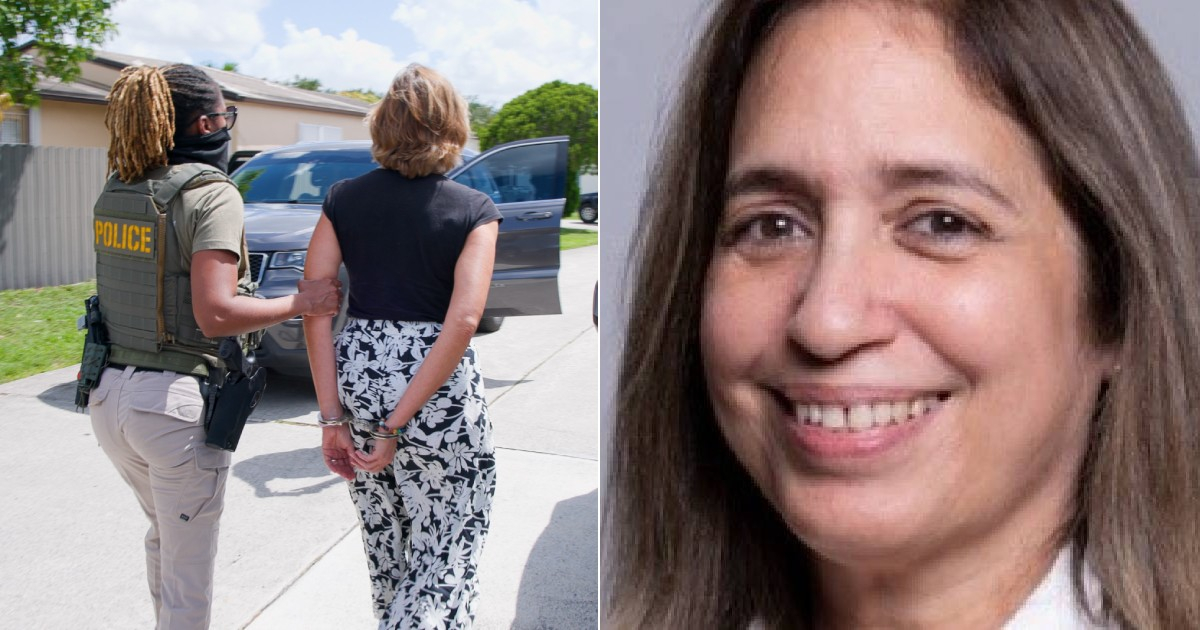
On Thursday, U.S. authorities in Miami, Florida, detained Adys Lastres Morera, a legal permanent resident and sibling of the executive chair of the Cuban military’s Grupo de Administración Empresarial S.A. (GAESA). This arrest follows a deportability determination made by Secretary of State Marco Rubio.
Agents from the U.S. Immigration and Customs Enforcement (ICE) Office of Investigations apprehended Lastres Morera after the Department of State revoked her legal permanent resident status on May 20, citing violations of the Immigration and Nationality Act. The federal agency declared in an official statement that her presence in the United States posed a security risk and undermined U.S. foreign policy interests.
Adys is the sister of Ania Guillermina Lastres Morera, who heads GAESA, a military-run enterprise commanding between 40% and 70% of Cuba’s economy and allegedly managing up to $20 billion in illicit assets, according to U.S. officials.
Legal Grounds for Deportation
The State Department ruled that Adys Lastres Morera’s presence in the U.S. was removable under Section 237(a)(4)(C) of the Immigration and Nationality Act. This law permits the deportation of permanent residents whose presence has severe adverse implications for U.S. foreign policy.
Adys entered the U.S. on January 13, 2023, during President Biden's administration, through a petition filed by her son, Ernesto Carvajal Lastres, an American citizen. Since her arrival, she has been involved as a manager or registered agent in Florida real estate companies, including REMAS Investments LLC and Santa Elena Investments LLC, based in Boca Raton.
The U.S. government noted that there is no record of her applying for American citizenship or a U.S. passport.
Implications of GAESA’s Control
John Condon, acting executive associate director of Homeland Security Investigations (HSI), justified the arrest by stating that GAESA, controlled by the Cuban military, is central to the country's communist kleptocracy, managing up to $20 billion in illicit assets. Allowing Lastres Morera to stay would signal that Cuban regime-affiliated networks could access U.S. financial, educational, and social systems, which is not permissible.
Condon emphasized that this arrest sends a strong message that the current administration acts swiftly to protect the homeland, uphold foreign policy interests, and enforce national laws.
According to ICE, GAESA's revenues exceed three times the Cuban government's budget, with much of these funds funneled into secret offshore accounts while ordinary Cubans suffer under the communist regime.
U.S. Policy Moves Against the Cuban Regime
The arrest is part of a coordinated effort by the Trump-Rubio administration against the Cuban regime. Recently, the Department of Justice unveiled a superseding indictment against Raúl Castro for the 1996 downing of two Brothers to the Rescue airplanes, resulting in the death of four individuals.
On May 7, Rubio sanctioned GAESA, Ania Guillermina Lastres Morera, and Moa Nickel S.A. directly under Executive Order 14404, signed by Trump on May 1.
Investigative reports have shown that Ania Lastres Morera holds 75% of shares in Allicom Limited, a UK-registered company, and owns apartments in Panama, where her daughter resides and works in the international port sector.
Adys Lastres Morera remains in ICE custody as deportation proceedings continue. The U.S. has also set a June 5 deadline for foreign companies to sever ties with GAESA or face secondary sanctions.
Frequently Asked Questions About GAESA and U.S. Actions
Why was Adys Lastres Morera arrested?
Adys Lastres Morera was arrested due to a deportability determination made by the U.S. State Department, stating her presence violated the Immigration and Nationality Act and posed a threat to U.S. foreign policy interests.
What is GAESA?
GAESA is a Cuban military conglomerate that controls a significant portion of the Cuban economy, reportedly managing up to $20 billion in illicit assets.
How does GAESA affect the Cuban economy?
GAESA, under military control, dominates between 40% and 70% of Cuba's economy, funneling revenues into offshore accounts while the Cuban populace endures economic hardships.