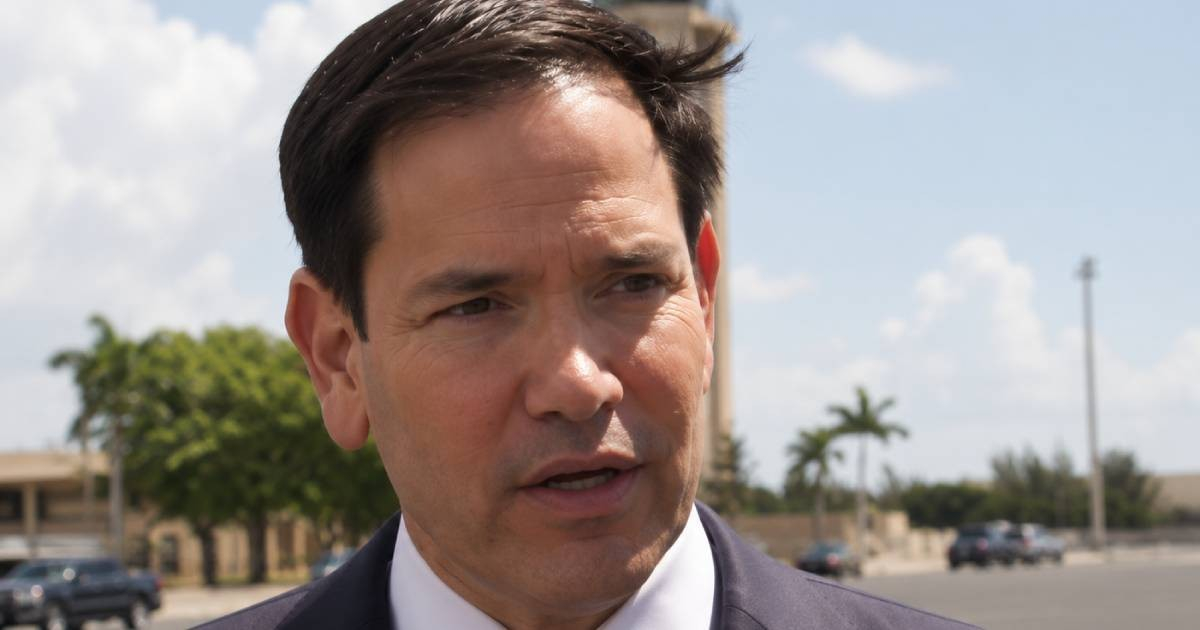
Secretary of State Marco Rubio articulated the Trump administration's stance on Cuba this Thursday with a succinct statement: "Cuba's future is in the hands of its people, but we will focus 100% on the national security threat, because that concerns America."
His remarks came the day after May 20, Cuba's Independence Day, when Rubio released a Spanish-language video message to the Cuban people—his first as Secretary of State. This coincided with the Justice Department unveiling formal charges against Raúl Castro for the 1996 downing of Brothers to the Rescue planes.
During a Miami-based dialogue broadcast by BBC News, Rubio labeled Cuba a "failed state" and was unequivocal: "Their economic system is dysfunctional. It's broken. And you can't fix it with the current political system in place. They simply do not know how to make it work."
Regional Comparisons and Criticism
Rubio drew comparisons between Cuba and its neighboring countries—Bahamas, Jamaica, the Dominican Republic, and Florida—where citizens are free to own businesses, work independently, and vote. "If that's possible around Cuba, why isn't it possible within Cuba?" he inquired.
He cautioned that the regime has long relied on the same strategy: "They've spent years just buying time and waiting us out. They won't be able to wait us out or buy time anymore. We are very serious. We are very focused."
Negotiation and National Security
Regarding the potential for a negotiated settlement, Rubio was skeptical but left the door ajar. President Trump's preference is always for a peaceful agreement, yet he acknowledged the likelihood is "not high" given the current regime's profile. "If they have a change of heart, we are here," he remarked.
Rubio dismissed claims that his policy amounts to "nation-building," framing it instead as a matter of direct national security. "Cuba is just 90 miles off our shores. If there’s a systemic collapse in that country, which is where they’re heading, we will be affected by the migration crisis and any violence and instability that occurs there."
Economic Control and Energy Crisis
The Secretary of State pointed fingers at GAESA, the military-business conglomerate controlling roughly 70% of Cuba's economy: "They have a private military company named GAESA with $18 billion in assets, and not a single cent goes into the state budget. Not a cent goes to help the Cuban people. Not a single cent."
Rubio explained that Cuba has experienced massive blackouts even while receiving free Venezuelan oil, as funds were diverted and never invested in energy infrastructure. The nation is enduring its worst electrical crisis in decades, with deficits reaching up to 2,113 MW recorded in May 2026.
Legal Proceedings Against Raúl Castro
On the formal charges against Raúl Castro, Rubio was forthright with the press: "Raúl Castro openly admits and boasts about giving the order to shoot down civilian planes." When asked how he plans to bring him to U.S. justice, he replied, "I'm not going to discuss how we will bring him here. If there is an announcement, we will tell you afterward, not beforehand."
The indictment presented on May 20 at Miami's Freedom Tower includes Raúl Castro and five Cuban military officers for the downing of the Brothers to the Rescue planes on February 24, 1996, which resulted in the deaths of four Cuban-Americans: Armando Alejandre Jr., Carlos Costa, Mario de la Peña, and Pablo Morales. The charges could lead to the death penalty or life imprisonment.
Frequently Asked Questions about Marco Rubio's Stance on Cuba
What is Marco Rubio's position on Cuba's economic system?
Marco Rubio views Cuba's economic system as dysfunctional and broken, believing it cannot be repaired under the current political regime.
How does Marco Rubio compare Cuba with its neighboring countries?
Rubio contrasts Cuba with neighbors like the Bahamas, Jamaica, the Dominican Republic, and Florida, where citizens can own businesses, work independently, and vote, questioning why such freedoms aren't available in Cuba.
What are the charges against Raúl Castro?
Raúl Castro is charged with the downing of Brothers to the Rescue planes in 1996, which caused the deaths of four Cuban-Americans. The charges could result in the death penalty or life imprisonment.