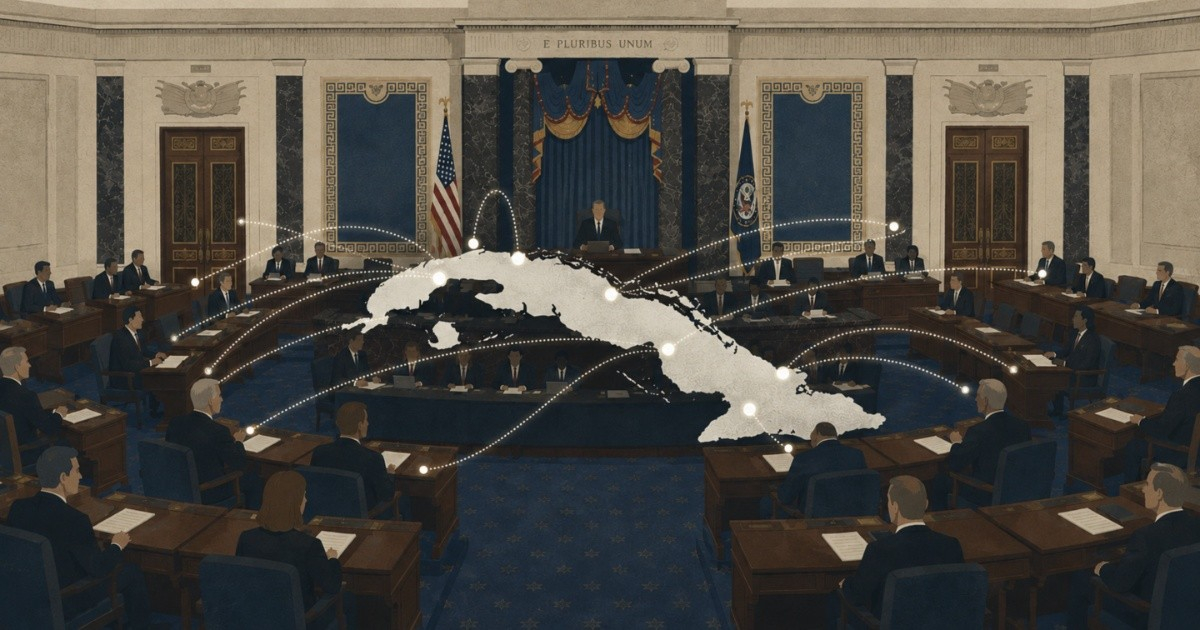
Democratic Representative Gregory W. Meeks, the ranking member of the House Foreign Affairs Committee, cautioned on Wednesday that the recent indictment against Raúl Castro by the Department of Justice seems to be more of a pretext for escalation, potentially leading to an unlawful invasion of Cuba, rather than a genuine pursuit of justice.
This statement came shortly after the Department of Justice publicly announced the criminal charges against the 94-year-old former Cuban leader at an event in Miami's Freedom Tower, coinciding with Cuba's Independence Day. Although a federal grand jury in Miami issued the indictment on April 23, it was only declassified yesterday.
Meeks acknowledged that Castro should be held accountable for the deaths of Americans in international waters, referencing the February 24, 1996, downing of two planes operated by the Brothers to the Rescue organization, which resulted in the deaths of four Cuban-Americans: Armando Alejandre Jr., Carlos Costa, Mario de la Peña, and Pablo Morales.
Potential Consequences and Sanctions
Despite this, the Democratic legislator warned against military solutions, stating that no amount of sanctions will bring a better future for the Cuban people. He also called for an end to what he termed the "oil blockade" enacted by the Trump administration, holding it responsible for exacerbating the suffering of the Cuban people by plunging hospitals, homes, and private businesses into darkness.
Executive Order 14380, signed on January 29, 2026, slashed Cuban oil imports by 80% to 90%, causing power outages lasting up to 25 hours a day in over 55% of the island's territory.
Political Reactions and Symbolism
Meeks urged the Trump administration to collaborate with Congress to reform the ineffective and harsh sanctions regime that has hindered successive administrations from negotiating meaningful engagement with Cuba.
The charges against Raúl Castro include conspiracy to murder U.S. citizens, destruction of aircraft, and four individual criminal counts. Along with Castro, five Cuban military officers—Lorenzo Alberto Pérez-Pérez, Emilio José Palacio Blanco, José Fidel Gual Barzaga, Raúl Simanca Cárdenas, and Luis Raúl González-Pardo Rodríguez—were also indicted.
Given the absence of an extradition treaty between Cuba and the United States and Castro's lack of travel to American soil, the indictment is largely symbolic.
Reactions were mixed: President Donald Trump hailed the indictment as "a great day" for the Cuban-American community, while Cuban-American Congresswoman María Elvira Salazar proclaimed it as "the beginning of the end for the Castro family."
From Havana, dictator Miguel Díaz-Canel dismissed the indictment as a "political maneuver" without legal foundation, and Foreign Minister Bruno Rodríguez labeled it a "farce."
Meeks concluded by stating that the only way to foster real change is to empower the Cuban people themselves, rather than persisting with a failed approach that punishes without yielding progress.
Key Questions on the Indictment Against Raúl Castro
What are the charges against Raúl Castro?
Raúl Castro faces charges including conspiracy to murder U.S. citizens, destruction of aircraft, and four individual criminal counts.
Why is the indictment considered symbolic?
The indictment is seen as symbolic because there is no extradition treaty between the United States and Cuba, and Raúl Castro has not entered U.S. territory.
What impact have U.S. sanctions had on Cuba?
U.S. sanctions, particularly the "oil blockade" under the Trump administration, have worsened conditions in Cuba by causing extensive power outages and impacting hospitals, homes, and businesses.