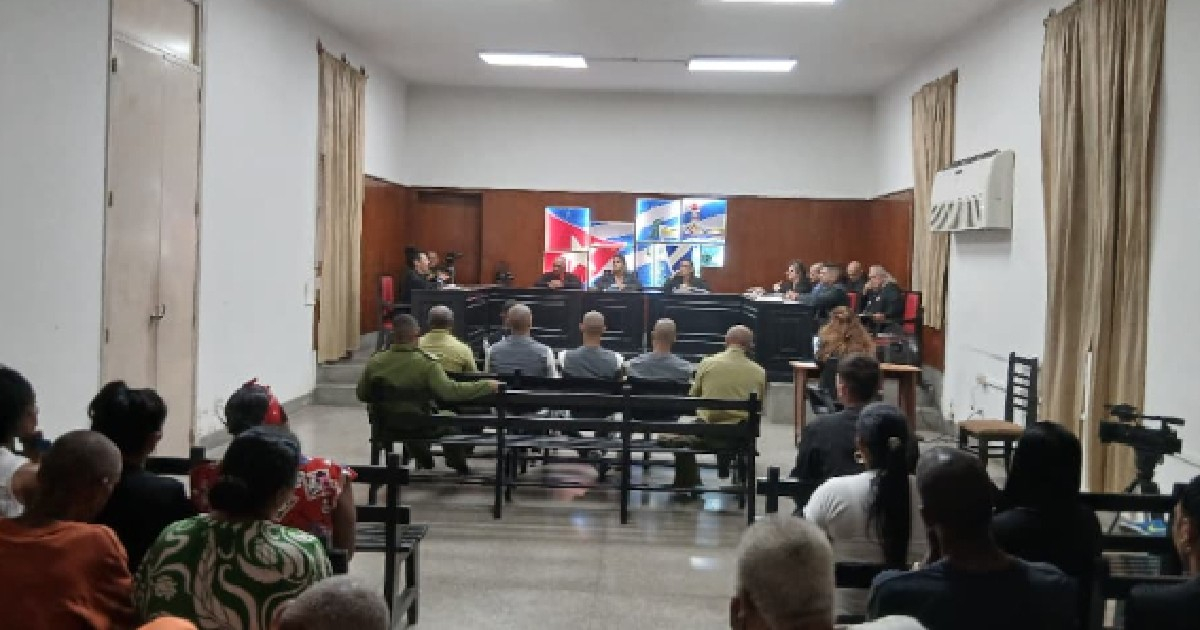
The First Criminal Chamber of the People's Provincial Court of Cienfuegos has handed down prison sentences ranging from four to six years to four men found guilty of trafficking synthetic cannabinoids. This high-profile trial was conducted publicly, aiming to set a strong example.
Labeled as case number 12 of 2026, the trial concluded with all four defendants being convicted of illegal drug-related offenses or handling substances with similar effects, as reported by the local newspaper 5 de Septiembre on Wednesday.
The defendants, Franklyn Ángel Fuentes Villa, Frank Abel Pedraza Pérez, and Marco Antonio Angulo Comas, each received a four-year prison term. Pedro Luis Díaz de Villegas Fernández, however, was given a harsher six-year sentence due to his repeat offender status and the severity of the offenses.
According to official accounts, the initial trio devised a scheme to profit from selling synthetic cannabinoids, colloquially known as "el químico" or "papelillo." Together with Díaz de Villegas, they purchased the substance at 5,000 Cuban pesos per gram and packaged it for sale at 300 pesos each. Their operation was interrupted by police as they attempted to distribute the drugs via vehicle.
While determining the sentences, the court considered the "young age" of three of the defendants as a mitigating factor. Conversely, Díaz de Villegas's history of offenses and the harmful nature of the drugs were viewed as aggravating factors, emphasizing the "toxicity and addictive potential" of these substances and their detrimental impact on consumers' health, family, and social environments.
The rise in synthetic cannabinoid use in Cuba is alarming, with emergency room visits climbing from 467 in 2024 to 886 in 2025, according to official statistics.
In addition to imprisonment, the defendants were also stripped of certain civic rights and banned from leaving the country.
This trial in Cienfuegos is part of the Fifth National Exercise for Crime Prevention and Confrontation, initiated by the government last Sunday. This initiative involves about 20 such "exemplary" trials nationwide.
Earlier this week, the People's Provincial Court of Matanzas sentenced two men to 15 years and another to 10 years in prison for robbery with violence, also in an exemplary trial.
In a similar case, two individuals in Artemisa were sentenced to 15 years in March for possessing just 1.74 grams of synthetic cannabinoids, in another trial meant to serve as a deterrent.
In recent years, the regime has employed these trials as a tool for social control, conducting public hearings with extensive media coverage to dissuade the populace amidst rising crime rates.
This new national exercise in crime confrontation comes shortly after public protests erupted in at least 12 Havana municipalities from May 13 to 17, with slogans demanding "Power and food!" and "Down with the dictatorship!" leading to at least 14 arrests.
Key Questions about Synthetic Cannabinoid Trafficking in Cuba
What were the sentences for the synthetic cannabinoid trafficking case in Cienfuegos?
Four men received prison sentences ranging from four to six years for trafficking synthetic cannabinoids, with the harsher penalty going to a repeat offender.
What factors did the court consider in determining sentences?
The court considered the young age of three defendants as a mitigating factor and emphasized the repeat offenses and harmful effects of the drugs as aggravating circumstances.
What is the government's purpose for conducting "exemplary" trials?
The regime uses these trials as a means of social control, aiming to deter crime by publicly showcasing the consequences of criminal activities through heavily publicized trials.