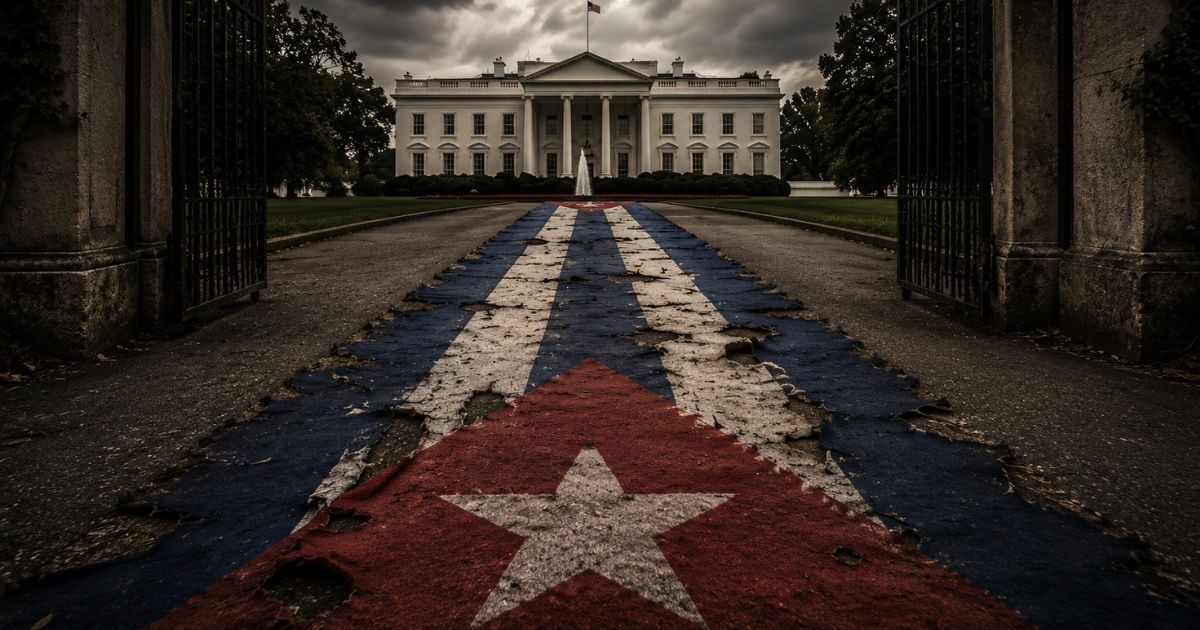
In a notable statement to The New York Times, Cuban ambassador to the United Nations, Ernesto Soberón Guzmán, expressed Havana's openness to discuss any topic with Washington, indicating a departure from previous stances. This marks the first time in years that a Cuban official has given an interview to the publication.
"Cuba is prepared to talk about everything with the United States. There are no taboo subjects in our discussions, provided they are based on reciprocity and equality," Soberón Guzmán stated during a one-hour conversation in New York.
This statement notably contrasts with the position taken by Miguel Díaz-Canel just a month ago, when he firmly dismissed any political negotiations with the U.S., reiterating twice, "There is no negotiation. There is no negotiation."
The ambassador did not provide specifics on what economic or political changes the regime might consider, as Cuba continues to operate under a single-party system with no free press.
Soberón Guzmán strongly criticized the aggressive rhetoric of the Trump administration, particularly remarks about "taking Cuba."
"Frequent declarations like 'we are ready to take Cuba' do not foster a climate of dialogue and trust," the diplomat remarked.
"Warmongering rhetoric is unhelpful. They are building various pretexts for a military aggression against Cuba, which is counterproductive," he added.
The decision to grant this interview, as explained by Soberón Guzmán, was intended to convey to the American public that Cuba seeks peace and cooperation, despite Washington's intensified pressure campaign in recent months.
This pressure heightened on the same day, as U.S. prosecutors formally charged Raúl Castro for ordering the downing of two Brothers to the Rescue planes on February 24, 1996, resulting in the deaths of four individuals, including three American citizens.
Simultaneously, Secretary of State Marco Rubio released a video in Spanish addressing the Cuban people, blaming the military conglomerate GAESA—which controls up to 70% of the island's economy—for the crisis faced by Cubans.
"The real reason you lack electricity, fuel, and food is because those who control your country have looted billions of dollars, but none of it has been used to help the people," Rubio stated.
Soberón Guzmán deemed these comments "an insult to human intelligence," attributing the energy crisis to the embargo and petroleum blockade imposed by Washington, which has led to power outages lasting up to 22 hours daily, food shortages, and black market gasoline prices exceeding $40 per gallon.
The Trump administration has offered $100 million in food and medicine to the island, contingent upon the distribution being managed by the Catholic Church or trusted organizations, rather than the Cuban government.
The ambassador indicated that Cuba plans to accept the aid but also described it as an "insult."
Negotiations between the two nations have been ongoing for months. Last week, CIA Director John Ratcliffe visited Havana to demand significant economic reforms and the cessation of Russian and Chinese intelligence operations on the island.
Soberón Guzmán highlighted potential areas for cooperation, including migration, tourism, agriculture, pharmaceutical production, and drug trafficking prevention.
However, he rejected the notion that Washington could offer lessons in democracy to Cuba, criticizing the electoral college, gerrymandering, and the influence of major political donors in the U.S. system.
"Is that the democracy you want for Cuba? We're not interested," the diplomat concluded.
Key Questions on U.S.-Cuba Relations
What topics is Cuba willing to discuss with the United States?
Cuba is open to discussing all topics with the United States, with no subjects being off-limits, as long as discussions are based on reciprocity and equality.
How does Cuba view U.S. aid offers?
While Cuba plans to accept the U.S. aid offer of $100 million in food and medicine, the ambassador described the offer as an "insult" due to the conditions imposed on its distribution.
What areas for cooperation does Cuba see with the United States?
Cuba sees potential for cooperation with the United States in areas such as migration, tourism, agriculture, pharmaceutical production, and drug trafficking prevention.