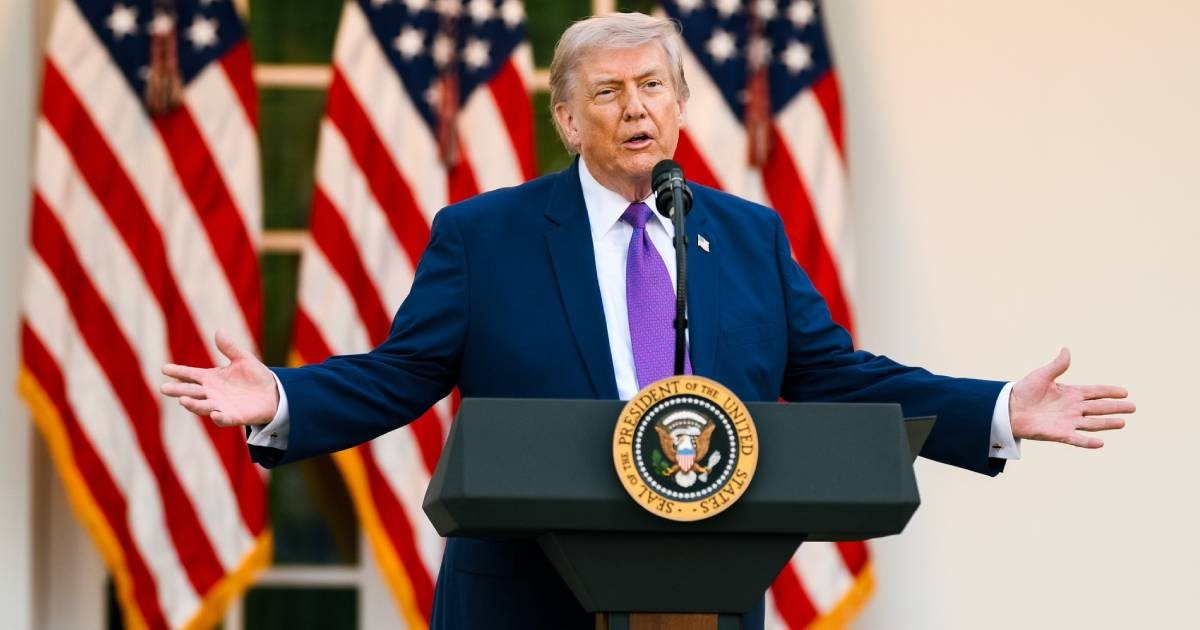
On Wednesday, U.S. President Donald Trump enthusiastically responded to the formal charges against Raúl Castro for the downing of Brothers to the Rescue planes, describing the announcement as a "pivotal and significant day" for the Cuban American community.
"The Cuban population in Miami, and beyond, those who arrived there devastated, whose families were torn apart, truly appreciate what the Attorney General has done today," Trump stated to reporters.
Trump emphasized that Cuba remains a top priority for his administration's agenda, pointing out the significant political backing he has received from the Cuban exile community. "Their support has been unparalleled, reaching levels unseen before," he asserted.
In an official statement, Trump issued a stern warning to the Cuban regime: "The United States will not tolerate a rogue state's hostile military, intelligence, and terrorist operations just ninety miles from U.S. shores."
The charges were announced by Acting Attorney General Todd Blanche at Miami's historic Freedom Tower, a symbol of Cuban exile, on May 20, a day commemorating Cuba's Independence Day.
"For the first time in nearly seven decades, the top leadership of the Cuban regime has been indicted," declared Blanche, summarizing the U.S. government's stance with a powerful remark: "If you kill Americans, we will pursue you."
The indictment against Raúl Castro includes charges of conspiracy to murder U.S. citizens, destruction of aircraft, and four individual counts of murder. This federal grand jury indictment was handed down in Miami on April 23, 2026, and made public this Wednesday.
Alongside Castro, five Cuban military officials were also charged: Lorenzo Alberto Pérez-Pérez, Emilio José Palacio Blanco, José Fidel Gual Barzaga, Raúl Simanca Cárdenas, and Luis Raúl González-Pardo Rodríguez.
The events trace back to February 24, 1996, when Cuban Revolutionary Air Force MiG-29s shot down two unarmed Cessna planes from the Brothers to the Rescue organization over international waters in the Florida Strait.
The attack resulted in the deaths of Armando Alejandre Jr., Carlos Costa, Mario Manuel de la Peña, and Pablo Morales. Their bodies were never recovered.
The centerpiece of the indictment is a June 1996 audio recording where Raúl Castro is heard giving the order for the attack. "Well, shoot them down over the sea when they show up; and don't consult those who have the authority," says the former Minister of the Revolutionary Armed Forces.
Reactions from the Cuban American community were swift. Congresswoman María Elvira Salazar declared, "Today marks the beginning of the end for the Castro family."
José Basulto, founder of Brothers to the Rescue and an attack survivor, expressed his emotions: "I have longed for this for a long time. I have longed for justice to be served, for justice to become a reality."
The Cuban regime dismissed the charges, with Foreign Minister Bruno Rodríguez labeling Secretary of State Marco Rubio as "a spokesperson for corrupt and vengeful interests," while the Cuban Embassy in the U.S. described the judicial process as a "deception."
Despite the announcement's significant political and historical impact, the practical reach of the charges remains limited. Raúl Castro, now 94, has never set foot on U.S. soil, and there is no extradition treaty between Cuba and the United States.
Key Questions About the Charges Against Raúl Castro
What are the primary charges against Raúl Castro?
Raúl Castro faces charges of conspiracy to murder U.S. citizens, destruction of aircraft, and four individual counts of murder related to the 1996 Brothers to the Rescue incident.
How did the Cuban American community react to the charges?
The Cuban American community responded positively, viewing the charges as a long-awaited step towards justice. Leaders like Congresswoman María Elvira Salazar called it the beginning of the end for the Castro family.
What is the significance of the audio recording in the indictment?
The audio recording from June 1996 is crucial as it captures Raúl Castro ordering the attack on the Brothers to the Rescue planes, providing direct evidence of his involvement.
Why is the practical impact of the charges limited?
The practical impact is limited because Raúl Castro has never entered U.S. territory, and there is no extradition treaty between Cuba and the United States, making enforcement of the charges challenging.