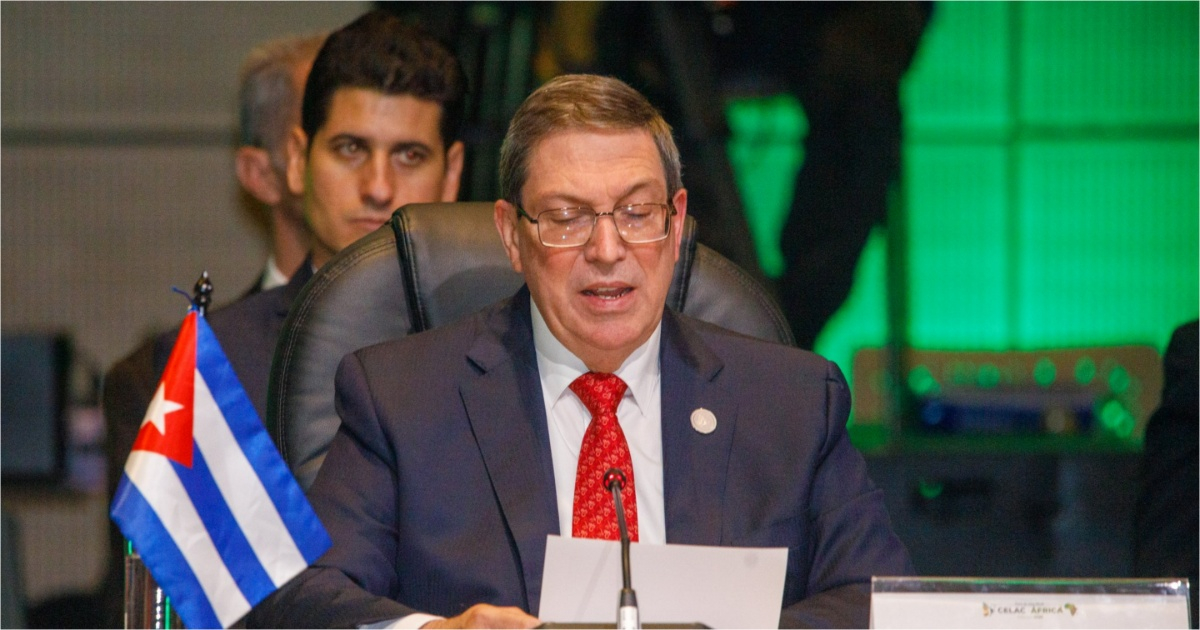
Cuba's Foreign Minister, Bruno Rodríguez Parrilla, has strongly criticized the recent federal criminal charges brought by the U.S. Department of Justice against former leader Raúl Castro. In a Facebook post released just hours after the official announcement in Miami, Rodríguez condemned the charges as a "sham...illegitimate and illegal."
Rodríguez denounced the U.S. government's action, stating, "We condemn the sham by the U.S. government in filing illegitimate and illegal charges against the Leader of the Cuban Revolution, General of the Army Raúl Castro Ruz."
The 1996 Brothers to the Rescue Incident
The foreign minister defended the downing of two Brothers to the Rescue aircraft on February 24, 1996, asserting it was an act of "legitimate defense" within Cuban airspace. He rejected U.S. claims that the incident occurred over international waters in the Florida Straits.
Rodríguez argued that the charges aim to "reinforce a fraudulent narrative to justify increased aggression against the Cuban people" and accused the U.S. government of being "complicit in the organization and execution of terrorist and violent acts against Cuba."
Broader Accusations Against the U.S.
Going further, Rodríguez alleged that Washington has committed "extrajudicial killings of nearly 200 people in international waters of the Caribbean and the Pacific, under alleged links to drug trafficking operations."
He concluded his statement with a resolute message, saying, "Cuba will not relinquish its inalienable right to legitimate defense," accompanied by the hashtag #RaúlEsRaúl.
Details of the Charges
The charges were announced by Acting Attorney General Todd Blanche at Miami's Freedom Tower—a symbol of Cuban exile—on a day full of symbolism: Cuba's Independence Day. These charges, approved by a grand jury on April 23, 2026, and revealed this Wednesday, include conspiracy to murder U.S. citizens, destruction of aircraft, and four individual counts of murder.
Alongside Raúl Castro, five Cuban military officers were charged: Lorenzo Alberto Pérez-Pérez, Emilio José Palacio Blanco, José Fidel Gual Barzaga, Raúl Simanca Cárdenas, and Luis Raúl González-Pardo Rodríguez.
The victims—Armando Alejandre Jr., Carlos Costa, Mario Manuel de la Peña, and Pablo Morales, all Miami residents—were killed when Revolutionary Air Force MiG-29s destroyed their unarmed Cessna 337 Skymaster planes. Their bodies were never recovered.
Evidence and Political Reactions
The core of the charges is an audio recording from June 1996 in which Castro allegedly orders, "Shoot them down over the sea when they appear; and do not consult those who have the authority." This is supported by over 10,000 pages of declassified FBI documents revealing an "Operation Venice" planned since February 13, 1996.
Blanche summarized the U.S. stance with a straightforward statement: "If you kill Americans, we will pursue you."
Rodríguez also criticized Secretary of State Marco Rubio, labeling him a "spokesman for corrupt and vengeful interests, concentrated in South Florida."
Despite the historic significance of the announcement, the charges are largely symbolic: Raúl Castro, now 94, has never set foot on U.S. soil, and there is no extradition treaty between Cuba and the United States.
Congresswoman María Elvira Salazar celebrated the charges with a statement reflecting exile sentiments: "Today marks the beginning of the end of the Castro family."
Understanding the U.S. Charges Against Raúl Castro
Why did the U.S. charge Raúl Castro?
Raúl Castro was charged by the U.S. Department of Justice with conspiracy to murder U.S. citizens and destruction of aircraft, related to the 1996 downing of Brothers to the Rescue planes.
What is the significance of the charges against Raúl Castro?
The charges are mainly symbolic, as Raúl Castro is unlikely to be extradited or face trial in the U.S., given his age and the lack of an extradition treaty between the two countries.