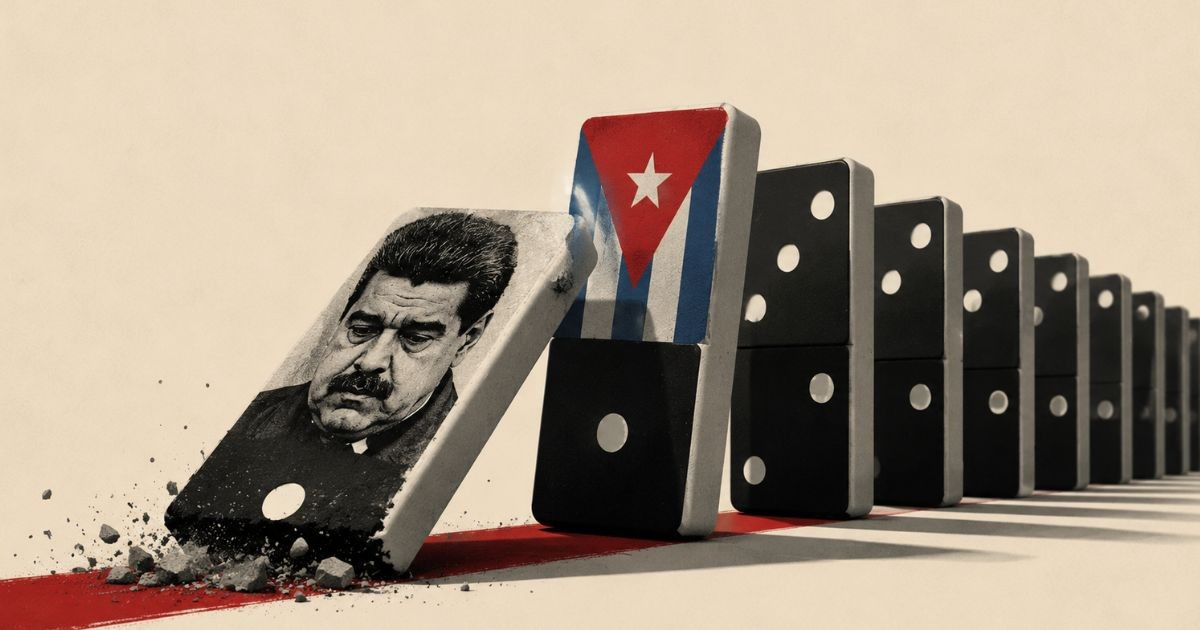
On Cuban Independence Day, President Donald Trump issued a stark warning to the Cuban regime, using the capture and extradition of Nicolás Maduro as a cautionary tale. This message coincided with the 124th anniversary of the Cuban Republic's proclamation.
“The indictment and removal of Maduro sent a clear signal to his socialist allies in Havana: This is our hemisphere, and those who destabilize it and threaten the United States will face consequences,” Trump stated from the White House.
Describing the January 2026 operation as “one of the boldest and most impressive special operations in generations,” President Trump highlighted it as a definitive warning to the Cuban regime. This operation, executed by U.S. Armed Forces, underscored the potential repercussions Cuba might face.
Trump criticized the communist government in Havana as a “direct betrayal of the nation for which its founding patriots bled and died,” accusing it of violently dismantling political freedoms, denying free elections, silencing dissent, and sinking the Cuban economy.
He further accused the military leaders of the regime of having “no interest in ensuring the prosperity of the Cuban people,” focusing solely on maintaining control and “violently exporting communism and despotism abroad.”
Regarding specific actions, Trump declared that his administration is “cutting off the financial lifelines that have for too long sustained brutal regimes in Central and South America.”
His commitment is “unwavering,” as he emphasized: “The United States will not tolerate a pariah state hosting hostile military, intelligence, and terrorist operations just 90 miles from American soil.”
Trump’s message followed a week of heightened pressure on Havana. On Monday, the Treasury Department (OFAC) sanctioned nine top Cuban officials and the Directorate of Intelligence (DGI/G2), freezing their assets and banning transactions with U.S. persons or entities.
Those sanctioned included Deputy Minister of the Revolutionary Armed Forces Joaquín Quintas Sola, Chief of Military Counterintelligence José Miguel Gómez del Vallín, and the heads of the Eastern and Western Armies, Eugenio Armando Rabilero Aguilera and Raúl Villar Kessell.
These sanctions align with an executive order signed by Trump on May 1 to penalize Cuban officials responsible for repression and threats to U.S. national security.
In tandem with Trump’s message, Secretary of State Marco Rubio released a Spanish-language video addressed to the Cuban people, proposing a “new relationship” between the U.S. and Cuba, with the explicit condition: “It must be directly with you, the Cuban people, not with GAESA.”
Rubio accused the regime of causing shortages of electricity, fuel, and food, noting that those in control have “plundered billions of dollars.”
In the days leading up to this message, there were leaks about a possible U.S. military action against Cuba, while Trump mentioned on Tuesday the potential for reaching a diplomatic agreement with the island.
Reuters reported on Wednesday that the Trump administration is also preparing to announce criminal charges against Raúl Castro.
Trump concluded his message with a promise: “We look confidently toward a new Golden Age for the island and its people.”
Key Questions About U.S.-Cuba Relations
What message did Trump's actions against Maduro send to Cuba?
Trump's actions against Maduro sent a clear message to Cuba's regime that destabilizing the hemisphere and threatening the United States will have serious consequences.
Who were the Cuban officials sanctioned by the U.S. Treasury Department?
The sanctioned officials included Joaquín Quintas Sola, José Miguel Gómez del Vallín, and the heads of Eastern and Western Armies, Eugenio Armando Rabilero Aguilera and Raúl Villar Kessell.
What are the U.S. administration's plans regarding financial support to brutal regimes?
The U.S. administration is committed to cutting off financial lifelines that have supported brutal regimes in Central and South America for too long.