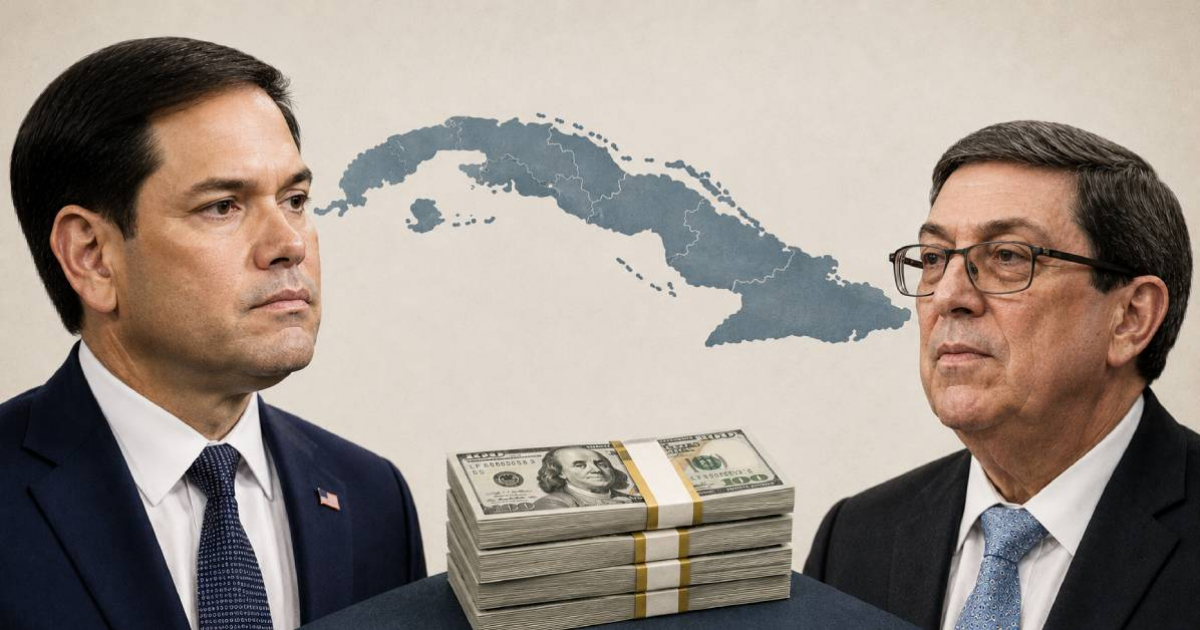
In a significant diplomatic move, acting U.S. ambassador to Havana, Mike Hammer, engaged with officials from Cuba's Ministry of Foreign Affairs to advance a $100 million humanitarian aid proposal. This offer from Washington is contingent upon the Cuban regime implementing specific reforms.
A State Department official confirmed the ongoing discussions on Wednesday, accusing the Cuban foreign ministry of spreading false information about the proposal.
"We've been in close coordination with the Cubans. We had a meeting yesterday and are aggressively pursuing this proposal, contrary to some of the falsehoods propagated by the Cuban Ministry of Foreign Affairs," the official stated, requesting anonymity.
The distribution of the aid is planned to be handled solely by Catholic Relief Services and Samaritan's Purse, ensuring no involvement from the Cuban government or its military and economic structures.
"We continue to urge the regime to accept the proposal and avoid interference with the delivery of the assistance," the official added.
Washington has also questioned the regime's handling of the crisis affecting the Cuban people: "The Cuban regime possesses several billion dollars. We urge them to utilize these funds to genuinely assist the Cuban populace and invest in their infrastructure instead of hoarding it."
The proposal was publicly disclosed by Secretary of State Marco Rubio on May 8 in Rome, a day after meeting with Pope Leo XIV at the Vatican. The State Department formalized it on May 13 through an official statement.
The Cuban regime's stance has notably shifted. Initially, Foreign Minister Bruno Rodríguez Parrilla dismissed the offer as a "fable" and "lie," but days later, he softened his position, indicating Cuba's willingness to "listen to the characteristics of the offer."
Díaz-Canel tweeted that if the aid is offered according to recognized humanitarian practices, Cuba "will encounter no obstacles or ingratitude."
On Wednesday, Cuba's Independence Day, Rubio released a Spanish-language video addressing the Cuban people, blaming GAESA for the crisis and extending, on behalf of Trump, an offer of a "new relationship" with Cuba.
That same day, the Department of Justice filed formal charges against Raúl Castro for ordering the downing of two Brothers to the Rescue aircraft on February 24, 1996, indicating that Washington continues to use judicial pressure as a negotiating tool while aid discussions progress.
Key Details on U.S.-Cuba Humanitarian Aid Negotiations
What is the condition for the $100 million aid from the U.S. to Cuba?
The aid is conditioned on the Cuban regime implementing specific reforms as part of the agreement.
Who will be responsible for distributing the aid in Cuba?
The distribution will be managed exclusively by Catholic Relief Services and Samaritan's Purse, without any involvement from the Cuban government.
How did the Cuban Foreign Minister initially respond to the U.S. aid offer?
Initially, Foreign Minister Bruno Rodríguez Parrilla dismissed the aid offer as a "fable" and "lie," but later expressed a willingness to discuss its details.