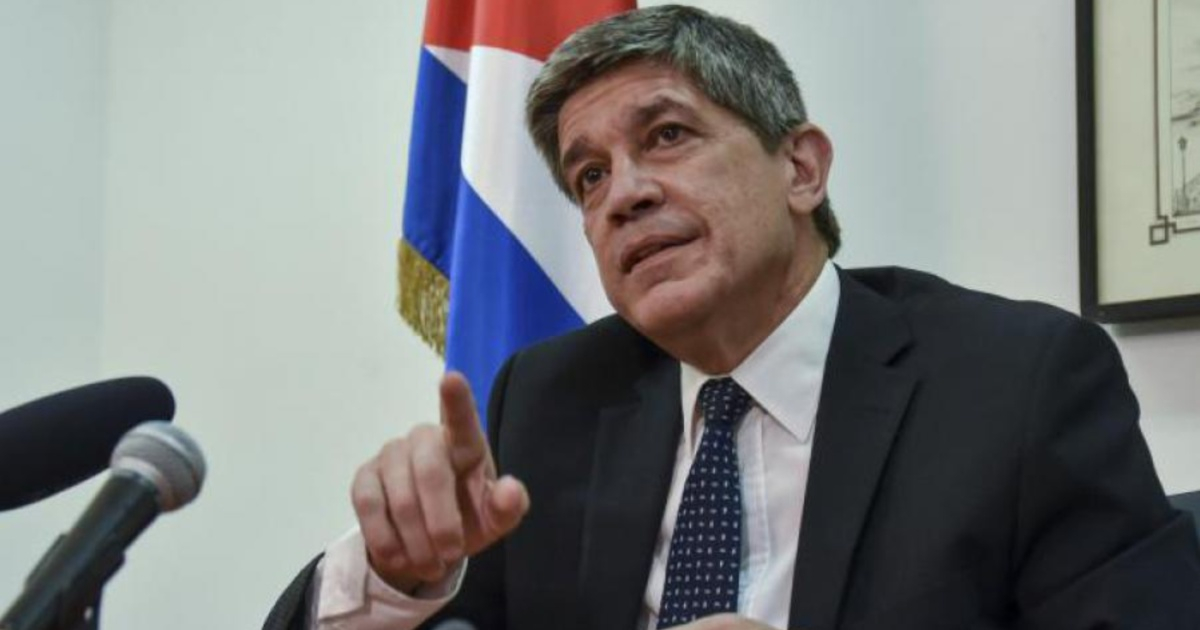
On Wednesday, Carlos Fernández de Cossío, Cuba's Deputy Foreign Minister, accused U.S. Secretary of State Marco Rubio of intentionally spreading misinformation about Cuba to rationalize what he described as a "brutal and ruthless assault" on the Cuban people.
"The reason the U.S. Secretary of State repeatedly and unscrupulously lies when discussing Cuba and tries to justify the aggression against the Cuban people is not due to ignorance or incompetence. He knows full well there is no justification for such a brutal and ruthless assault," Cossío posted on his X account.
The official emphasized that Rubio's statements are not the result of a misjudgment or lack of knowledge, but rather a deliberate strategy. This marks the most direct accusation Cossío has made against the Secretary of State since the rhetorical tensions between the two governments escalated in May 2026.
This tweet comes amid heightened tensions between Washington and Havana. On May 7, Rubio announced new sanctions targeting GAESA, the military conglomerate that controls approximately 40% to 70% of Cuba's formal economy.
While aboard Air Force One on May 13, Rubio labeled Cuba as a "failed state," suggesting they would offer the regime a chance to improve its economy but expressing skepticism about any transformation occurring without a change in government.
On May 17, Axios published a report based on classified U.S. intelligence indicating that Cuba had acquired over 300 military drones from Russia and Iran since 2023. The report suggested Cuban officials had discussed potential uses against the Guantanamo Naval Base, military vessels, and Key West, Florida.
Cossío has consistently responded to each of Rubio's declarations. On May 10, he dismissed a purported U.S. humanitarian aid offer as a "dirty political deal."
On May 14, he denied any Cuban threats against the U.S., accusing Washington of engaging in an "unrelenting economic war."
On May 17, he asserted Cuba's right to self-defense, claiming the "anticuban" effort to justify a military assault "intensifies by the hour."
On May 12, Secretary of Defense Pete Hegseth testified before Congress, labeling Cuba as a "threat to U.S. national security," while U.S. intelligence officials noted they did not see an imminent attack but acknowledged the risk of escalation.
This exchange represents a peak in the rhetorical confrontation between the Cuban regime and the Trump-Rubio administration as of 2026.
Cossío framed U.S. policy toward Cuba not as a miscalculation, but as a campaign of purposeful falsehoods serving Rubio's narrative of a Cuban economy "broken and beyond repair as long as the current regime remains in power."
Understanding the U.S.-Cuba Diplomatic Tensions
What prompted Carlos Fernández de Cossío's accusations against Marco Rubio?
Carlos Fernández de Cossío accused Marco Rubio of deliberately lying about Cuba to justify U.S. actions, describing these actions as a "brutal and ruthless assault" on the Cuban populace.
What recent actions did Marco Rubio take against Cuba?
Marco Rubio announced new sanctions against GAESA, a military conglomerate in Cuba, and described Cuba as a "failed state" while expressing skepticism about economic improvement without a regime change.
How has Cossío responded to Rubio's statements?
Cossío systematically refuted Rubio's claims, dismissing U.S. aid offers as political maneuvering, denying Cuban threats, and asserting Cuba's right to self-defense against perceived U.S. aggression.