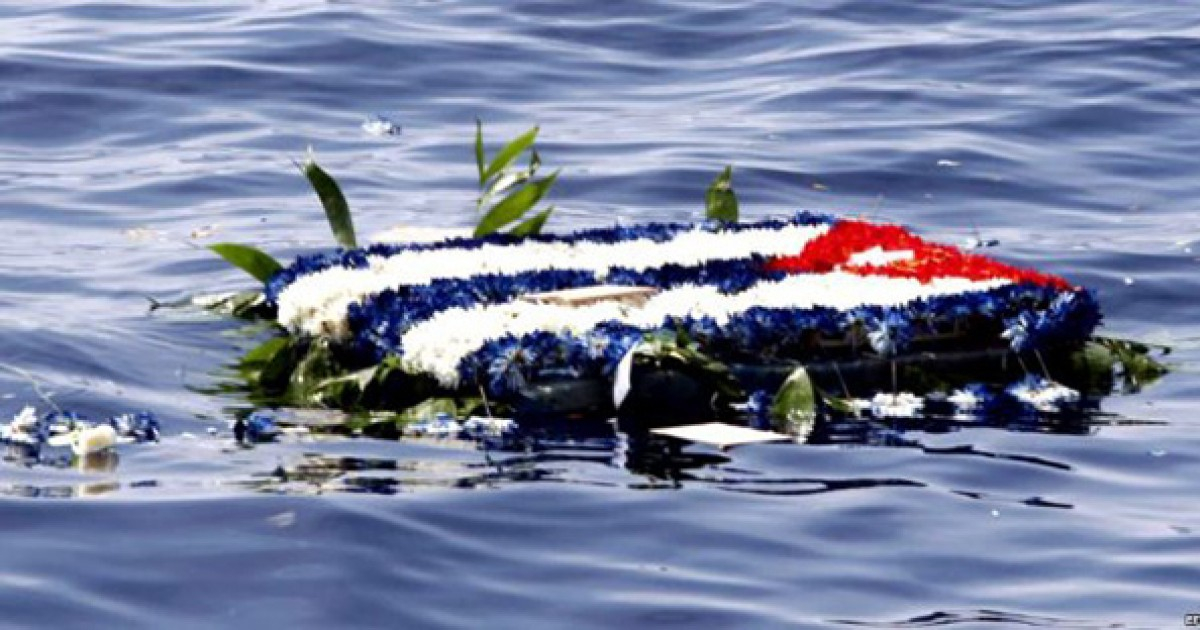
The Cuban Embassy in the United States initiated a social media campaign this Wednesday under the banner "MythBreakers" to rationalize the downing of two civilian planes from Brothers to the Rescue on February 24, 1996. The embassy described the incident as a "deception" and asserted that Havana had exhausted all diplomatic avenues before taking action.
Launched on the official @EmbaCubaUS account on the social media platform X, the campaign precedes a scheduled announcement from the U.S. Department of Justice at Miami's Freedom Tower. Reports suggest potential criminal charges against Raúl Castro for the shootdown, coinciding with May 20, a date rich with symbolism as it marks the anniversary of Cuba's independence in 1902.
Historical Violations and Diplomatic Tensions
In its posts, the embassy claimed that between 1994 and 1996, Brothers to the Rescue committed over 25 violations of Cuban airspace, each "formally reported in writing" to the State Department, the Federal Aviation Administration (FAA), and the International Civil Aviation Organization (ICAO).
"No one can claim ignorance," the Cuban diplomatic mission stated in one of its tweets.
As evidence, the embassy shared an internal FAA memo dated January 22, 1996—one month before the shootdown—in which official Cecilia Capestany warned, "The worst-case scenario is that one day the Cubans will shoot down one of these planes, and the FAA better have everything in order."
Key Figures and Statements
The document also specifically mentioned José Basulto, founder of Brothers to the Rescue, and revealed that the Undersecretary of State had contacted Secretary of Transportation Peña to discuss the situation.
The embassy also referenced intelligence analyst Dr. Latell, who stated in a 2009 CBS Miami report that "the Cuban government had been protesting the flights for at least 17 or 18 months before the shootdown," and that American diplomats in Havana could see and hear the planes from their own mission.
International Discrepancies
In another tweet, the embassy contended that no sovereign state is obligated to endure "illegal and ongoing incursions" within its territory, emphasizing that international law and civil aviation agreements protect airspace sovereignty.
However, Cuba's narrative conflicts with international findings. The ICAO concluded in its July 1996 report that the two planes were shot down approximately nine to ten nautical miles outside Cuban territorial airspace, in international airspace, and that Cuba did not attempt radio communication before opening fire.
The attack resulted in the deaths of four individuals: Armando Alejandre Jr., Carlos Costa, Mario de la Peña, and Pablo Morales, whose remains were never recovered. A third aircraft, operated by Basulto, managed to escape.
Potential Legal Ramifications
The possible charges against 94-year-old Raúl Castro are reportedly based on a June 1996 audio recording in which Castro allegedly commands, "Shoot them down in the sea when they appear; and do not consult those with authority."
Florida's Attorney General reopened a criminal investigation into the incident in March 2026, aligning with the 30th anniversary of the shootdown. This move propelled the Cuban regime's new diplomatic effort to counter the narrative ahead of the Department of Justice's announcement.
Understanding the Brothers to the Rescue Incident
What is the "MythBreakers" campaign?
The "MythBreakers" campaign is a social media initiative launched by the Cuban Embassy in the United States to defend its actions during the 1996 Brothers to the Rescue incident, labeling it a "deception" and claiming diplomatic channels were exhausted before the incident.
Who were the victims of the Brothers to the Rescue shootdown?
The shootdown resulted in the deaths of Armando Alejandre Jr., Carlos Costa, Mario de la Peña, and Pablo Morales. Their bodies were never recovered after the incident.
What did the ICAO report conclude about the incident?
The International Civil Aviation Organization's report determined that the planes were downed in international airspace, roughly nine to ten nautical miles outside Cuban territorial airspace, and that Cuba did not attempt to communicate before firing.