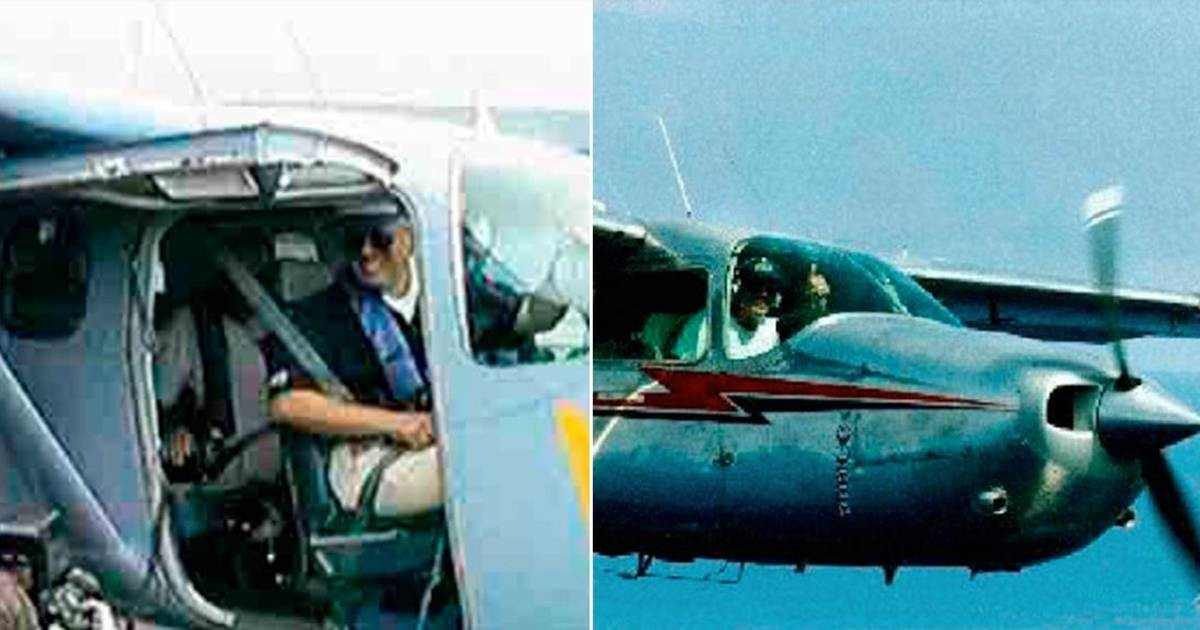
The Cuban Embassy in the United States recently took to social media platform X to assertively label the "Brothers to the Rescue" incident as a "deception." This statement, part of their "Myth Debunkers" campaign, was released just hours before the U.S. Department of Justice planned a commemorative event at Miami's Freedom Tower for the victims of the 1996 downing of two civilian planes.
The Cuban diplomatic mission emphasized on X that the airspace violations by "Brothers to the Rescue" between 1994 and 1996 were not isolated events. Instead, they described these as part of "over 25 serious, deliberate, and systematic violations" recorded by Cuba's Ministry of Foreign Affairs and civil aviation authorities.
"These were not mere miscalculations but a sustained campaign endangering international aviation safety," the embassy stated in its post.
Rising Tensions and Potential Charges Against Raúl Castro
This Cuban response emerges during heightened tensions. Sources have indicated to CNN that U.S. federal prosecutors are contemplating criminal charges against the 94-year-old Raúl Castro, linking him to the February 24, 1996, attack. During this incident, Cuban Air Force jets shot down two unarmed Cessna 337 aircraft belonging to the organization over the Florida Straits.
The attack resulted in the deaths of four crew members: Armando Alejandre Jr. (45), Carlos Costa (30), Mario de la Peña (24), and Pablo Morales (30). A third plane, carrying the organization's founder, José Basulto, managed to evade capture.
At that time, Raúl Castro served as the Minister of the Revolutionary Armed Forces. Central to the potential federal case is an audio recording from June 1996, first reported by El Nuevo Herald in August 2006. In it, Castro allegedly commanded, "Take them down over the sea when they appear; do not consult those with the authority."
Historical Repercussions and Ongoing Investigations
In February 2026, Representative Mario Díaz-Balart and other Cuban American lawmakers urged then-Attorney General Pam Bondi via letter to indict Raúl Castro, citing the audio as critical evidence.
Coinciding with the 30th anniversary of the shootdown, Florida's Attorney General reopened a criminal investigation in March 2026.
The incident had profound historical impacts. Days after the attack, President Bill Clinton signed the Helms-Burton Act, tightening sanctions against Cuba—a cornerstone of the enduring U.S. embargo. At the UN, U.S. Ambassador Madeleine Albright denounced the Cuban pilots' radio celebrations post-attack: "Frankly, this is not guts. It is cowardice."
Espionage and Diplomatic Shifts
Subsequent FBI investigations revealed that the Cuban spy network "La Red Avispa" had provided intelligence on the February 24 mission to the regime. Five Cuban spies were convicted in 2001; Gerardo Hernández Nordelo received two life sentences for conspiracy to commit murder. In a diplomatic pivot, President Barack Obama released them in 2014 as part of renewing ties with Cuba.
If charges against Raúl Castro materialize, it would mark the first instance of the U.S. seeking criminal accountability directly from a member of the Castro family for this event, according to recent reports anticipating the May 20 announcement at Miami's Freedom Tower.
Implications of Potential Charges Against Raúl Castro
What is the "Brothers to the Rescue" incident?
The "Brothers to the Rescue" incident refers to the 1996 event where Cuban Air Force jets shot down two civilian planes belonging to the organization, resulting in the deaths of four crew members.
Why are charges being considered against Raúl Castro?
Charges are being considered against Raúl Castro due to his alleged role in ordering the attack on the civilian planes, with a central piece of evidence being an audio recording from 1996.
What were the historical consequences of the 1996 incident?
The incident led to the signing of the Helms-Burton Act by President Bill Clinton, which intensified sanctions against Cuba and remains a key element of the U.S. embargo.