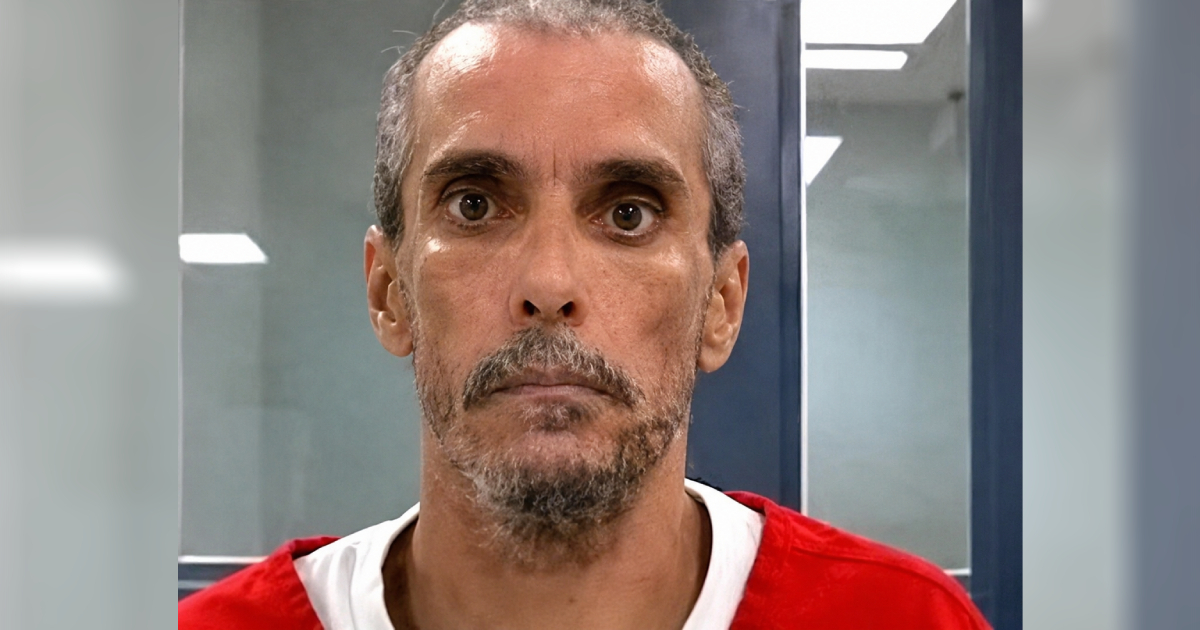
On Tuesday, the White House released a mugshot of Cuban citizen Héctor Hechavarría Rivaflecha, categorizing him among the most dangerous foreign criminals in the United States. This move is part of its "Worst of the Worst" campaign targeting undocumented immigrants with severe criminal records.
A message on the social media platform X highlighted the Trump administration's focus on removing "the worst of the worst criminal illegal immigrants" from American streets.
In a series of posts, the White House showcased several migrants apprehended by the Immigration and Customs Enforcement (ICE) in the past week. These individuals, including Hechavarría, a Florida resident, have been convicted or are accused of violent crimes.
The Department of Homeland Security (DHS) formally announced his arrest on May 14 during National Police Week. According to the federal agency's statement, Hechavarría has convictions for premeditated murder, aggravated assault with a deadly weapon, and assaulting individuals aged 65 or older—all committed in Miami, Florida.
The Miami Incident
The DHS did not disclose the details leading to Hechavarría's convictions. However, reports from the Miami Police cited by NBC Miami recount an incident from February 2014. At that time, Hechavarría, then 43, entered Presidente Supermarket in Little Havana on SW 8th Street wielding a sword. He threatened to kill everyone present and struck a woman in the arm.
The supermarket's security guard, José Antonio Mendoza, 47, confronted him and was hit on the head. Mendoza subsequently fired his weapon several times at the attacker, as reported by former Miami Police spokesperson Kenia Reyes. Both were taken to the Ryder Trauma Center, with Hechavarría in critical condition and Mendoza stable.
Immigration and Crime
Hechavarría initially faced two counts of attempted premeditated murder with a deadly weapon. CiberCuba has not confirmed whether the incident at Presidente Supermarket is directly related to the crimes listed by DHS in their recent statement.
The federal agency regularly reports on the arrests of undocumented immigrants with serious criminal backgrounds, including murder, child sexual abuse, assault with deadly weapons, drug trafficking, and other offenses.
As part of the "Worst of the Worst" initiative, the Trump administration has consistently publicized the arrests and deportations of what it considers "the most dangerous foreign criminals," who pose a threat to public and national security. Earlier this year, the White House highlighted the arrest of another Cuban during an immigration operation in February.
Increasing Arrests and Deportations
ICE's arrests of Cubans surged by 463% between October 2024 and January 2026. During this period, the approval of permanent residencies for Cuban nationals plummeted by 99.8%, dropping from over 10,000 approvals per month to just 15 in January.
Corresponding with the rise in arrests, deportations have also escalated. Between January 2025 and April 2026, President Donald Trump's administration returned 1,992 Cubans to Cuba.
However, the majority of deportations are directed to third countries due to Havana's reluctance to accept nationals with criminal histories in the U.S. residing there since before 2017.
While no official statistics have been released, it is reported that at least 6,000 Cubans were deported to Mexico in the past year—a number that could be even higher. Additionally, other Cuban citizens have been sent to African nations and Ecuador.
Understanding the "Worst of the Worst" Campaign
What is the "Worst of the Worst" campaign?
The "Worst of the Worst" campaign is an initiative by the Trump administration aimed at targeting and deporting undocumented immigrants with serious criminal records from the United States.
Why are Cuban nationals being deported to third countries?
Many Cuban nationals are deported to third countries because the Cuban government is unwilling to accept individuals with criminal histories who have lived in the U.S. since before 2017.
How has the approval rate for Cuban permanent residencies changed?
The approval rate for Cuban permanent residencies has dramatically decreased by 99.8%, from over 10,000 approvals monthly to just 15 in January during the period from October 2024 to January 2026.