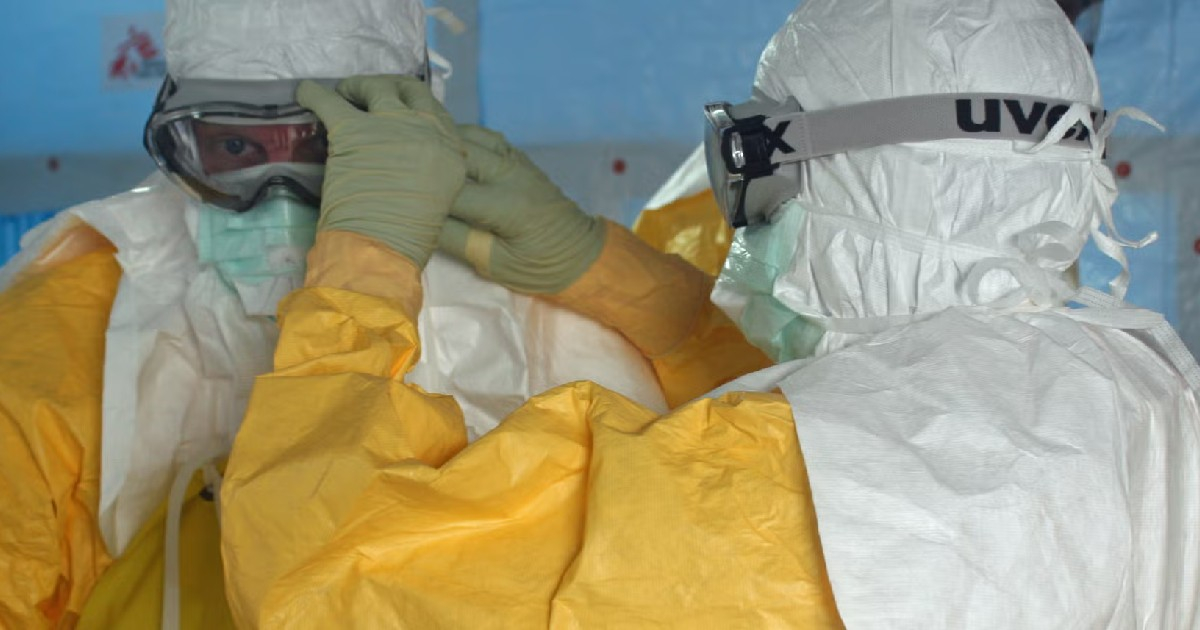
The United States Department of State has issued a Level 4 travel advisory—"Do Not Travel"—for the Democratic Republic of the Congo (DRC), South Sudan, and Uganda amid the escalating outbreak of the Bundibugyo Ebola virus, which has already resulted in over 130 deaths in the area.
In an official statement released Tuesday on its social media platform, the State Department "strongly urged" U.S. citizens to avoid traveling to these three nations "under any circumstances" and to reconsider plans to visit Rwanda, which has been elevated to a Level 3 alert.
Additionally, for Rwanda, there is a specific restriction advising against approaching within 10 kilometers of the DRC border.
Unprecedented Travel Warnings Issued
Issuing simultaneous Level 4 alerts for three African countries due to the same health crisis is exceptionally rare within the State Department's advisory system, typically reserved for scenarios involving war, extreme terrorism, or severe health emergencies.
The outbreak is centered in the Ituri province, located in the troubled eastern region of the DRC. The World Health Organization (WHO) first received an alert on May 5, when reports surfaced of an unidentified disease with a high fatality rate in Mongbwalu, including the deaths of four healthcare workers in just four days. The outbreak was officially declared on May 15, marking the seventeenth occurrence in the DRC since the virus was first identified in 1976.
Discrepancies in Fatality Reports
There are varying reports on the number of victims: Congolese Health Minister Roger Kamba noted 131 probable deaths, while Government Spokesperson Patrick Muyaya reported 116 suspected fatalities. The WHO confirmed 88 deaths, including a case in Uganda, and warned that "the outbreak is potentially much larger than currently detected."
The virus has reached Kinshasa—the capital—and Goma, with confirmed cases in Kampala and near the Congolese border in South Sudan. Muyaya expressed concern that "the spread of the disease to new areas raises worries about the risk of further transmission in densely populated regions characterized by significant population movements."
International Response and Challenges
A day earlier, the U.S. Centers for Disease Control and Prevention (CDC) announced a 30-day entry restriction for non-U.S. citizens who had been in Uganda, DRC, or South Sudan within the previous 21 days, effective immediately.
The Bundibugyo strain lacks an approved vaccine or specific treatment, unlike the Zaire variant. Its fatality rate ranges from 25% to 40%, according to Doctors Without Borders. This is only the third outbreak of this strain in history, following those in Uganda between 2007 and 2008, and in the DRC in 2012.
Efforts to control the outbreak face significant hurdles: over 100 armed groups operate in Ituri, and more than 273,000 people are internally displaced, as per the United Nations, complicating medical deployment and encouraging unsafe burial practices that accelerate transmission.
The WHO declared the outbreak a Public Health Emergency of International Concern on May 16, dispatching 18 tons of medical supplies to the region. Global fear is mounting as Ebola continues to spread to new cities and countries in the area.
Key Questions About the Ebola Outbreak
What is the current travel advisory for the affected countries?
The U.S. Department of State has issued a Level 4 "Do Not Travel" advisory for the Democratic Republic of the Congo, South Sudan, and Uganda.
Why is this Ebola outbreak considered particularly dangerous?
This outbreak is considered highly dangerous due to its rapid spread across borders, high fatality rate, and lack of an approved vaccine or treatment for the Bundibugyo strain.
What are the challenges faced in controlling the outbreak?
Control efforts are hindered by the presence of armed groups, significant internal displacement, and unsafe burial practices that accelerate the virus's transmission.