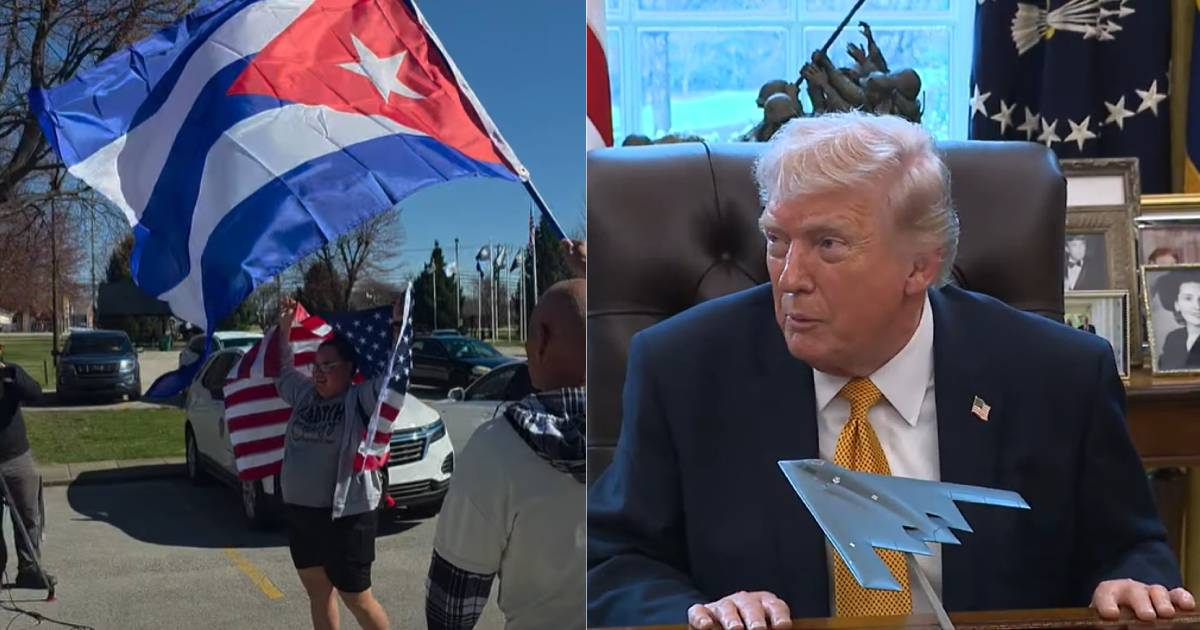
On Tuesday, President Donald Trump expressed his deep admiration for Cuban Americans, describing them as "remarkable individuals" who have endured significant hardships, including the loss of loved ones and imprisonment. His remarks, shared via a video on social media, also hinted at the possibility of diplomatic negotiations with Cuba.
"I am extremely proud of Cuban Americans. They have been truly remarkable people. Many have lost family members, suffered greatly, and experienced imprisonment," Trump stated.
When questioned about the possibility of "a diplomatic deal with Cuba," the president responded affirmatively, saying, "I believe so. Yes, I do believe so."
These remarks are part of a series of compliments directed at the Cuban American community throughout 2026. Back in March, Trump praised them as "highly entrepreneurial and very intelligent," highlighting the Fanjul family as a prime example of business success, noting their inability to visit Cuba for approximately 50 years.
During a March 10 appearance at Trump National Doral in Miami, the president described Cuban American entrepreneurs as "the most successful" in the United States.
This comes amid heightened diplomatic tensions and activity between Washington and Havana, unprecedented in decades. On May 14 and 15, CIA Director John Ratcliffe visited Havana, engaging with Cuban officials, including Raúl Guillermo Rodríguez Castro, Raúl Castro's grandson, to convey Washington's willingness to discuss economic and security matters in exchange for "fundamental changes."
Following this visit, Trump was resolute: "They will need to come to us."
The previous negotiations in April collapsed after Miguel Díaz-Canel's regime rejected an ultimatum to release political prisoners like Luis Manuel Otero Alcántara and Maykel Osorbo, with the deadline passing on April 24 without resolution.
The regime then established "red lines" and refused to negotiate its sovereignty, while Díaz-Canel declared that "no aggressor will bend Cuba's will."
Trump's strategy combines gestures of openness with maximum pressure. On May 1, he signed an executive order expanding sanctions against regime officials in the energy, defense, metals, and finance sectors, and on May 2, he threatened to deploy the USS Abraham Lincoln aircraft carrier to Cuban waters.
Recently, Politico reported that "the odds of Trump launching an attack on Cuba are increasing," as the Cuban American base in Florida shows signs of division between those supporting pragmatic agreements and those demanding the regime's complete overthrow as a non-negotiable condition.
Understanding Trump's Approach to Cuban Americans and Cuba Relations
Why does Trump hold Cuban Americans in high regard?
Trump values Cuban Americans for their resilience, entrepreneurial spirit, and the significant hardships they've overcome, making them a key demographic in his political strategy.
What is the current status of diplomatic relations between the US and Cuba?
Diplomatic relations remain tense, with ongoing negotiations and significant demands from both sides. The US seeks fundamental changes from the Cuban regime in exchange for economic and security discussions.
What are the main points of contention in US-Cuba negotiations?
Key issues include the release of political prisoners, economic reforms, and the Cuban regime's sovereignty. The US has imposed conditions that Cuba has so far refused to meet.