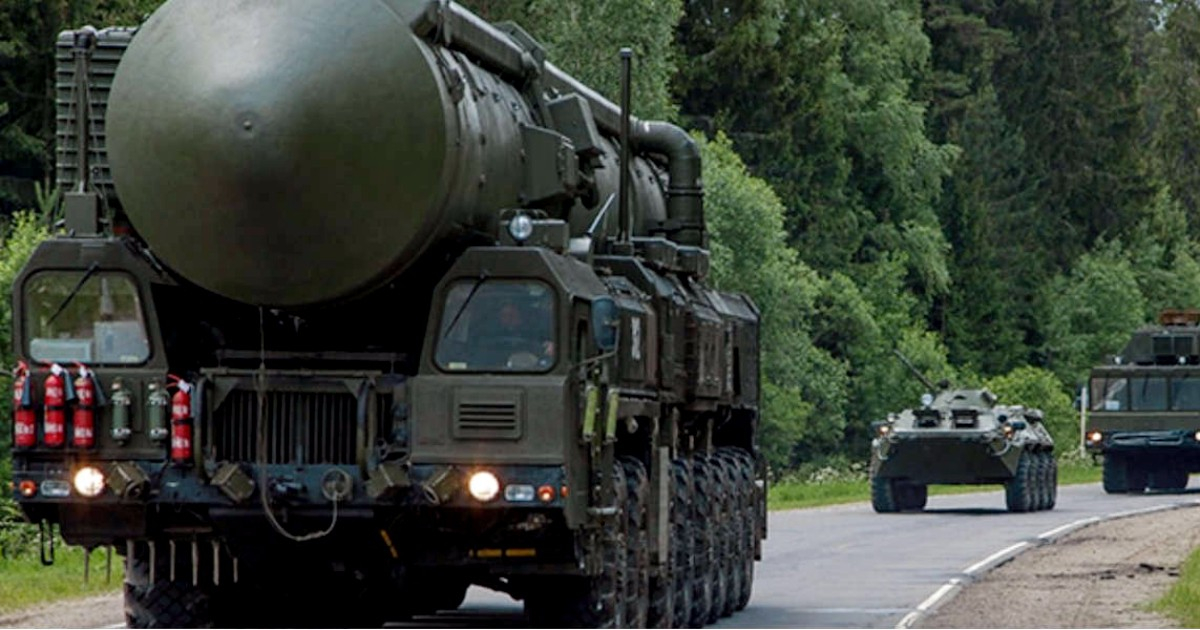
This Tuesday, Russia and Belarus initiated joint military exercises focusing on nuclear weaponry, set to continue until May 21. These maneuvers, described by the Russian Defense Ministry, aim to prepare and deploy nuclear forces under the threat of aggression.
According to a BBC report, the drills involve more than 64,000 military personnel and over 7,800 pieces of equipment, including more than 200 missile launchers, over 140 aircraft, 73 surface ships, and 13 submarines.
Participating forces include the Strategic Missile Forces, the Northern and Pacific fleets, long-range aviation, and units from the Leningrad and Central Military Districts. Additionally, Moscow confirmed that the exercises include the preparation and joint use of nuclear weapons stationed in Belarus, effectively positioning Minsk as an active platform for Russian nuclear deterrence near NATO borders.
On the previous day, the Belarusian Defense Ministry announced its own nuclear exercises coordinated with Russia, preceding the joint announcement.
The Ukrainian Foreign Ministry responded harshly, labeling the drills as an "unprecedented challenge to global security architecture" and accused both regimes of violating Articles I and II of the Nuclear Non-Proliferation Treaty (NPT), which prohibit nuclear states from transferring control of weapons of mass destruction and non-nuclear states from receiving them.
Kiev emphasized that by turning Belarus into a nuclear base near NATO's borders, the Kremlin is effectively legitimizing nuclear proliferation worldwide and setting a dangerous precedent for other authoritarian regimes.
Ukraine demanded a significant increase in sanctions against Moscow and Minsk, more military support for Kiev, enhanced allied presence on NATO's eastern flank, and deeper security cooperation with Ukraine.
These exercises are not unprecedented. In September 2025, Russia and Belarus conducted the Zapad-2025 joint drills, which included training with nuclear and hypersonic systems, such as the Oreshnik missile, near the Atlantic Alliance's borders.
Back in May 2024, Putin had already ordered maneuvers for non-strategic nuclear forces in response to what Moscow described as "threats and provocative statements" from the West.
The international context heightens concerns: on February 5, 2026, the New START treaty—the last bilateral nuclear arms control agreement between the United States and Russia—expired without renewal or replacement, removing the final verifiable limits on both powers' strategic arsenals.
Belarus, having forsaken Soviet nuclear weapons in the 1990s and signed the NPT as a non-nuclear state, has effectively reversed this stance since Putin announced the deployment of Russian tactical nuclear weapons on its territory in March 2023, completed by June of that year.
Ukraine warned that "the audacity of Moscow and Minsk, which have deliberately crossed all of the NPT's red lines, cannot go unanswered by the Euro-Atlantic community and the rest of the world."
Impact of Joint Nuclear Drills on Global Security
What are the main objectives of the joint exercises by Russia and Belarus?
The primary goal of these joint exercises is to prepare and deploy nuclear forces under conditions perceived as aggressive threats.
How has Ukraine reacted to these military drills?
Ukraine has condemned the drills as an unprecedented challenge to global security and accused Russia and Belarus of breaching the Nuclear Non-Proliferation Treaty.
What was the significance of the New START treaty's expiration?
The expiration of the New START treaty eliminated the last verifiable limits on the strategic arsenals of the United States and Russia, raising global security concerns.