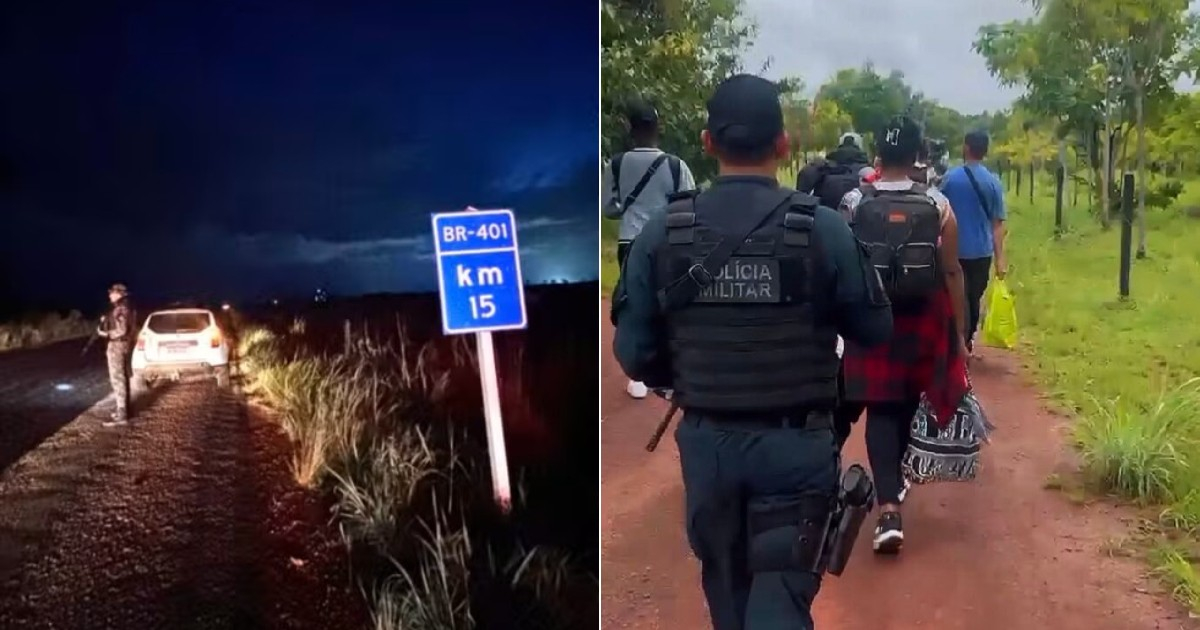
In a series of police operations conducted over the past week, authorities have identified the unlawful entry of more than 40 Cuban nationals, among them seven children, through various points along the Brazil-Guyana border in the state of Roraima. These actions led to the arrest of two individuals suspected of facilitating illegal migration.
Two separate incidents, occurring on May 12 and 16 in different northern municipalities of Roraima, highlight the ongoing activities of human trafficking networks in this border region and the increasing influx of Cuban migrants seeking better living conditions in South America.
Police Interventions Uncover Human Trafficking
On Tuesday, May 12, during a routine patrol by the Roraima Military Police (PMRR) along the banks of the Tacutu River in Bonfim, officers discovered a vehicle parked near "Porto do Mateus." Upon inspecting the nearby forest area, they heard voices and found 31 Cuban nationals.
The group, consisting of 14 men, 12 women, and five children, reportedly crossed the river in canoes from Guyana. Authorities detained a man suspected of promoting illegal immigration in the border area. The 31 Cuban migrants were transported to the Federal Police checkpoint in Bonfim, while the suspect, the vehicle, and seized materials were taken to the Federal Police Regional Superintendency in Boa Vista.
Second Incident Highlights Risky Migration Practices
The second operation took place four days later, on Saturday night, when Military Police officers intercepted a vehicle on BR-401 highway in the municipality of Cantá, a region notorious for cross-border crimes like smuggling and human trafficking.
Upon requesting the driver to lower the rear windows, officers discovered the car lacked back seats, instead cramming 10 Cubans — eight adults and two children aged two and four — alongside their luggage in precarious conditions. The 27-year-old driver admitted to picking up the passengers in Lethem, Guyana, charging $50 per person for transport. He was arrested, and the case was recorded as promoting illegal migration, with the added charge of subjecting victims to inhumane or degrading conditions.
Escalating Migration and Enforcement Efforts
Since 2026, border operations in northern Brazil have intensified. In February, the Civil Police launched "Operação Malecón" against a network recruiting Cubans on the island and smuggling them through the Guyana border. In April, three family members were arrested for transporting 20 Cubans by road from Guyana.
The most common route begins in Cuba, leading to Guyana — the only country in the region not requiring a visa for Cubans — followed by a land or river crossing into Roraima, and ending with distribution southward into Brazil.
Migrant flow from Cuba to Brazil surged in 2025, with asylum applications exceeding 41,900, marking an 88% increase from 2024. This made Cubans the largest group seeking asylum in Brazil, surpassing Venezuelans.
This surge is attributed to Cuba's economic collapse and the closure of the northern route to the United States. Between 2010 and 2024, Brazil received 52,373 Cuban asylum requests, a figure nearly matched in the first nine months of 2025 alone.
Understanding the Cuban Migration Surge to Brazil
What factors contribute to the increase in Cuban migration to Brazil?
The rise in Cuban migration to Brazil is primarily due to the economic collapse in Cuba and the closure of migration routes to the United States, leading many Cubans to seek better opportunities in South America.
Why is Guyana a key point in the migration route from Cuba to Brazil?
Guyana does not require a visa for Cuban nationals, making it an accessible entry point for Cubans beginning their journey to Brazil, where they cross into Roraima either by land or river.