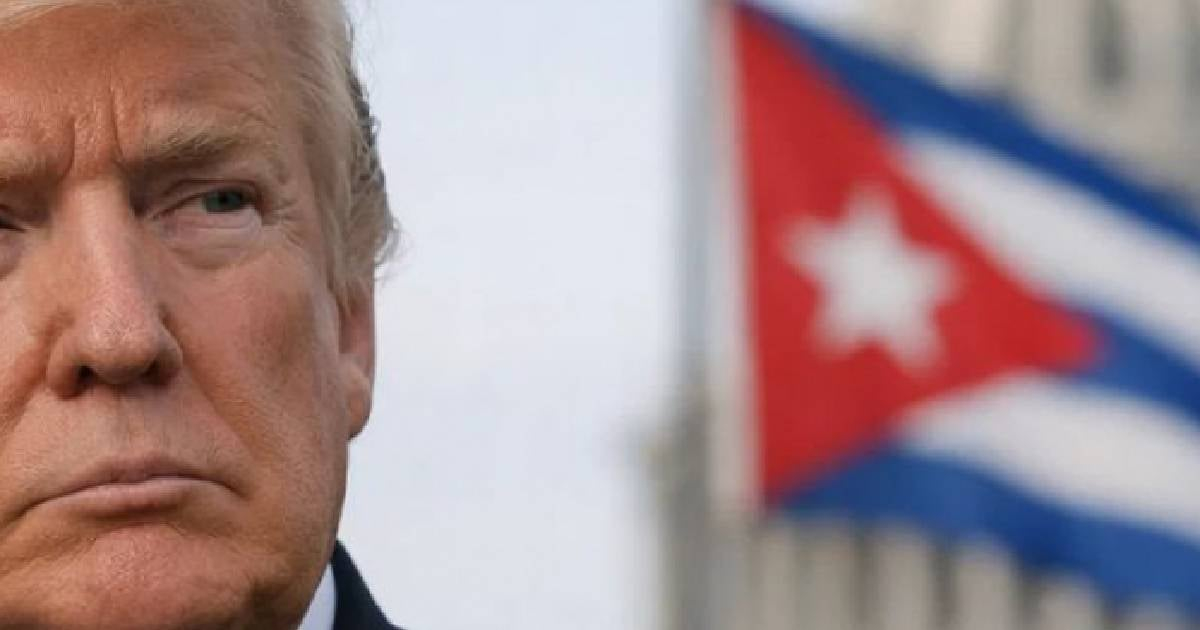
The Trump administration is increasingly contemplating military intervention in Cuba, marking a significant shift from the economic and diplomatic pressure tactics previously employed, according to an article by Politico foreign affairs correspondent Nahal Toosi.
Both a U.S. official and an individual familiar with the internal discussions confirmed to Politico that President Trump and his advisors are growing frustrated with the ineffective pressure campaign—which includes a fuel blockade—aimed at forcing the Cuban regime to embrace substantial economic and political reforms.
"The mood has definitely shifted," noted a source familiar with the discussions. "Initially, the belief was that Cuba's leadership was weak and that a combination of intensified sanctions, essentially a petroleum blockade, along with U.S. military successes in Venezuela and Iran would compel the Cubans to negotiate. Now, the situation in Iran has become more complicated, and the Cubans are proving to be much tougher than anticipated. As a result, military action is now on the table in a way it wasn't before," the source added.
Military Planning Underway
In recent weeks, the U.S. Southern Command has initiated a series of planning sessions, beginning to draft potential military action plans, according to both sources. Options range from targeted airstrikes intended to exert pressure on the regime to a full-scale ground invasion aimed at overthrowing it.
A White House official emphasized that "it's the Pentagon's job to make preparations to provide the commander-in-chief with maximum options," while clarifying that "this does not imply the president has made a decision."
Escalating Tensions
Secretary of State Marco Rubio, who also serves as a national security advisor, suggested in a Fox News interview that time is running out: "We'll give them a chance. But I don't think it's going to happen. I don't believe we can change Cuba's trajectory while these people are in charge."
This strategic pivot occurs amid several escalation signals. Over the weekend, Axios reported that Cuba acquired hundreds of military drones with backing from Russia and Iran, discussing ways to deploy them should hostilities arise. Many national security analysts viewed this report as a leak intended to justify potential U.S. military action.
Additionally, CIA Director John Ratcliffe's visit to Havana last Thursday—the highest-level direct contact between the two nations on Cuban soil since 2016—conveyed that Cuba "can no longer serve as a platform for adversaries to advance hostile agendas in our hemisphere." Meanwhile, the Department of Justice is reportedly preparing criminal charges against 94-year-old Raúl Castro for the 1996 shootdown of Brothers to the Rescue planes.
Cuban Response and U.S. Strategy
Cuban President Miguel Díaz-Canel responded on Monday via X, warning that a U.S. military aggression "would provoke a bloodbath with unpredictable consequences."
Politico's sources ruled out the involvement of Cuban exiles in any mission: "They've concluded that exiles have no role here except as cheerleaders and gadflies. This won't be Bay of Pigs 2.0."
A U.S. official harshly criticized the regime's paralysis: "The system is so calcified and consensus-based. They live in an alternate reality and literally do not care about the Cuban people."
The Senate rejected a Democratic initiative on April 29, with a 51 to 47 vote, to limit Trump's ability to order military action against Cuba without Congressional approval, leaving the president with significant freedom under the War Powers Act.
Brian Latell, a former senior CIA official with expertise in Cuba, cautioned against underestimating the regime's resilience: "They might attempt a relatively small operation, but if that's what they're considering, they may again be overestimating what they could achieve."
Key Considerations on Potential U.S. Military Action in Cuba
What has prompted the Trump administration to consider military action against Cuba?
The administration's frustration with the failure of economic pressure tactics, including a fuel blockade, to compel the Cuban regime to implement significant reforms has led to the consideration of military options.
What military options are being considered by the U.S.?
Options range from targeted airstrikes to exert pressure on the Cuban regime to a full-scale ground invasion aimed at regime change.
What recent developments have escalated tensions between the U.S. and Cuba?
Recent developments include Cuba's acquisition of military drones with support from Russia and Iran, CIA Director John Ratcliffe's visit to Havana, and the preparation of criminal charges against Raúl Castro by the Department of Justice.