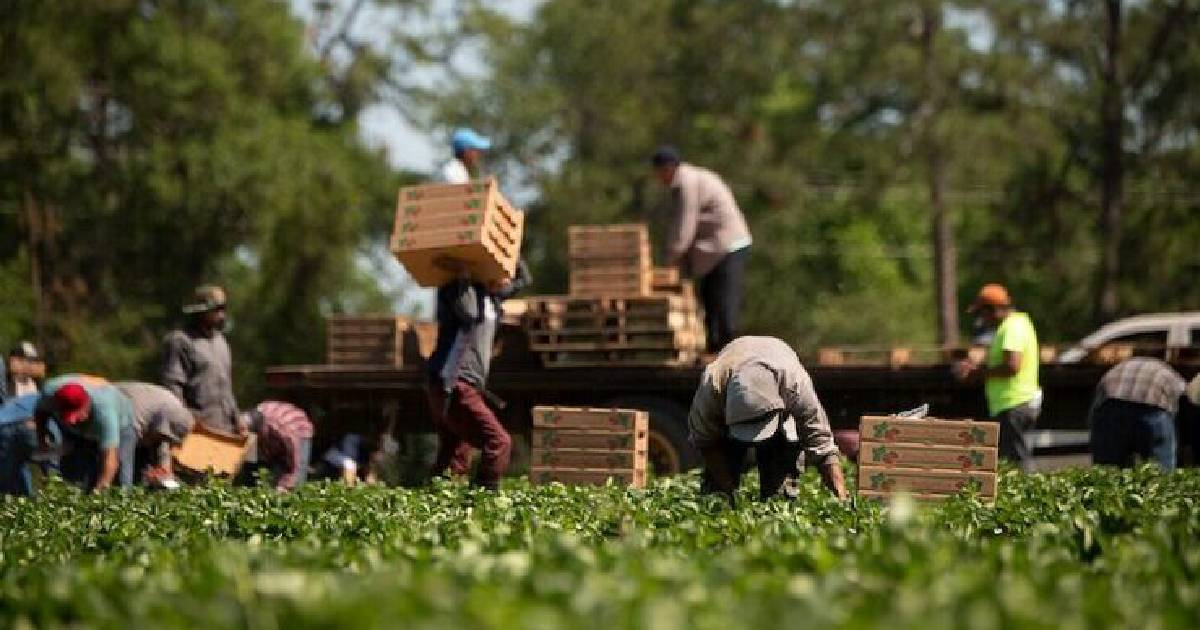
In the first quarter of 2026, U.S. agricultural and food exports to Cuba totaled $102.8 million, a significant drop from $129.8 million during the same period in 2025. This represents a year-on-year decline of 20.8%, as reported by the U.S.-Cuba Trade and Economic Council this month.
This decline is starkly different from the record high of fiscal year 2025, when U.S. agricultural exports to Cuba reached $476.1 million, marking a 19.4% increase over fiscal year 2024.
The downturn in early 2026 breaks the previous upward trend and occurs amidst the Trump-Vance administration's tightening sanctions against the Cuban regime.
In March 2026, however, there was a slight improvement: exports rose to $36.9 million, up 0.85% from March 2025, although still below the $40.6 million recorded in March 2024.
The earlier months were harsher: in January 2026, exports suffered a 21.7% year-on-year drop, and in February, the decrease reached 36.6%, bringing the quarterly total to its lowest level in years.
Current Standing in U.S. Agricultural Trade
Cuba ranks as the 51st largest market among 219 for U.S. agricultural exports, slightly improving from the 52nd position the previous year, indicating the island's demand remains significant in U.S. agribusiness.
In terms of bilateral trade, exports of vehicles and fuels to Cuba's private sector show consistent growth.
Vehicle and Fuel Exports Growth
Since 2022, the cumulative value of vehicle exports, including electric vehicles, gasoline-powered cars, bicycles, motorcycles, trucks, and parts, has surpassed $253 million, with $27.2 million recorded in early 2026 alone.
Simultaneously, Cuba imported $11.6 million in fuels from the U.S. in the first quarter of 2026, with a significant 75.6% concentrated in March—totaling $8.78 million—allocated exclusively to the private sector, explicitly excluding the government, Armed Forces, and state entities.
This selective approach is central to the Trump-Vance administration's strategy, applying maximum pressure on the Cuban state while embracing the island's emerging private sector.
Impact of the Energy Crisis and Political Sanctions
The reduction in agricultural imports coincides with Cuba's worst energy crisis in decades. Following the capture of Nicolás Maduro on January 3, 2026, Venezuela halted its subsidized crude shipments of around 26,000 barrels per day, and Mexico ceased its deliveries nine days later under U.S. pressure.
Cuba requires between 100,000 and 110,000 barrels daily to meet total demand, but domestic production only covers about 40%, resulting in power outages lasting up to 30 hours a day.
The new sanctions against GAESA announced by Marco Rubio on May 7, coupled with Trump's May 1 Executive Order on repression in Cuba, bring the total sanctions against the regime to over 240 since January 2026.
In April 2026, the UN warned that the energy crisis is having a "systemic and increasingly severe" impact in Cuba, with a humanitarian plan aimed at assisting two million people across 63 municipalities in eight provinces, facing a funding shortfall of nearly $60 million out of the $94 million needed.
Frequently Asked Questions about U.S.-Cuba Agricultural Trade
What caused the decline in U.S. agricultural exports to Cuba in 2026?
The decline is attributed to the tightening of sanctions by the Trump-Vance administration against the Cuban regime, disrupting previous growth trends.
How has Cuba's energy crisis affected its economy?
Cuba's energy crisis, exacerbated by halted oil shipments from Venezuela and Mexico, has led to severe power outages and has strained the country's economic stability.
What is the U.S. strategy towards Cuba's private sector?
The U.S. strategy under the Trump-Vance administration involves applying pressure on the Cuban government while selectively opening trade with the island's private sector.