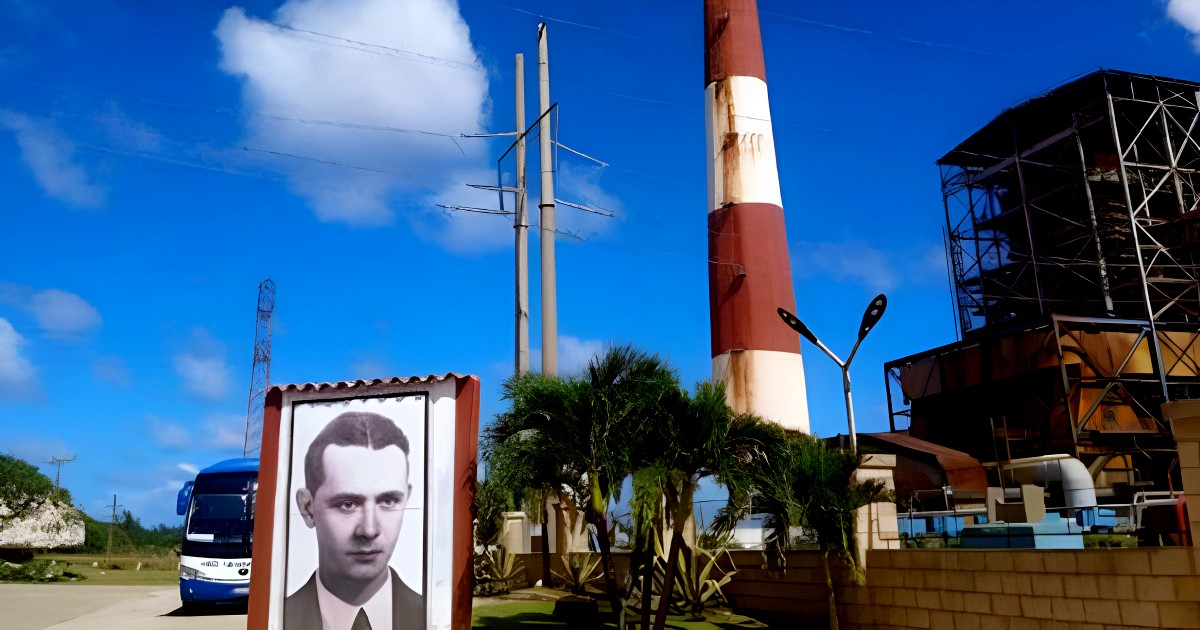
The Antonio Guiteras thermoelectric power plant, Cuba's largest single power generation unit, reconnected to the National Electric System (SEN) at 11:06 p.m. on Sunday, reaching 200 MW. However, its delayed re-entry was insufficient to avert a widespread blackout throughout the island.
According to a statement from the Electric Union released on Monday, the peak power outage on Sunday reached 2,119 MW at 10:00 p.m., surpassing planned limits due to the absence of both the CTE Guiteras unit and unit 2 of the CTE Santa Cruz.
As of 6:00 a.m. on Monday, the situation remained dire. The SEN had only 1,150 MW available against a demand of 2,720 MW, resulting in 1,520 MW of power shortages at that time.
Bleak Outlook for Power Supply
The forecast for Monday night is equally grim. The Electric Union anticipates an availability of merely 1,150 MW to meet a maximum demand of 3,200 MW, leading to a projected shortfall of 2,050 MW and an estimated disruption of 2,080 MW during peak hours.
Adding to the woes, a new malfunction occurred on Monday morning. Unit 4 of the CTE Carlos Manuel de Céspedes went offline at 8:52 a.m. due to an emergency shutdown caused by a condenser leak, as reported by the state-owned company.
Ongoing Technical Challenges
Active malfunctions have also sidelined units 1 of the CTE Ernesto Guevara De La Serna, unit 2 of the CTE Lidio Ramón Pérez, and units 3 and 5 of the CTE Antonio Maceo, while three other units remain under maintenance. Thermal generation limitations have left 516 MW out of service.
Román Pérez Castañeda, the general director of the CTE Antonio Guiteras, informed Girón that the plant reconnected at 11:06 p.m. on Sunday, reaching 200 MW output. During its downtime, over 200 maintenance tasks were performed, including measures to mitigate risks from cyclones and heavy rains.
Maintenance Efforts and Challenges
Key repairs included a failed tube in the high-temperature reducer, two failed tubes in the economizer, and a sealing issue on the furnace floor. The director acknowledged that the economizer failure prevented proper water circulation, as water leaked from the damaged area, prolonging repair processes.
The recent shutdown leading to Sunday’s reconnection marked the ninth malfunction of the Guiteras plant so far in 2026.
The plant had exited the SEN last Wednesday at 4:58 a.m. due to a boiler leak, just five days after being reconnected on May 9 following approximately 90 hours of repairs and nearly 300 corrective actions.
On Sunday, Cuba’s 54 solar photovoltaic parks contributed 3,365 MWh, with a peak output of 501 MW at noon. However, their generation is exclusively during daylight hours and fails to cover the nighttime peak, which is when the largest deficits occur.
The electric crisis of May 2026 stands as the most severe of the year. On May 13, a record deficit of 2,153 MW was recorded at 9:30 p.m., and the following day, after the Guiteras plant's failure, availability plummeted to 636 MW, resulting in blackouts lasting up to 20 hours daily in Havana and outages from Ciego de Ávila to Guantánamo.
Cuba's Ongoing Energy Crisis: Key Questions
What is causing the frequent power outages in Cuba?
The power outages are primarily due to technical malfunctions in major power plants, such as the Antonio Guiteras, and insufficient power generation capacity to meet the demand.
How is the Cuban government addressing the power crisis?
The government is attempting to address the crisis through maintenance and repair of existing power plants, as well as exploring alternative energy sources like solar power, although these efforts have yet to resolve the power shortages.