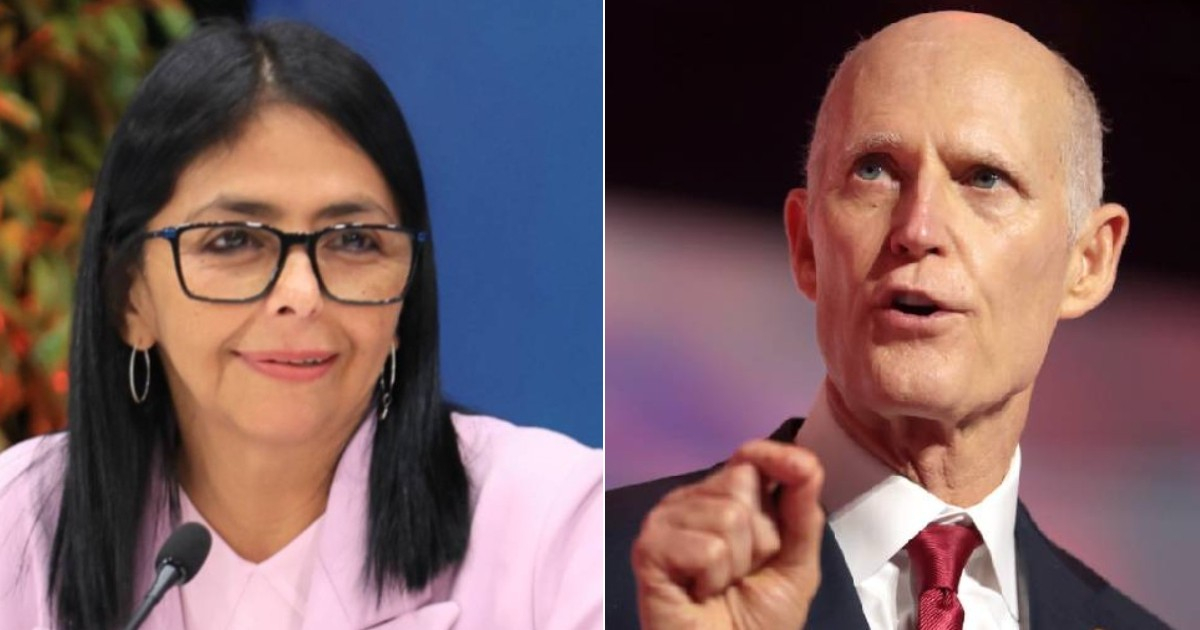
U.S. Senator Rick Scott has placed the blame squarely on the Venezuelan government for the death of 83-year-old Carmen Navas, the mother of political prisoner Víctor Hugo Quero. He called for Delcy Rodríguez to face justice, describing the situation as a crime against humanity.
In a statement posted on social media platform X, Scott was unequivocal: "The Venezuelan regime KILLED Carmen Navas through torture, cruelty, and the evil they inflicted on her and her son, Víctor Hugo Quero."
Scott painted a vivid picture of Carmen Navas as "the face of the Venezuelan dictatorship's brutality," detailing the relentless cruelty she endured. "They kidnapped her son, concealed his death for months, and forced a mother to search from prison to prison while they already knew he was dead," he elaborated.
The senator concluded with a stern warning: "Delcy Rodríguez and every thug involved in this crime against humanity WILL be brought to justice. We will not rest until they face the justice they deserve and ALL POLITICAL PRISONERS ARE FREED."
Carmen Navas passed away on Sunday after nearly 16 months of searching Venezuelan prisons for her son, never informed by authorities that Quero had been dead for months.
The Tragic Case of Víctor Hugo Quero
Víctor Hugo Quero was apprehended on January 1, 2025, near Plaza Venezuela in Caracas, accused of terrorism, criminal conspiracy, and treason—allegedly detained for "looking foreign."
He died in custody on July 24, 2025, and his body was secretly buried six days later without his family's knowledge. In October 2025, both the Public Defender's Office and the Venezuelan Attorney General's Office continued to claim Quero was still detained, months after his death.
The Venezuelan government did not publicly acknowledge his death until May 7, 2026, nine months after it occurred. Carmen Navas was finally able to say goodbye to her son shortly before her own passing, witnessing the exhumation and attending a memorial service in Caracas.
A Mother's Heartbreaking Farewell
In her final public words, Carmen Navas encapsulated her ordeal: "I haven't wanted to speak to the press; they killed my son; they never let me see him. A mother's pain is unmatched."
Vente Venezuela, led by María Corina Machado, demanded justice for Navas's death, declaring: "Her death is the cry of thousands of mothers torn apart by persecution. May her courage drive us to see Venezuela free from torture and secrecy."
This is not the first time Scott has targeted Rodríguez over this issue. On May 8, following the revelation of Quero's death, he called for the U.S. to reimpose sanctions on Rodríguez, who had been removed from the OFAC sanctions list on April 1, 2026, and labeled her as "the head of a cartel."
Continuing Pattern of Abuse
The case aligns with a documented pattern: at least 27 individuals detained for political reasons have died in Venezuelan state custody since 2014, with at least eight political prisoners dying in Venezuelan jails since July 2024.
Despite the Amnesty Law enacted by Rodríguez on February 19, 2026, the Penal Forum verified only 768 actual releases compared to the 8,616 claimed by the government. On April 25, Rodríguez announced the end of amnesty while hundreds of political prisoners remained incarcerated.
Understanding the Crisis in Venezuela
What led to Carmen Navas's death?
Carmen Navas died after a grueling 16-month search for her son, Víctor Hugo Quero, who died in custody but whose death was concealed by Venezuelan authorities.
What accusations were made against Víctor Hugo Quero?
Víctor Hugo Quero was accused of terrorism, criminal conspiracy, and treason, reportedly detained for "looking foreign."
How has the Venezuelan government responded to political prisoner deaths?
The Venezuelan government has shown a pattern of concealing deaths of political detainees, acknowledged only after significant delays, as seen in the case of Víctor Hugo Quero.