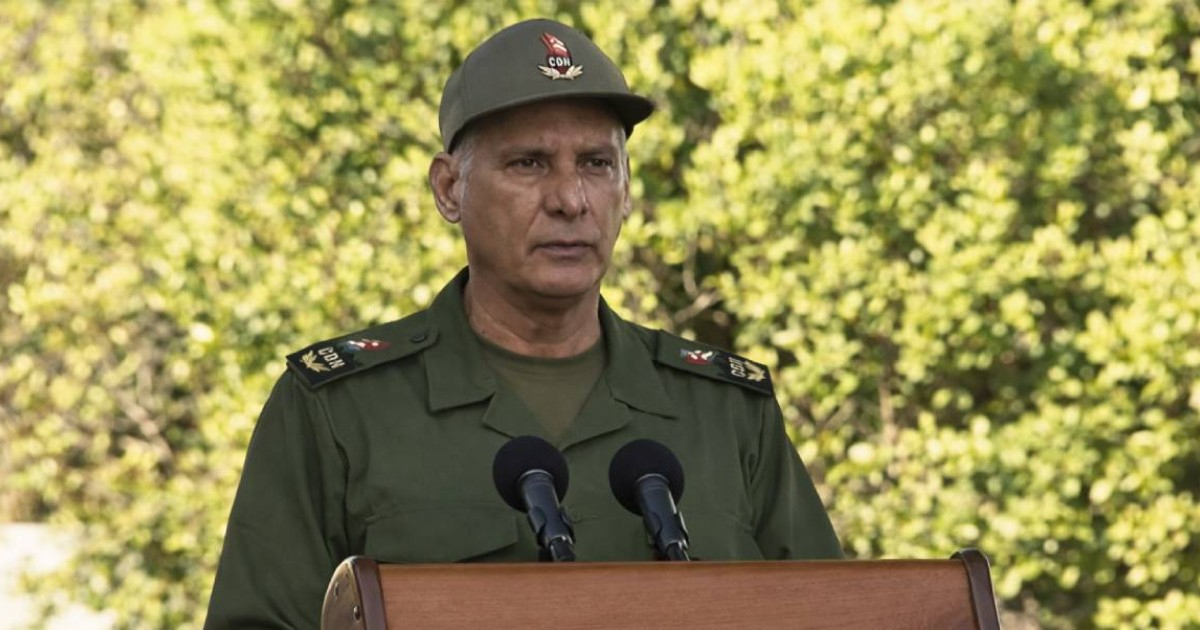
Miguel Díaz-Canel has issued a stern warning that any military action by the United States against Cuba will trigger "bloodshed of immeasurable consequences." He condemned Washington's threats as "an international crime" even before they materialize.
"The mere threat already constitutes an international crime. Should it happen, it will lead to bloodshed with unpredictable outcomes, along with a destructive impact on regional peace and stability," Díaz-Canel posted Monday on X.
This statement from the Cuban leader comes on the heels of a report by Axios, which cited classified U.S. intelligence suggesting that Cuba has acquired over 300 military drones.
Allegedly, these drones have been sourced from Russia and Iran since 2023, with Cuban officials reportedly discussing their potential use against the Guantanamo Naval Base, U.S. military vessels, and possibly Key West, Florida.
"Cuba poses no threat and has no aggressive plans or intentions against any country. This includes the United States, with whom we have never harbored such intentions, a fact well known by their government, particularly their defense and national security agencies," Díaz-Canel asserted.
He further emphasized that Cuba "has the absolute and legitimate right to defend itself against military aggression," rejecting any notion that this could be "logically or honestly" used as a pretext to wage war on the Cuban people.
Historical Context of "Bloodshed" Rhetoric
The term "bloodshed" is not new in the Cuban government's discourse during this crisis. Foreign Minister Bruno Rodríguez Parrilla previously used it on May 8 to warn of the consequences of U.S. military action.
On Sunday, the Cuban Foreign Ministry also posted on X: "If Cuba is attacked, it will exercise its right to legitimate defense," while Deputy Foreign Minister Carlos Fernández de Cossío labeled the U.S. as the aggressor.
Recent Developments and Military Tensions
The escalation has recent roots. On May 7, Trump administration officials informed AP that a military option against Cuba was "on the table," though no imminent action was planned.
On May 13, Defense Secretary Pete Hegseth told Congress that Cuba poses a threat to U.S. national security. The Republican Senate blocked a Democratic initiative for the second time to limit Trump's war powers over the island.
On May 1, Trump signed an executive order expanding sanctions against the regime in the energy, defense, mining, and financial services sectors.
Cuban Military Preparations
In response, the Cuban regime has declared 2026 as the "Year of Defense Preparation." The Ministry of the Revolutionary Armed Forces (MINFAR) conducts weekly civilian military exercises using AK-47 rifles, drones, and anti-tank mines under slogans like "For Cuba, there is no alternative: victory or death."
Despite the fiery rhetoric, a quiet negotiation has been underway for over two months between Washington and Havana. This included a visit by CIA Director John Ratcliffe to Havana and a $100 million humanitarian aid offer—comprising food, medicine, and satellite internet via Starlink—conditioned on its distribution by the Catholic Church and independent organizations, not the Cuban state.
Frequently Asked Questions on U.S.-Cuba Tensions
What prompted Díaz-Canel's warning to the U.S.?
Díaz-Canel's warning was a response to potential U.S. military aggression against Cuba, following reports that Cuba acquired military drones from Russia and Iran.
What is the significance of the drones acquired by Cuba?
The drones, reportedly acquired from Russia and Iran, have raised concerns due to discussions about their potential use against U.S. military targets, including the Guantanamo Naval Base.
How has the U.S. government responded to the situation?
The U.S. has expanded sanctions against Cuba and is considering military options, though no immediate action has been planned. Negotiations are ongoing for humanitarian aid.
What is Cuba's stance on defending itself?
Cuba asserts its right to defend itself against aggression and denies having any aggressive intentions towards the U.S. or other countries.