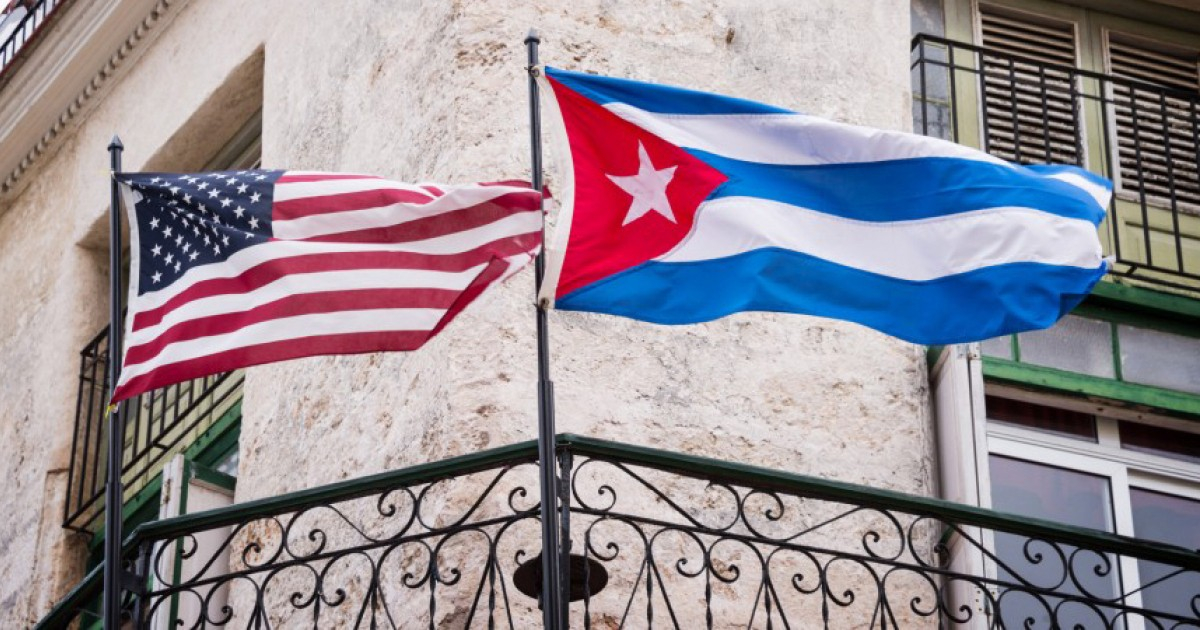
The Communist Party of Cuba (PCC) took to its official account on X this Sunday, asserting that the United States is attempting to resurrect a "failed Cuba," specifically referencing the era under dictator Fulgencio Batista. The PCC claims that the current embargo and military threats are designed with this goal in mind.
This statement comes amidst escalating tensions between Havana and Washington, which intensified on May 1st. On that day, President Donald Trump threatened to deploy the USS Abraham Lincoln aircraft carrier off the Cuban coast and signed a new executive order that tightens sanctions on Cuba, affecting the energy, defense, mining, and financial services sectors.
In their post, the PCC invokes Batista’s rule to support their argument, stating that during his nearly seven-year regime, over three billion pesos were manipulated through public collections and securities. They claim that Batista used a network of frontmen, intermediaries, accomplices, partners, and lawyers to conceal his interests in approximately 70 companies.
The U.S. Connection to Batista's Regime
The single-party system further accuses Washington of never hiding its support for Batista’s regime. "The U.S. government entrenched itself in convenient neutrality whenever the dictator's continual human rights violations were raised, and made significant arms deliveries to the dictatorship," the PCC stated.
The message concludes by equating current U.S. pressure with historical support: "That was the Cuba that failed: the one that bowed to Yankee designs, resorted to torture and servitude, prioritized the few and the Empire's desires over the people's needs. It's to bring back that scenario that they now block and threaten us militarily."
Propaganda Campaign Intensifies
This tweet is the latest in a propaganda campaign the regime has maintained since early May. On May 2nd, Díaz-Canel responded to Trump with the slogan "No aggressor, no matter how powerful, will find surrender in Cuba," and the following day warned delegates from 36 countries of the "imminence of a military aggression," invoking the "War of the Entire People" doctrine.
Cuban Foreign Minister Bruno Rodríguez Parrilla labeled Trump's remarks as a "new clear and direct threat of military aggression," while Cuba's ambassador to the UN, Ernesto Soberón Guzmán, stated that words like "surrender" or "capitulate" are not part of the Cuban vocabulary.
The Economic Reality in Cuba
This narrative starkly contrasts with the daily reality faced by Cubans. Economist Pedro Monreal cautioned that Cuba's GDP contraction could reach 15% by 2026, matching the worst year of the Special Period, while the Economic Commission for Latin America and the Caribbean (ECLAC) predicts a 6.5% decrease, the steepest in Latin America and the Caribbean.
Since January 2026, the Trump administration has imposed over 240 sanctions on Cuba, including Executive Order 14380 on January 29th, which declared the Island a threat to U.S. national security and enforced an energy embargo.
The PCC concluded its post with the hashtags #CubaEstáFirme and #LaPatriaSeDefiende, as large areas of the country endure power outages lasting up to 25 hours daily and widespread shortages that regime critics attribute to more than six decades of the communist government's policies.
Understanding U.S.-Cuba Relations
What is the PCC's main accusation against the U.S.?
The PCC accuses the United States of trying to reinstate a "failed Cuba," referring to the Batista era, using the embargo and military threats to achieve this.
How has the Trump administration responded to Cuba?
The Trump administration increased tensions by threatening military action and tightening sanctions on sectors like energy, defense, and finance.
How does the current economic situation in Cuba compare to the past?
Economists warn that the current economic contraction could reach levels similar to the worst year of the Special Period, with a projected GDP decrease of 15% by 2026.