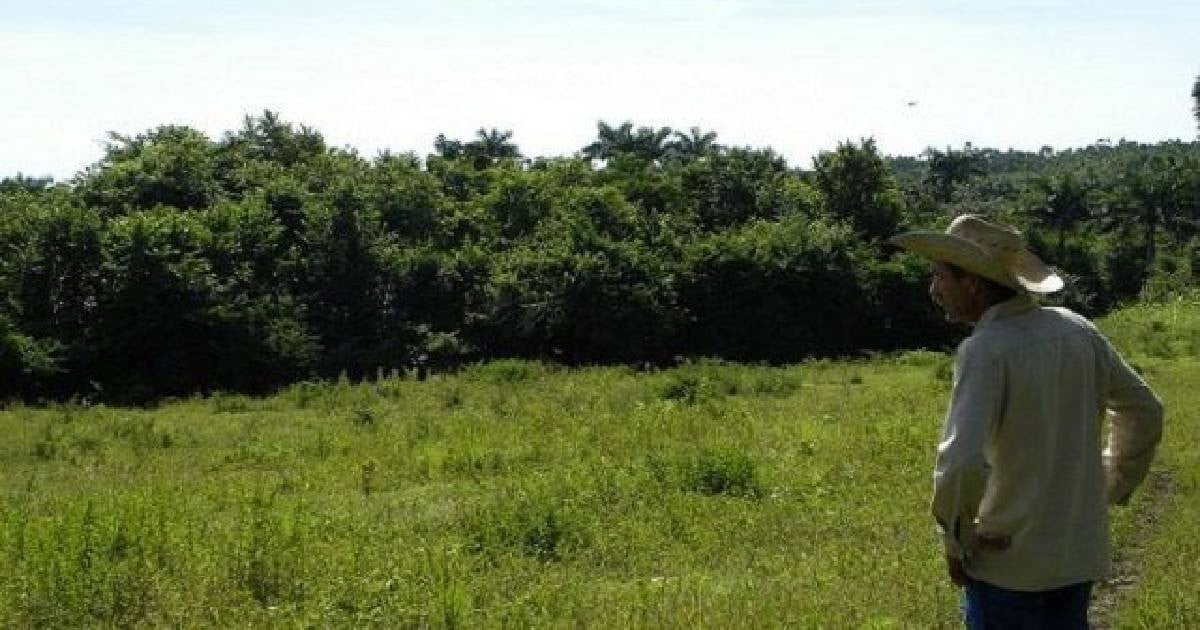
Today, Cuba observes Farmers' Day and marks the 67th anniversary of the First Agrarian Reform Law with official ceremonies across the nation. However, the stark reality of the agricultural sector stands in sharp contrast to the official rhetoric. Markets are barren or prices are prohibitively high for most citizens, with production in decline and bureaucratic hurdles stifling producers.
In Granma province, a provincial event took place on Saturday at the VIII Congreso credit and services cooperative in Yara municipality, led by Yudelkis Ortiz Barceló, the Communist Party's first secretary in the province.
Leyanis Manso Martí, president of the National Association of Small Farmers (ANAP) in the eastern province, reiterated their commitment to boosting key crops like rice, tubers, and vegetables. Awards were presented to the municipality of Yara and outstanding cooperatives and producers, as reported by the state newspaper La Demajagua.
The gap between this narrative and reality is immense. Orlando Lorenzo Linares Morell, president of the Cuban Agricultural Business Group, recently acknowledged that rice production plummeted from 304,000 tons in 2018 to a mere 111,000 tons in 2025, constituting just 36% of the level seven years ago. He admitted that this figure "is not significant on the Cuban table."
The planting campaign by the end of April only reached 70% completion, and agricultural aviation has come to a complete halt. Due to a lack of fuel, the sector has reverted to using oxen, buffaloes, horses, windmills, and solar pumps.
"We have the equipment, but not enough fuel," Linares Morell confessed.
The energy crisis is directly impacting the food supply chain. Energy and Mines Minister Vicente de la O Levy acknowledged on Wednesday that Cuba "has absolutely no fuel, no diesel, only accompanying gas."
In Guantánamo, the fuel shortage for pasteurization processes means raw milk must be distributed directly from the farm to stores for children aged two to six years.
"Directly, because it doesn't undergo pasteurization due to the energy contingency we face," explained Adriel Leiva Elías, director of the Dairy Products Company in Cuba's easternmost province.
In addition to structural obstacles, state bureaucracy is another hurdle. In April, the private company Havana Agro SURL reported that the Institute of Agricultural Engineering within the Ministry of Agriculture consistently creates deliberate obstacles to prevent producers from accessing agricultural machinery, leading the company to announce plans to limit its operations on the island.
Although the government formally declared the end of the Acopio monopoly in April with Decree 143, the regulation still upholds extensive state control mechanisms. The system has accumulated millions in debt to farmers; in Havana alone, it owed nearly 200 million pesos to producers.
Prices in agricultural markets are beyond the reach of most. A carton of eggs costs 3,800 Cuban pesos, imported rice ranges from 690 to 840 pesos per kilogram, and a basic minimum grocery shopping accounts for more than 56% of the average monthly salary of 6,930 pesos.
The Food Monitor Program estimates that 96.91% of the population lacks adequate access to food.
Economist Pedro Monreal has pointed out that the current Cuban agricultural crisis is more severe than the Special Period of the 1990s.
Even President Miguel Díaz-Canel inadvertently summed up the scale of the collapse on May 3, stating, "We will eat what we are capable of producing."
Key Issues in Cuban Agriculture
What is the current state of rice production in Cuba?
Rice production in Cuba has significantly declined, dropping from 304,000 tons in 2018 to just 111,000 tons projected for 2025, which represents only 36% of the production level from seven years ago.
How is the energy crisis affecting Cuban agriculture?
The energy crisis has led to a halt in agricultural aviation and a reversion to manual and animal-powered farming methods due to a lack of fuel, severely affecting agricultural productivity and the food supply chain.
What are the challenges faced by Cuban farmers due to bureaucratic obstacles?
Cuban farmers face significant bureaucratic challenges, including intentional obstacles from the Ministry of Agriculture that hamper access to necessary machinery, limiting their ability to increase production and efficiency.