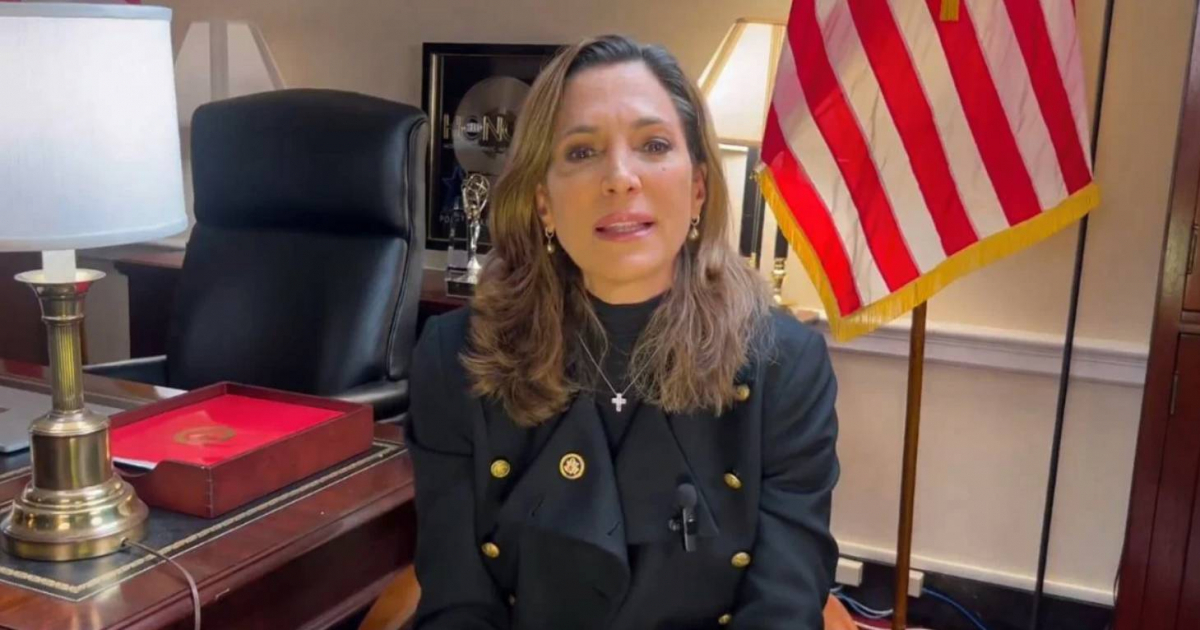
Republican Congresswoman María Elvira Salazar issued a stark warning on Sunday about the potential threat posed by military drones reportedly acquired by the Cuban regime. She emphasized that these drones could be a "direct threat to the national security" of the United States, following an exclusive report by Axios that suggests Cuba has incorporated approximately 300 of these unmanned aerial vehicles.
In her post on X, Salazar referenced the exclusive report by Marc Caputo from Axios, which detailed that the Cuban regime may have started deliberations on deploying these drones against the Guantánamo Bay Naval Base, U.S. military vessels, and possibly Key West, lying a mere 90 miles from Havana.
"The world has witnessed the destructive potential of drones in the hands of hostile regimes, and having such capabilities just 90 miles from Florida should alarm every American," Salazar pointed out.
She further added, "A dictatorship aligned with America's adversaries operating so close to our shores is not merely a regional issue. It is a direct threat to our national security."
The Axios report, drawing from intelligence sources, indicates that since 2023, Cuba may have been acquiring attack drones from Russia and Iran, which are being stored at various locations on the island.
A senior official from the Trump administration, cited in the report, expressed heightened concern over the drones' potential use, especially combined with the presence of Iranian military advisors in Havana and Russian and Chinese signal intelligence facilities on Cuban soil.
This report, based on classified intelligence and inputs from unnamed officials, suggests over "300 drones" as an unverified claim pending official confirmation.
Salazar's cautionary statement comes shortly after Secretary of Defense Pete Hegseth informed Congress that the Cuban regime posed a threat to U.S. national security. This was in response to a direct question from Congressman Mario Díaz-Balart on May 12.
During the same congressional session, Hegseth confirmed that Russian ships, including the nuclear submarine Kazan, have docked at Cuban ports. He also raised concerns over the Russian intelligence complex in Lourdes.
The diplomatic situation remains tense. Last Wednesday and Thursday, CIA Director John Ratcliffe made a historic visit to Havana, conveying a message from President Trump. The president expressed willingness to engage in discussions on economic and security matters, contingent upon "fundamental changes" in Cuba.
The CIA notably shared official images of Ratcliffe's visit on X, tagged with "Havana, Cuba," a rare move for an intelligence agency, cautioning the regime that "the opportunity window won't stay open indefinitely."
Throughout May, Salazar has consistently highlighted Cuba as a national security threat. On May 12, she described the situation as "a clear and present danger to the United States" following Hegseth's testimony. By May 14, she asserted that "the United States cannot pretend" to overlook the Cuban crisis.
Since February of 2026, the U.S. has significantly increased reconnaissance flights near Cuba—The New York Times reported at least 25 surveillance flights as of May 13—amid a continuous hardening of Washington's stance towards Havana.
Understanding the Potential Cuban Drone Threat
What is the nature of the drone threat from Cuba?
The concern is that Cuba has acquired military drones potentially for use against U.S. targets such as the Guantánamo Bay Naval Base, military ships, and Key West, posing a national security risk.
How has the U.S. responded to the drone threat from Cuba?
The U.S. has intensified reconnaissance efforts near Cuba, with increased surveillance flights, and is maintaining a firm diplomatic stance demanding changes in the Cuban regime.
What are the implications of Cuba's alliances with Russia and Iran regarding drone capabilities?
Cuba's alliances with Russia and Iran may enhance its drone capabilities, raising concerns due to the presence of military advisors and intelligence facilities from these countries on Cuban soil.