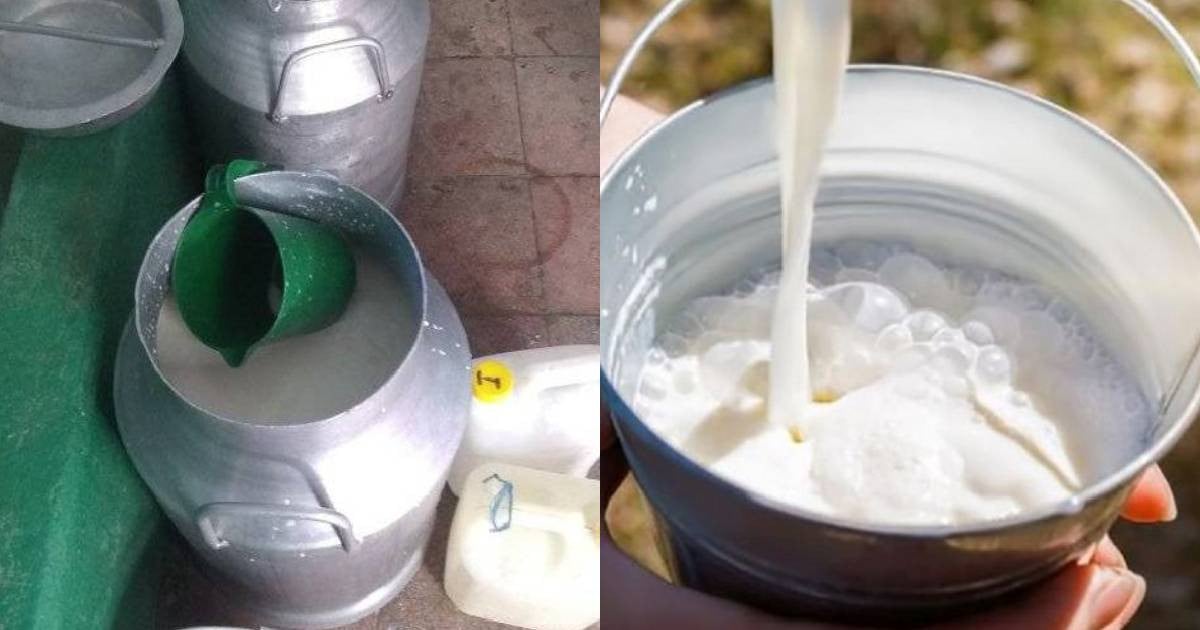
As Cuba grapples with a severe energy crisis, the Dairy Products Company in Guantánamo is now compelled to supply unpasteurized milk directly from farms to local stores. The delivery schedule for children aged two to six has been extended from three days to four, as reported this past Saturday.
According to Adriel Leiva Elías, the company's director, the lack of fuel oil necessary for operating the pasteurization boiler has forced them to deliver raw milk directly to distribution points.
"Due to the energy contingency, we can't pasteurize the milk because we lack the fuel oil needed for the boiler. Therefore, it is delivered straight from the farm to the store," Leiva Elías explained to Radio Guantánamo.
In response to this situation, authorities are placing health responsibilities on families. "We advise the population to shorten the cooking time, from milking the cow to home pasteurization," he suggested.
Delivery Schedule Adjustments
The delivery cycle has been modified from three days to four, with each eligible child receiving one liter of fluid milk. Children under two years old will continue receiving powdered milk instead of fluid milk.
Starting Monday, internal direct deliveries will occur in the municipalities of San Salvador and Manuel Tames without transferring surplus to Guantánamo city. In Niceto Pérez, milk distribution will prioritize children aged two to six, followed by those with dietary needs and pregnant women. Any remaining milk will be sold directly to the public through local food services.
In Guantánamo city, electric tricycles will be used for local collection due to the lack of fuel for conventional vehicles, ensuring supply to the General Hospital, Children's Hospital, and Maternity Home.
Widespread Energy Struggles
This decision comes amid Cuba's worst energy crisis in decades. The Minister of Energy and Mines, Vicente de la O Levy, acknowledged last Wednesday that the country is completely out of fuel oil and diesel, relying solely on accompanying gas.
On that same day, the National Electric System faced a historic shortfall of 2,174 MW, with only 976 MW available against a demand of 3,150 MW, resulting in power outages affecting nearly 70% of the nation.
Similar issues are evident in other provinces. In March, Matanzas halted infant milk distribution for weeks due to fuel shortages, while in Camagüey, producers resorted to animal traction and bicycles for transporting milk to collection centers.
In April, a complaint in Las Tunas exposed milk adulterated with water intended for children, with a density of 16.5 g/mL compared to the standard 30 g/mL.
Health Risks of Raw Milk
Providing unpasteurized milk to children aged two to six poses significant health risks. According to the Centers for Disease Control and Prevention (CDC) and the World Health Organization, raw milk can harbor bacteria like E. coli, Salmonella, Listeria, and Campylobacter, which can cause severe kidney complications in children under five.
Cuba's dairy production has plummeted by 37.6%, now producing less than 200 million liters annually against a demand of 500 million. The country has lost over 900,000 cattle since 2019.
FAQs on Guantánamo's Milk Distribution Amid Energy Crisis
Why is Guantánamo distributing unpasteurized milk?
Due to an energy crisis, the lack of fuel oil needed for pasteurization has forced the Dairy Products Company to deliver milk directly from farms to stores without pasteurizing it first.
What are the health risks of consuming raw milk?
Raw milk can contain harmful bacteria such as E. coli, Salmonella, Listeria, and Campylobacter, which pose serious health risks, particularly to children under five.
How is the milk delivery schedule changing?
The delivery schedule has been extended from three days to four, with each child aged two to six receiving one liter of milk during this period.