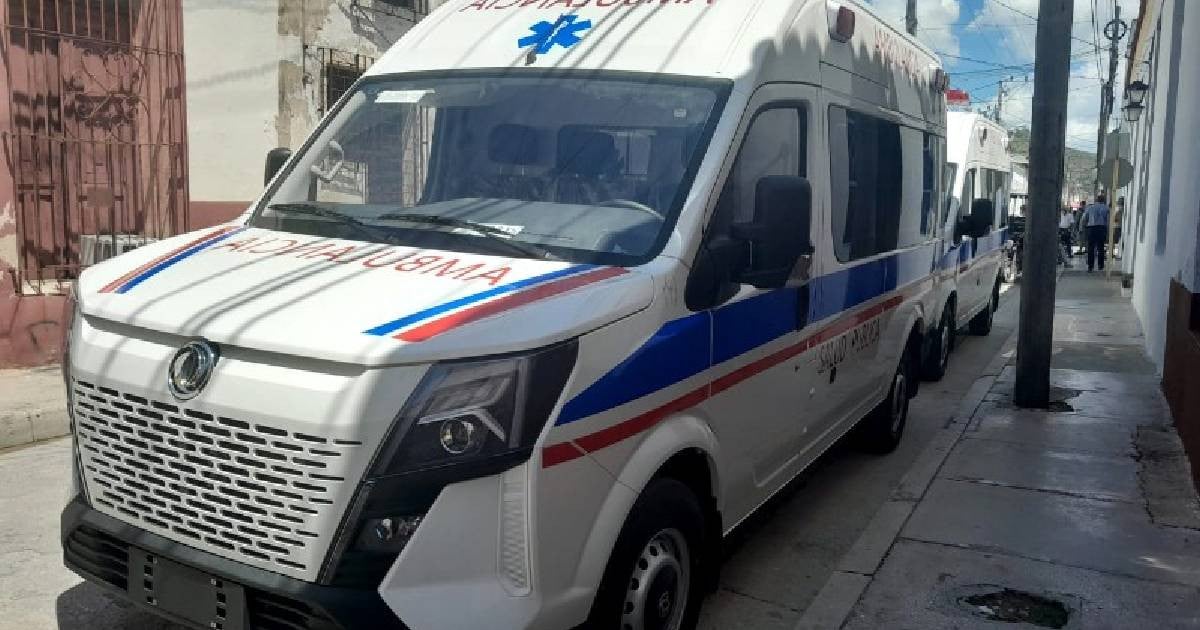
The healthcare system in Holguín province has been bolstered with the arrival of six new ambulances equipped with advanced life support features. These vehicles will be distributed across several municipalities in northeastern Cuba.
The ambulances, manufactured by the Chinese company Dongfeng, offer a fuel efficiency of eight kilometers per liter. They are set to serve the regions of Holguín, Báguanos, Cueto, Banes, Calixto García, and Rafael Freyre, according to the official newspaper ¡Ahora! on Friday.
This allocation is part of a broader initiative by the Ministry of Public Health aimed for completion by 2026, which also includes the addition of four electric ambulances and one more conventional vehicle for Holguín.
The announcement coincides with Pinar del Río receiving five ambulances from the same manufacturer to enhance its emergency services, indicating a phased distribution of medical vehicles across provinces in recent weeks.
Despite these isolated deliveries, they starkly contrast with the severe structural deficit acknowledged by the Ministry of Public Health itself. Nationwide, Cuba only has 39.6% of the ambulances required.
Earlier this year in Matanzas, only 16 out of the 54 needed ambulances were operational, representing less than a third of the required fleet.
In February, the Health Minister, José Ángel Portal Miranda, informed Parliament that Cuba's healthcare system was "on the brink of collapse," exacerbated by power outages lasting up to twenty hours a day, fuel shortages, and an aging vehicle fleet.
A Ministry of Health executive admitted that ambulance wait times could exceed five hours in some instances, a grim reality that has resulted in lost lives.
In April, Alexis Rosales Aldama died in Santiago de Cuba after waiting over four hours for an ambulance; the hospital stated the vehicle couldn't depart until four patients were on board due to fuel scarcity.
In January, former police officer Yordanis Beltrán Beltrán, aged 42, also died in Santiago de Cuba after waiting more than two hours without receiving medical attention.
In response to the crisis, the regime has attempted to mitigate the shortfall with sporadic purchases, including 50 ambulances in January 2026, 25 electric Foton ambulances in February, and Dongfeng vehicles distributed in April and May across various provinces.
Recognizing the crisis's scale, the UN launched a $94.1 million emergency humanitarian plan in March 2026 to assist nearly two million Cubans in 63 municipalities, while the World Health Organization's director-general described the island's healthcare situation as "deeply concerning."
Understanding Cuba's Healthcare Challenges
Why is the Cuban healthcare system facing a crisis?
Cuba's healthcare system is under strain due to a combination of factors including severe shortages of ambulances, frequent power outages, fuel scarcity, and an aging fleet of medical vehicles, which have collectively brought the system to the brink of collapse.
What measures has the Cuban government taken to address the ambulance shortage?
In an effort to address the shortage, the Cuban government has procured new ambulances, including 50 purchased in January 2026, 25 electric ambulances from Foton in February, and several Dongfeng vehicles distributed in April and May.