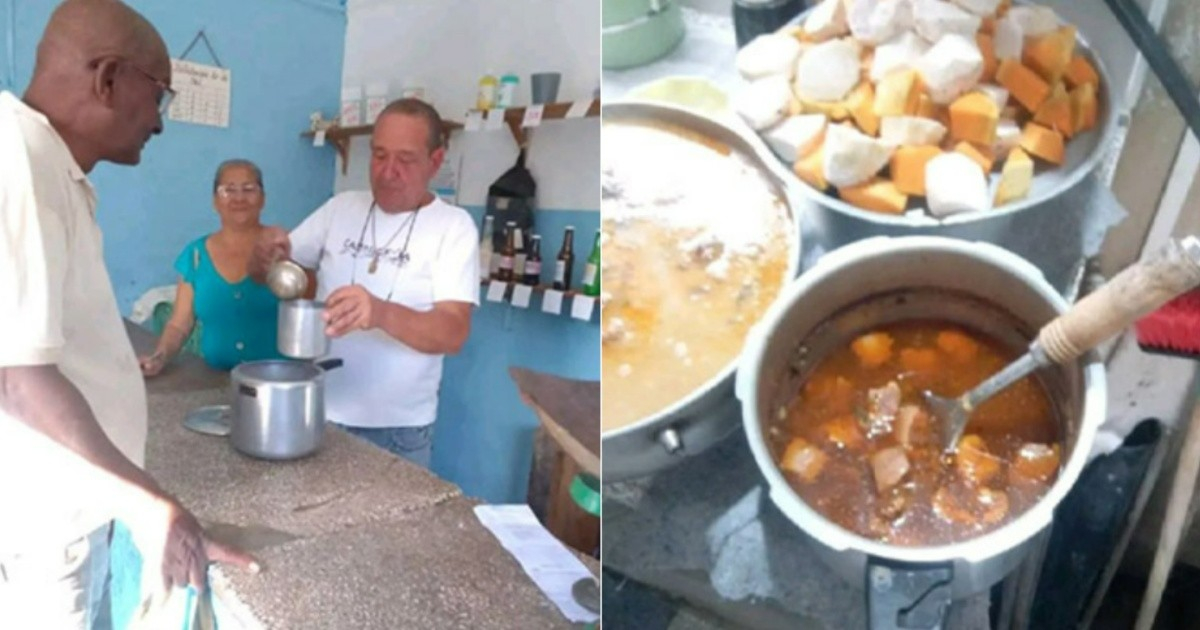
With countless families in Santa Clara and the 13 municipalities of Villa Clara unable to cook at home due to power outages and a lack of domestic fuel, state-run food stalls have become a lifeline, according to a report from the Cuban News Agency last Saturday.
While the government frames this initiative as an act of "solidarity," it is more accurately a desperate response to a crisis they themselves described as "acute, critical, and extremely tense." In May, Villa Clara experienced blackouts lasting up to 20 hours daily, and propane tanks were selling on the black market for as much as 50,000 Cuban pesos.
The food offerings, which include soups, stews, salads, and main dishes, are sold at prices the authorities claim are affordable. The operation involves the Bread and Pastry Production Company, Commerce and Gastronomy, the Villa Clara Food Products Company, EsAzúcar, and agricultural collectives.
Community Reactions
Susely Morfa González, head of the Provincial Defense Council, defended the program with a telling statement: "Any economic measure will assist families." Despite these assurances, local residents express skepticism about the initiative's effectiveness. María Elena Rodríguez from the Camacho community straightforwardly stated, "It doesn't solve the situation, but it's a tremendous relief; plus, it's well-cooked and reasonably priced." Pedro Luis Hernández, from El Gigante, added, "Many people have no means to cook at home."
Energy and Food Crisis Background
The backdrop of this initiative is one of the most severe energy and food crises in modern Cuban history. On May 13, the Electric Union recorded a historic deficit of 2,113 MW, surpassing the previous record of 2,075 MW on March 6. Energy and Mines Minister Vicente de la O Levy revealed that Havana endured blackouts of 20 to 22 hours daily and acknowledged that Cuba did not receive fuel shipments from December 2025 until the end of March 2026.
Simultaneously, the food crisis is worsening. The ration book system, once a staple of survival, has essentially collapsed. Since February, rationed bread in Villa Clara has been limited to children under 13 and seniors over 65, with its weight reduced from 80 to 40 grams per unit and its cost increased from five cents to 75 cents.
History of Similar Measures
This isn't the regime's first attempt at such a temporary fix. A similar measure was implemented in Camagüey in August 2025, amid blackouts, sparking similar skepticism and anger among residents.
Meanwhile, growing desperation has led to protests. The Cuban Conflict Observatory documented 1,133 protests in April 2026, a 29.5% increase from April 2025, with demands like "Electricity and food!" being chanted outside government buildings across the island.
In February, Díaz-Canel unveiled the "Option Zero" contingency plan, which includes severe rationing and enforced local self-sufficiency, further highlighting the regime's lack of a long-term solution to a crisis that has been decades in the making under 67 years of communist dictatorship.
Understanding Villa Clara's Energy and Food Crisis
Why are families in Villa Clara buying prepared meals?
Due to prolonged power outages and a lack of domestic fuel, many families in Villa Clara are unable to cook at home and are turning to state-organized food stalls for prepared meals.
What is the "Option Zero" plan?
The "Option Zero" plan, announced by Díaz-Canel, involves severe rationing and enforced local self-sufficiency in response to Cuba's ongoing energy and food crisis.
How severe are the power outages in Villa Clara?
In May, power outages in Villa Clara reached up to 20 hours daily, with a historic electrical deficit of 2,113 MW recorded.
What measures has the government taken to address the food crisis?
The government has organized the sale of prepared meals at affordable prices and announced the "Option Zero" plan, but these measures have not provided a long-term solution to the food crisis.