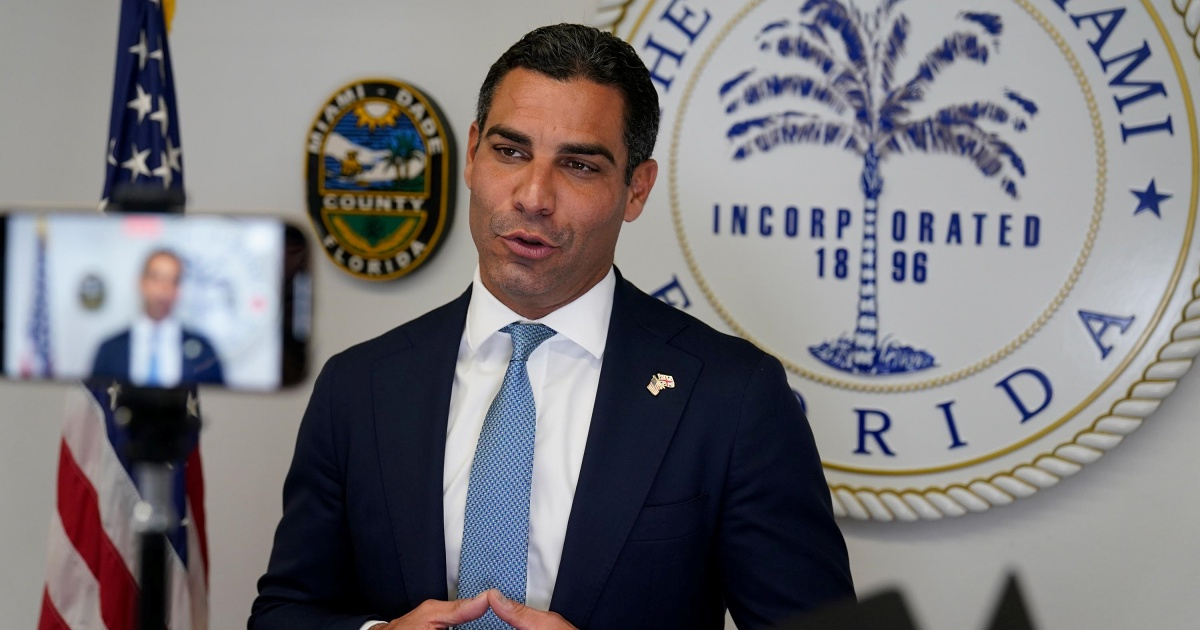
Francis Suarez, a prominent Cuban-American figure within the Republican Party and former mayor of Miami, recently characterized President Donald Trump's policy towards Cuba as the "boa constrictor strategy" during an interview with The Will Cain Show, published on May 15.
"I call it the boa constrictor strategy. He has consistently increased pressure while simultaneously negotiating," Suarez explained, using a metaphor to describe the Trump administration's approach of maximum pressure on Havana's regime.
Suarez indicated that Trump has extended an exit option to Cuban leaders, yet they have refused to take it. "He has given everyone a way out, a chance to leave. Unfortunately, many do not believe in his resolve or will, or for some reason think they cannot or should not leave, leading them to dig in. This has resulted in disastrous consequences," he remarked.
The former mayor cautioned that time is running short: "I believe there will be a small window. If they do not seize this opportunity, my guess is the United States will take action and, frankly, bring about a generational change in this hemisphere once again."
Suarez also highlighted the broader implications of the strategy, pointing out that Cuba acts as a "base of operations" for U.S. adversaries, with direct impacts on illegal immigration and hemispheric security.
Suarez's comments are backed by concrete actions from the administration. On January 20, 2026, Trump reinstated Cuba on the list of State Sponsors of Terrorism. On January 29, he signed Executive Order 14380, declaring a national emergency concerning the island.
On May 1, Trump issued a new executive order targeting the dictatorship, expanding sanctions, blocking assets linked to the regime within U.S. territory, and imposing secondary sanctions on foreign financial institutions dealing with sanctioned Cuban entities.
Since January 2026, the administration has imposed over 240 sanctions against the Cuban regime and intercepted at least seven tankers bound for the island, worsening an energy crisis with blackouts lasting up to 25 hours a day.
On May 6, Secretary of State Marco Rubio sanctioned GAESA—the Cuban military's business conglomerate—its CEO Ania Guillermina Lastres Morera, and Moa Nickel S.A. Trump's sanctions against the Cuban regime have also impacted the Canadian company Sherritt, which reported that the measures materially affected its ability to operate in Cuba.
Marco Rubio's senior advisor on sanctions against GAESA has confirmed that pressure will continue to escalate if the regime does not relent, aligning with Suarez's description: "The president has articulated the strategy. He is executing it. He is applying more pressure."
Understanding Trump's "Boa Constrictor Strategy" on Cuba
What is the "boa constrictor strategy" regarding Cuba?
The "boa constrictor strategy" refers to President Trump's policy of applying maximum pressure on the Cuban regime through a combination of sanctions and diplomatic negotiations, aimed at forcing political change.
How has the Trump administration increased pressure on Cuba?
The administration has re-added Cuba to the list of State Sponsors of Terrorism, issued executive orders expanding sanctions, blocked assets, and imposed secondary sanctions on foreign institutions dealing with Cuban entities.
What consequences has the strategy had on Cuba?
The strategy has led to an energy crisis with extensive blackouts and has strained Cuba's economic relations, particularly affecting companies like the Canadian firm Sherritt.