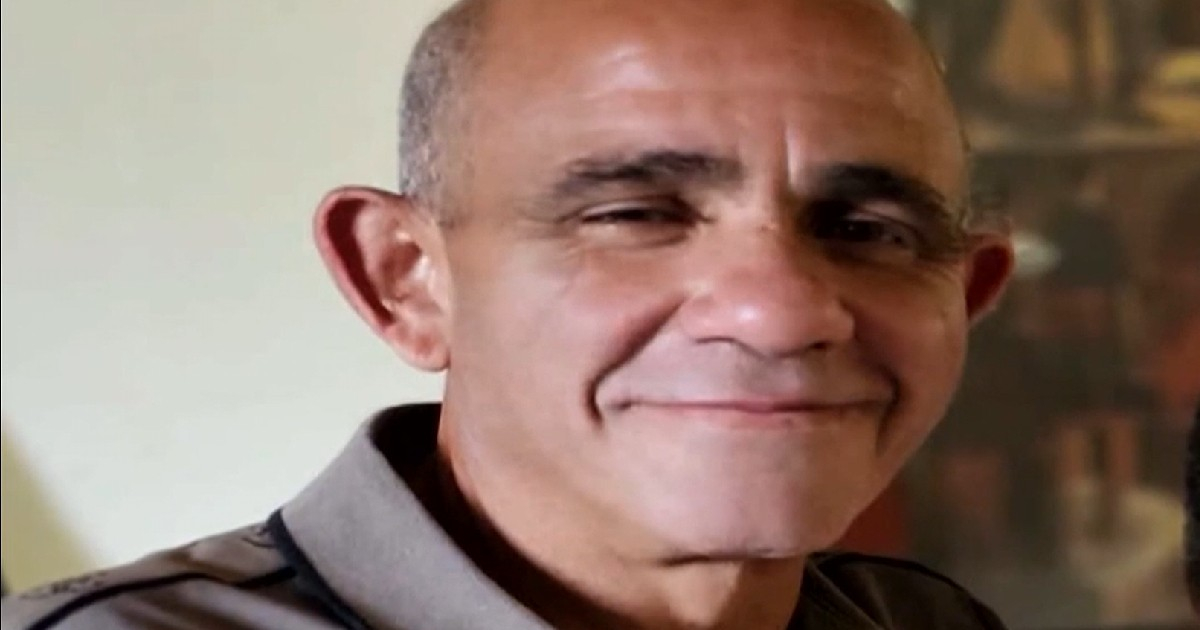
Arianne Betancourt, 33, shared with USA TODAY Network through Reuters Connect the harrowing conditions her father, Justo Betancourt, 54, endured during his six-month confinement at the Alligator Alcatraz immigration center in the Everglades, Florida. He was shackled for up to 23 hours a day, suffered from hunger, and witnessed fellow detainees being pepper-sprayed.
Betancourt’s release came early Thursday morning after District Judge Kyle Dudek granted a habeas corpus petition, proving that his detention was unlawful.
Arianne, along with her two siblings, picked him up around 2:00 a.m. from the Krome North Service Processing Center in Miami, where he had been transferred by van from the swamp-based facility.
"Seeing him step out of the van, so frail and struggling with each step... It's bittersweet because I'm relieved he's home, yet I’m angry about his condition," Arianne expressed.
She described her father as so emaciated that at 125 pounds, she could wrap her arms completely around him.
"Even layered in clothes and a sweatshirt, we hadn't realized how tiny he was beneath it. They don’t feed them properly," Arianne continued.
She further mentioned that her father had been immobile during his detention and spoke with slurred speech, raising concerns about what medical evaluations might reveal.
Betancourt, a type 2 diabetic requiring insulin injections twice daily, was informed at the center that "if he wanted insulin, he could get it in Mexico," according to his daughter.
Their reunion was marred by ICE agents' restrictions: hugs were forbidden upon his exit from Krome, their car was searched, his luggage had to be stored in the trunk, and taking photos or videos was prohibited.
The first embrace occurred at a nearby gas station.
A Case of Mistaken Detention
Betancourt, residing in the U.S. for over 36 years, was detained on October 29, 2025, during a routine annual appointment with ICE, a requirement he fulfilled each year.
Court records indicate he had completed parole following numerous prior convictions.
According to his daughter, he was made to sign an English document he couldn’t comprehend, under the pretense of an annual registry, which was actually an involuntary self-deportation.
Initially detained at Alligator Alcatraz, he was then moved to Krome and later sent to Mexico for deportation. However, Mexico denied his entry, sending him back to the swamp facility until his legal release.
The Notorious Facility Set to Close
Constructed in a mere eight days by order of Governor Ron DeSantis and opened on July 3, 2025, at the Dade-Collier Airport within Big Cypress National Preserve, Alligator Alcatraz faced severe allegations regarding its detention conditions from inception.
Amnesty International released a report in December 2025 branding the treatment at the facility as "torture" by international standards, citing a 60x60 cm punishment cage known as "the box," overflowing toilets, constant artificial lighting, substandard food and water, and the use of pepper spray on detainees.
At Betancourt’s release, the center housed approximately 1,400 detainees, with 700 to 800 being Cuban.
Plans are underway to shut down Alligator Alcatraz by June 2026, partly due to its exorbitant operational costs exceeding one million dollars daily. Florida has yet to receive a federal reimbursement of 608 million dollars.
Frequently Asked Questions About Alligator Alcatraz and Justo Betancourt’s Case
Why was Justo Betancourt detained at Alligator Alcatraz?
Betancourt was detained after signing a document he didn't understand, which was misrepresented as an annual registry but was actually a self-deportation order.
What conditions did detainees face at Alligator Alcatraz?
Detainees faced harsh conditions including prolonged shackling, inadequate food, exposure to pepper spray, and confinement in small punishment cages.
When is Alligator Alcatraz scheduled to close?
Alligator Alcatraz is planned to close by June 2026 due to its high operational costs and numerous human rights complaints.