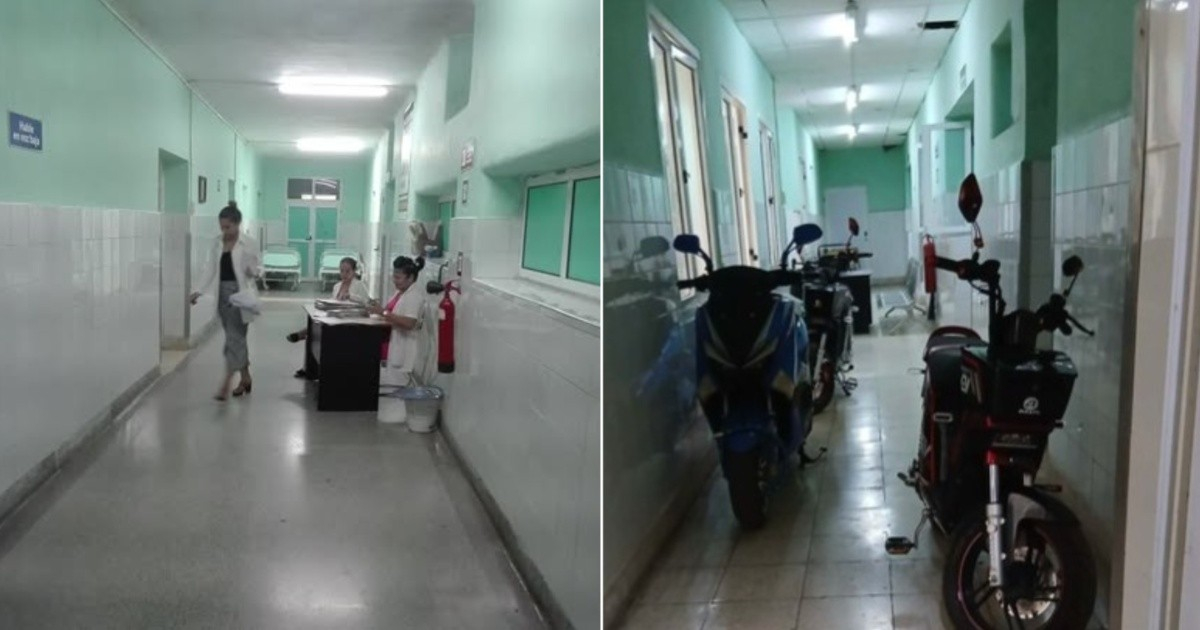
Cuban journalist José Luis Tan Estrada shared a striking image on Saturday that captures the transformation of the Perinatal Care Unit at the Maternity Hospital in Camagüey into a parking area for electric motorcycles. This image serves as a stark representation of the crumbling healthcare system on the island.
The photo, tagged with #TanteandoCuba, reveals at least three motorcycles parked in the corridor of the unit, including a blue bike and a black and red Bucatti, resting on the hospital's tiled floor amid white-tiled walls typical of a clinical setting.
"Just when you think you've seen it all. The Perinatal Care Unit at Camagüey Maternity Hospital turned into a parking lot," remarked Tan Estrada alongside the image.
The journalist highlighted the serious implications, noting, "While newborns and vulnerable patients require a sterile and protected environment, motorcycles and vehicles are being brought into a closed ward, increasing the risk of infections."
The hospital in question is the Ana Betancourt de Mora Provincial University Gyneco-Obstetric Hospital, the leading maternal-gyneco-obstetric facility in the province. Its Neonatology service was once hailed as one of the finest in Cuba, with over 160 children ventilated in a single year and a survival rate of 95.6%.
Perinatal Care Unit's Vital Role
A Perinatal Care Unit is designed to care for newborns and mothers during the immediate pre- and post-delivery periods. It necessitates strict sterile conditions due to the high immunological vulnerability of its patients. Repurposing this space as a parking area poses a direct threat to the most fragile lives within the healthcare system.
This alarming situation unfolds amidst a severe healthcare crisis in Camagüey. In April, the Manuel Ascunce Domenech Provincial Hospital faced several complaints related to flooded basements, accumulating garbage, and corroded pipes situated near surgical areas.
During the same period, hepatitis A cases in Camagüey triggered alarms, with daily positive cases ranging between 30 and 40, even as authorities denied the existence of an outbreak.
Back in February, the Cuban government conceded to a national healthcare collapse when Minister of Public Health José Ángel Portal Miranda acknowledged that the system was "on the brink of collapse."
That same month, hospitals across Cuba halted surgeries due to an energy crisis, prioritizing hemodialysis and maternity care. The surgical waitlist in Cuba expanded from 86,141 patients in February 2024 to approximately 96,400 by 2026, with hospital infrastructure continuing to deteriorate while the regime fails to offer structural solutions.
Understanding the Healthcare System Crisis in Cuba
What led to the transformation of the Perinatal Care Unit into a motorcycle parking area?
The conversion is indicative of the systemic failure of Cuba’s healthcare infrastructure, highlighting poor management and prioritization within the system.
How does the parking of motorcycles in a clinical area affect patient safety?
Introducing vehicles into a clinical environment compromises sterility, increasing the risk of infections, particularly for immunologically vulnerable patients like newborns.
What is the status of Cuba's healthcare system overall?
Cuba’s healthcare system is in a state of crisis, characterized by infrastructure decay, resource shortages, and an overwhelmed capacity to meet patient needs.