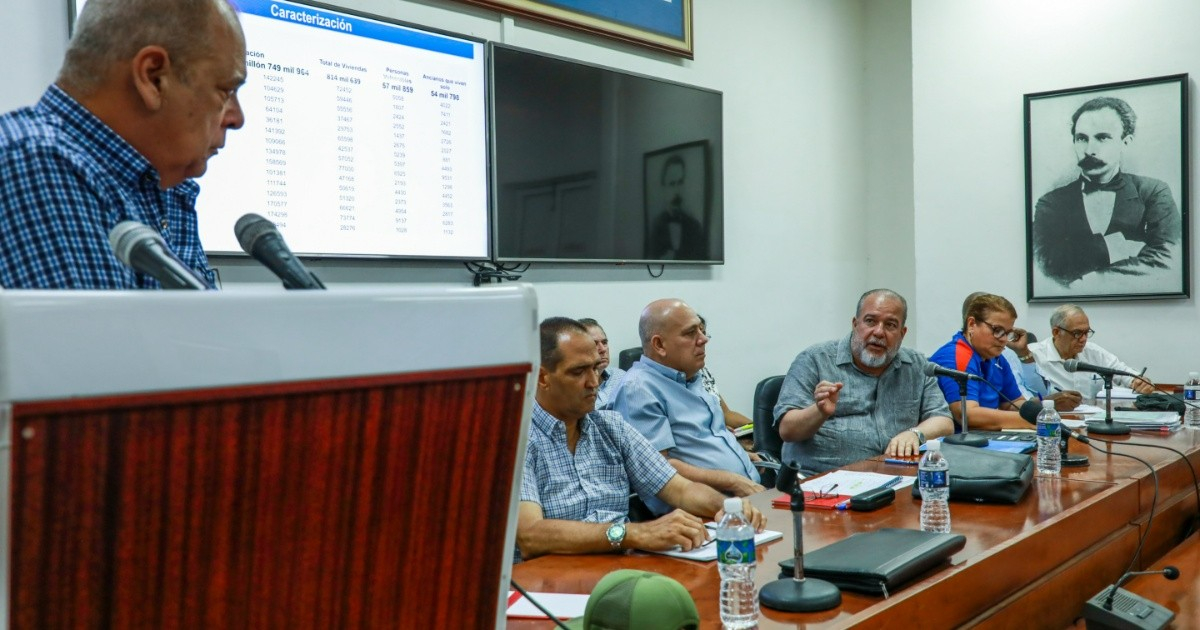
On Saturday, Cuban Prime Minister Manuel Marrero Cruz took to social media platform X to attribute the growing challenges in maintaining essential services on the island to the "energy blockade and economic warfare measures by the U.S." He assured that the Cuban government will persist in "implementing alternatives" in the transportation sector.
This statement coincided with an announcement from the Ministry of Transportation about a severe reduction in the frequency of buses, trains, and ferries starting June 18, 2026, underscoring the collapse of Cuba's public transportation system.
Marrero described the situation as "maliciously constructed," asserting that the government's program prioritizes services directly affecting the population and the economy's functioning.
Such rhetoric fits the regime's established narrative, which consistently blames Washington for its troubles, sidestepping decades of inefficiency, poor management, and an economic model that the Cuban Center for Economic Studies (CEEC) labeled "exhausted" in February 2026, characterized by "stagnation and lack of recovery."
Official narratives are contradicted by data. Bus production in Cuba plummeted from 473 units in 2019 to a mere 12 projected for 2026, a drastic 97.5% drop that predates the latest U.S. sanctions.
In October 2024, Marrero himself acknowledged that fuel shortages were "the primary factor" in Cuba's economic collapse, even before any new 2026 sanctions were imposed.
The public transportation system in Cuba is deteriorating at an alarming rate: in January 2026, the government admitted to meeting only 42% of planned targets. By March 2026, in Ciego de Ávila, just two out of 135 bus routes were operational. In Sancti Spíritus, all intermunicipal and rural transportation was suspended due to fuel shortages.
From June 20 onward, the ferry between Nueva Gerona and Batabanó will reduce its operation from two weekly frequencies to just one departure on Saturdays. National trains to Santiago de Cuba, Guantánamo, Holguín, and Bayamo-Manzanillo will operate a round trip approximately every two weeks.
The economic backdrop is equally grim. According to the CEEC, the Cuban economy shrank by 5% in 2025, with a cumulative contraction exceeding 15% since 2020 and roughly 23% since 2019. The Economic Commission for Latin America and the Caribbean (CEPAL) forecasts a 6.5% decline for 2026, the worst in Latin America, while The Economist Intelligence Unit projects a -7.2% contraction.
Organizations such as CEPAL, the CEEC, and the French Development Agency agree that the crisis is rooted in internal structural issues: excessive centralization, low productivity, and an inefficient state sector that cannot be solely attributed to external sanctions.
Marrero's remarks came days after former President Donald Trump signed Executive Order 14404 on May 1, 2026, and the Department of State sanctioned GAESA — the military conglomerate controlling about 40% of Cuba's economy — and its CEO Ania Guillermina Lastres Morera on May 6.
Foreign financial institutions have until June 5, 2026, to cease operations with GAESA, adding pressure that the regime uses to bolster its victim narrative, while the Cuban people endure a transportation system crumbling under the weight of 67 years of dictatorship.
Understanding the Cuban Transportation Crisis
Why is Cuba's transportation system collapsing?
Cuba's transportation system is collapsing due to severe fuel shortages, inefficient management, and an outdated economic model. Despite government claims, these issues are not solely the result of U.S. sanctions.
What measures is the Cuban government taking to address the transportation crisis?
The Cuban government claims it will continue to "implementing alternatives" to address the crisis, although specific strategies have not been detailed, and reductions in service frequencies indicate ongoing struggles.
How has the Cuban economy performed in recent years?
The Cuban economy has faced significant contractions, with a 5% decline in 2025 and a projected 6.5% decline in 2026. These figures indicate a prolonged economic downturn since 2020.