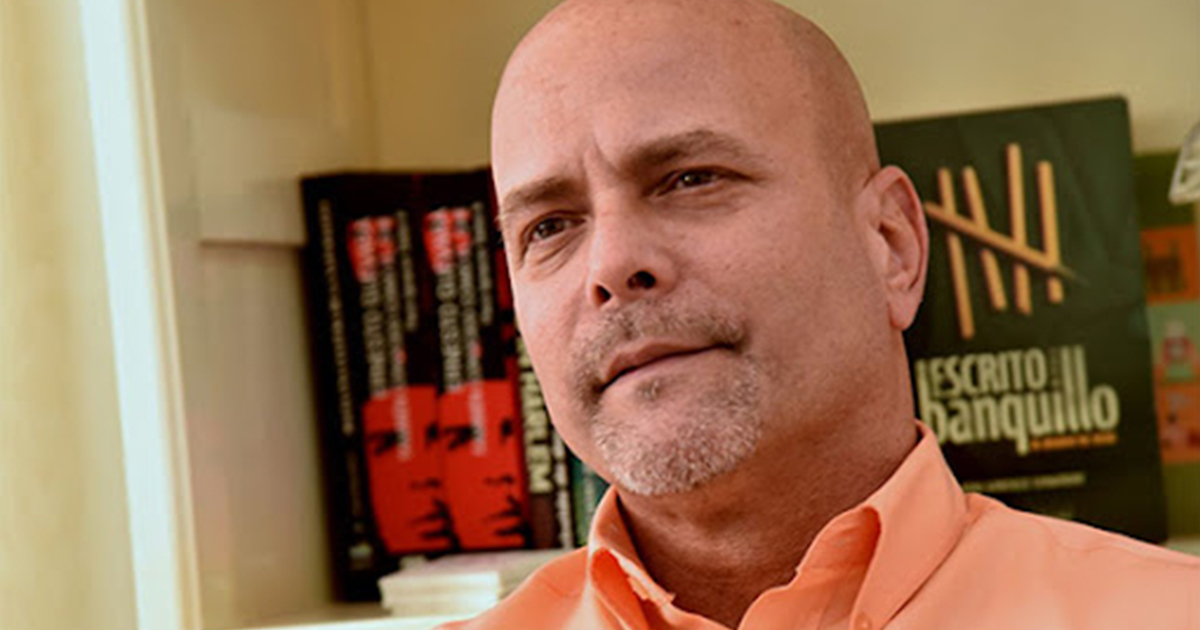
Gerardo Hernández Nordelo, the national coordinator of the Committees for the Defense of the Revolution (CDR) and one of Cuba's so-called "Five Heroes," recently shared photos of a street fair at the intersection of Línea and L in Havana's Vedado district. The images, tagged with #CDRCuba, #CubaNoSeRinde, and #LaPatriaSeDefiende, appear to be an attempt to portray normalcy amid one of Havana's most severe social crises in years.
The photos depict tents, vendors, clothing, parked motorcycles, and the Cuban soda brand Tukola, all suggesting a bustling commercial scene. Hernández captioned the posts simply as, "Right now, at the Línea and L fair, in Vedado, Havana."
The reaction from Cubans on social media was swift and pointed. Many users directly questioned why Hernández chooses to showcase fairs rather than uploading footage of the ongoing protests and the regime's repression across the island.
His post came just two days after police forces violently suppressed demonstrators in Havana's Playa municipality, deploying specialized units known as "black berets" and State Security patrols.
Since May 13, protests have erupted throughout Havana, marked by pot-banging, street blockades, and chants of "Electricity and food!" and "Down with the dictatorship!" in neighborhoods such as Marianao, Nuevo Vedado, Luyanó, Santos Suárez, San Miguel del Padrón, Playa, Puentes Grandes, and Guanabacoa.
The regime responded by imposing a widespread internet blackout in Havana, seemingly to prevent the dissemination of images documenting the crackdown.
Power outages in the capital have reached between 20 and 22 hours daily, with the Cuban government openly acknowledging a lack of diesel and fuel oil to maintain the electrical system.
Hernández's pattern is familiar. On May 14, he shared messages that some interpreted as an implicit acknowledgment of the risks of protesting in Cuba. On May 12, he claimed that Trump "has no idea" about the situation in Cuba, sparking further criticism. In April, he posted a video of Cubans dancing after a political event to counter claims that attendance was coerced.
In each instance, the common thread remains: while Cubans endure blackouts, shortages, and oppression, Hernández disseminates propaganda intended to project normalcy or undermine the protests.
On Friday, the U.S. Embassy issued a security alert in Cuba due to the blackouts and escalating social unrest, as reports of new protests and increasing tension in the capital continued to emerge.
The May 2026 crisis is rooted in the collapse of Cuba's energy system, exacerbated by the halt in Venezuelan crude supplies and intensified U.S. sanctions, which analysts describe as a Cuba teetering on the brink of collapse, facing the precipice of change.
Questions Surrounding Gerardo Hernández's Actions
Why did Gerardo Hernández post images of a street fair during protests?
Gerardo Hernández shared images of a street fair in an apparent attempt to depict normalcy amidst significant social unrest and protests in Havana.
How have Cubans reacted to Hernández's posts?
Cubans on social media have reacted with criticism, questioning why Hernández is not sharing content related to the protests and government repression.
What was the government's response to the protests in Havana?
The Cuban government has responded to the protests with violent repression, deploying specialized forces and imposing internet blackouts to control the narrative.