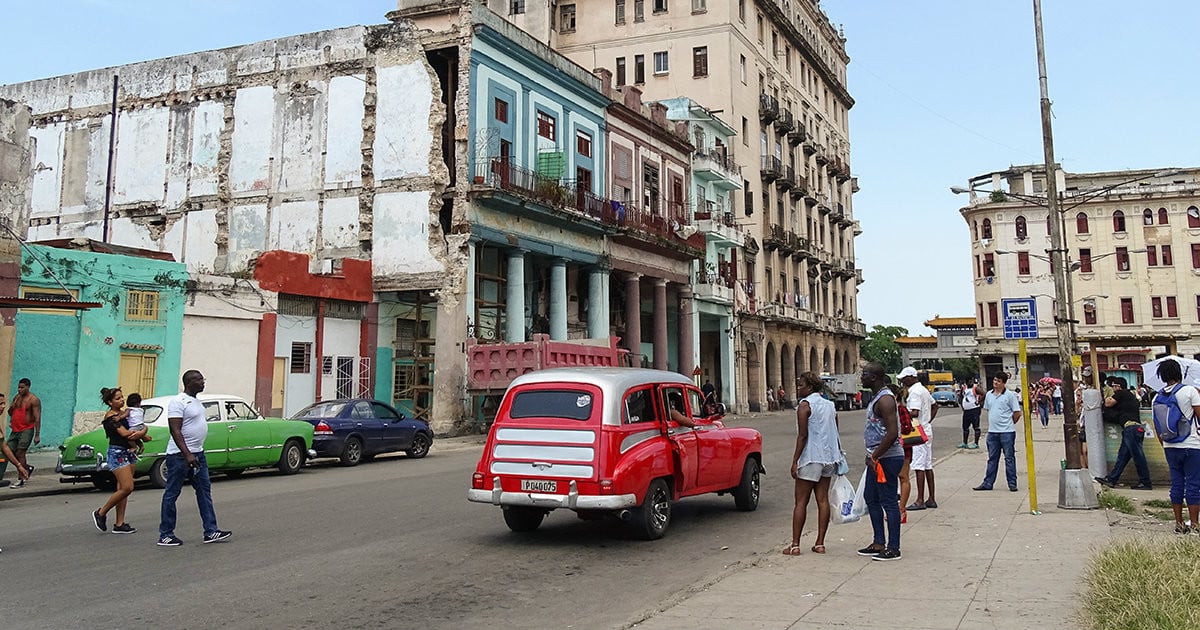
The Cuban Ministry of Transportation announced a new series of severe cuts on Friday due to a fuel shortage, which includes a drastic reduction in the frequency of national buses, trains, and maritime services to the Isle of Youth. This announcement has sparked a wave of public outrage on social media.
In Matanzas, public transportation is virtually nonexistent. Iraida Din, a local resident, expressed her frustration online. "Transportation to hospitals costs over 1,000 pesos, but getting around the main municipality is a nightmare because it's all about private services, some of which aren't even registered with ONAT," she explained.
The situation in Holguín is similarly dire. "Minister, at least provide something for the municipalities, even if it's just once a day. Here in Holguín, prices are intolerable," Reina Cuba commented on a post by the official Cubavisión Internacional channel on Facebook, which announced the changes.
Public Frustration and Government Priorities
The comments that resonated most highlighted the regime's double standards. "There's no fuel for public transportation, but there is for private rentals and officials' cars," noted Maria Perez Castellano.
Some citizens turned to sarcasm to express their despair. "They should bring back horse-drawn carriages like in the 19th century," wrote Napoles Maria, while María Elena González questioned whether "they plan to use hot air balloons."
Liliet Gómez Fernández raised a concern that many parents share. "How long will in-person classes in Havana continue when there's no way to get around, and tricycles charge whatever they want?" she inquired.
Mounting Energy Crisis
Norma Sierra summed up the sentiment in four words: "Many strategies, few results."
Norma Garcia was more direct, calling for empathy. "Show some empathy for the average Cuban, who is tired of enduring," she stated emphatically.
Transportation Minister Eduardo Rodríguez Dávila announced that starting June 18, departures of National Buses between Havana and provincial capitals will be reduced to three times a week, while routes to Manzanillo and Baracoa will be limited to once a week.
The Nueva Gerona–Batabanó ferry, connecting the Isle of Youth with the mainland, will reduce its service from twice a week to just once on Saturdays, starting June 20.
These measures coincide with the state-run Cimex Corporation nearly doubling gasoline prices, setting special B100 at $2.60 per liter, while in the black market, a liter was priced between 4,000 and 6,000 Cuban pesos.
The crisis stems from an unprecedented energy shortage. On May 14, the Minister of Energy and Mines, Vicente de la O Levy, admitted that Cuba has "absolutely none" of the diesel or fuel oil needed to sustain the national electrical system.
In December 2025, out of a fleet of 558 interprovincial buses, only 219 were operational, and the situation has only worsened since then.
Cuba requires eight fuel ships per month, but only one has arrived in recent months, according to Minister De la O Levy himself, indicating that the transportation crisis is likely to worsen in the coming weeks.
Understanding the Transportation Crisis in Cuba
What measures has the Cuban government taken in response to the fuel shortage?
The Cuban government has announced significant reductions in the frequency of national buses, trains, and maritime services to cope with the fuel shortage.
How are Cuban citizens reacting to the transportation cuts?
Cubans have expressed outrage and sarcasm on social media, criticizing the government's priorities and highlighting the difficulty of daily transportation.
What is the current state of public transportation in Cuba?
Public transportation in Cuba is severely limited, with many areas experiencing a near-total lack of services, forcing residents to rely on costly private transportation.