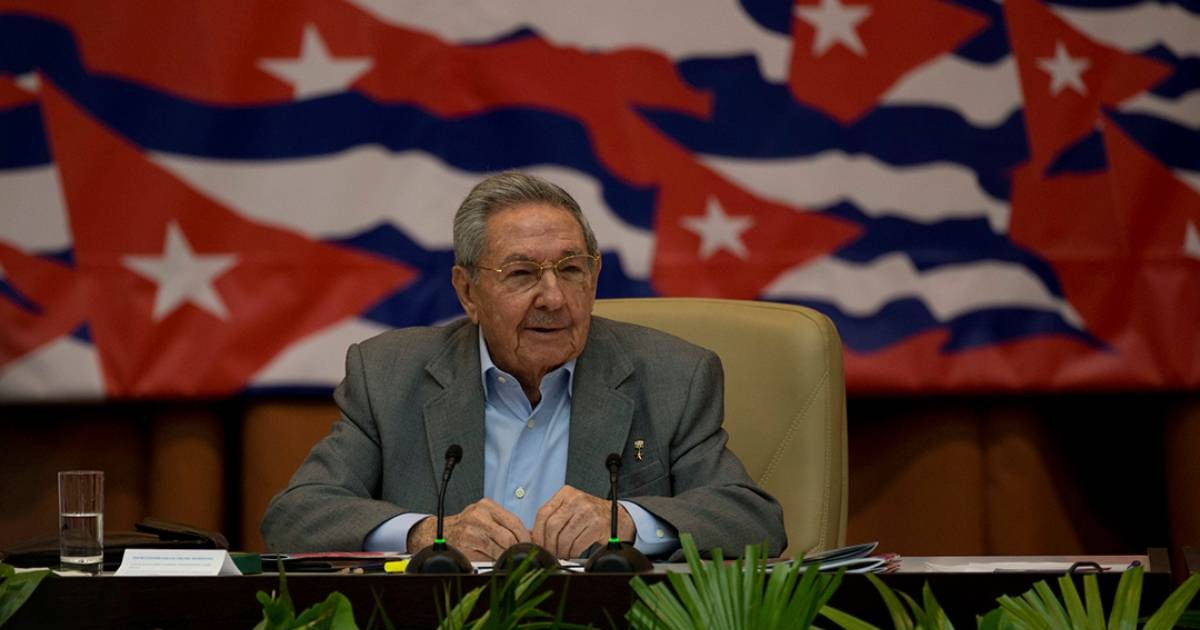
The United States Department of Justice is set to file federal charges against Raúl Castro on Wednesday, May 20, for the deaths of four individuals during the downing of two Brothers to the Rescue aircraft in 1996. This information comes from two sources with knowledge of the investigation, as reported by the Miami Herald.
The grand jury indictment will be publicly announced at an event hosted by the Federal Prosecutor's Office for the Southern District of Florida at the Freedom Tower in Miami. This event coincides with Cuba's Independence Day and will honor the four victims: Armando Alejandre, Mario de la Peña, Carlos Costa, and Pablo Morales.
The Key Evidence: Castro's Audio Recordings
Central to the indictment is an audio recording from June 1996, in which Castro can be heard discussing the decision-making process surrounding the shootdown: "I said try to knock them down over the territory, but they entered Havana and left... Well, knock them down over the sea when they appear."
If authenticated in court, this recording could demonstrate Castro's active involvement in the decision, rather than merely issuing a general order.
Additionally, Congressman James McGovern revealed in December 2014 that Castro had confessed to him directly: "I gave the order. I am responsible."
International Legal Implications
On February 24, 1996, Cuban MiG fighters shot down two unarmed Cessna aircraft from Brothers to the Rescue over international waters in the Florida Straits, as determined by the International Civil Aviation Organization.
The four victims were Cuban Americans searching for rafters at sea. Their bodies were never recovered. A third plane, carrying the leader of the organization, José Basulto, managed to escape.
Both Raúl and Fidel Castro publicly claimed responsibility for the order, yet neither faced prosecution for nearly three decades.
Federal Judge James Lawrence King previously ruled that the Cuban government acted "with outrageous disregard for international law and basic human rights" by "murdering four human beings in international airspace over the Florida Straits."
Political and Diplomatic Context
The families of three victims received a civil settlement of $187 million. Cuba refused to pay, but Washington permitted the transfer of $93 million from frozen Cuban assets to the families.
This indictment comes amid heightened pressure from the Trump administration on the Cuban regime, including increased sanctions and a coordinated legal campaign against Communist Party officials.
On the same Friday, CIA Director John Ratcliffe traveled to Havana to meet with Cuban officials, including Raúl Guillermo Rodríguez Castro, Raúl Castro's grandson and a lieutenant colonel in the MININT. The Trump administration framed this visit as a message that Cuba must enact fundamental changes.
When asked about the potential indictment aboard Air Force One, President Trump refrained from confirming it: "I'll let the Department of Justice speak. But they need help, as you know."
In March 2026, Florida's Attorney General reopened the criminal investigation, and Cuban-American congress members such as Rick Scott, Carlos Giménez, Mario Díaz-Balart, and María Elvira Salazar formally demanded that the Department of Justice indict Castro.
In November 2025, the Department of Justice had already charged former Cuban pilot Luis Raúl González-Pardo Rodríguez with immigration fraud for concealing his military history related to the shootdown.
Raúl Castro, who will turn 95 in June, remains the highest formal authority in Cuba as the first secretary of the Communist Party, although Miguel Díaz-Canel serves as the country's president.
Analyst Brian Fonseca from Florida International University cautioned that the indictment might be more than symbolic: "The formal indictment is symbolic; it represents the symbolism of charging one of the arch-enemies of the Cuban-American community and the architect of the failed Cuban Revolution," but added it could also "unlock new tools of U.S. power, such as law enforcement operations in Cuba."
Key Questions About Raúl Castro's Indictment
What is the significance of the audio recording in Raúl Castro's case?
The audio recording is crucial because it allegedly captures Raúl Castro's involvement in the decision-making process for the shootdown, indicating his direct participation rather than a general order.
How did the U.S. respond to Cuba's refusal to pay the civil settlement?
In response to Cuba's refusal, the U.S. government authorized the transfer of $93 million from frozen Cuban assets to the victims' families.
Why is the indictment of Raúl Castro considered symbolic?
The indictment is seen as symbolic because it targets one of the principal figures of the Cuban Revolution, representing a significant move against a longstanding adversary of the Cuban-American community.