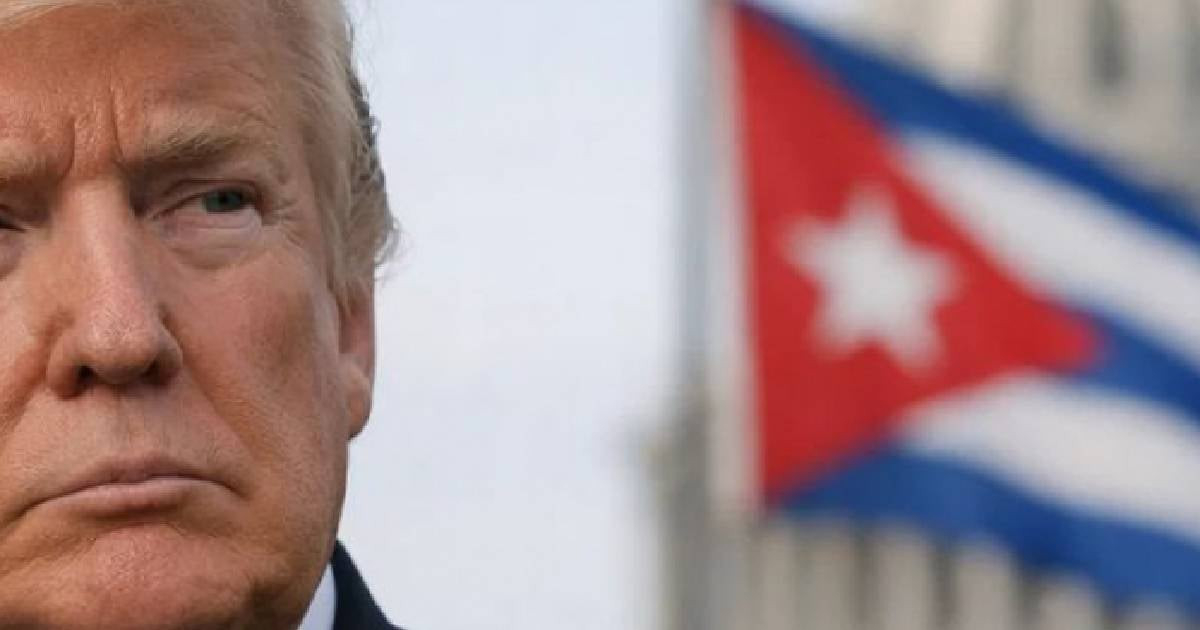
The Cuban Ambassador to the United States, Lianys Torres Rivera, declared on Friday that the Cuban government will not compromise its sovereignty or political system with the Trump administration. She also disclosed that Cuba is preparing militarily for a potential American invasion.
In a firm statement, Torres delineated the conditions clearly. "We are getting ready for this more than ever before. We cannot be naive. We cannot afford to be naive," she emphasized during an exclusive interview with The Hill at the Cuban Embassy in Washington.
Critical Point in U.S.-Cuba Relations
This declaration comes at a particularly tense time in bilateral relations, just a day after CIA Director John Ratcliffe visited Havana. He delivered a direct message from Trump, expressing the U.S. administration's willingness to engage in economic and security policies, provided that Cuba ceases to be a haven for American adversaries in the Western Hemisphere.
The diplomat also warned that an invasion would have severe repercussions. "It could be a grave mistake, leading to a bloodbath. We do not want to see Cubans dying in Cuba," she stated, while also expressing a desire to avoid American casualties.
Protests and Challenges
Addressing the recent protests in Havana, featuring cacerolazos, barricades, and fires in neighborhoods such as Santos Suárez, Luyanó, Lawton, Marianao, and Guanabacoa, Torres Rivera urged Washington not to misinterpret these actions.
"When people endure 20-hour blackouts, they have grievances and express them," she argued, cautioning the U.S. against mistaking these protests for a lack of resolve to resist.
Torres summed up the state of bilateral relations with a poignant remark, "We are experiencing one of the most challenging, if not the most challenging, times in our bilateral relations."
U.S. Diplomatic Moves
During his visit to Havana, the CIA director met with Raúl Guillermo Rodríguez Castro, the grandson of former President Raúl Castro, and Interior Minister Lázaro Álvarez Casas. This marked only the second official U.S. flight to Cuban soil since 2016.
The CIA warned that "the window of opportunity will not remain open indefinitely" and that "Cubans should not delude themselves into thinking the president won't enforce the red lines," referencing the Venezuelan precedent explicitly.
Simultaneously, the State Department reiterated its offer of $100 million in direct humanitarian aid, contingent upon the regime allowing distribution through the Catholic Church and other organizations.
Secretary of State Marco Rubio was candid about Washington's demands. "Their model is broken. It doesn’t work and will never change as long as the current leaders remain in charge," he told NBC News.
Legal and Energy Challenges
In another development, CBS News reported that the Trump administration is preparing legal action against former President Raúl Castro, now 94, for the downing of two planes belonging to the Cuban exile group Brothers to the Rescue on February 24, 1996, which resulted in four deaths. This strategy mirrors the approach used against Nicolás Maduro prior to his capture.
The energy crisis exacerbates the situation, with blackouts lasting up to 20 hours a day in some Havana circuits, linked to a loss of 25,000 to 30,000 barrels of Venezuelan oil daily.
The Cuban Conflict Observatory recorded 1,133 protests in April 2026, a 29.5% increase compared to the same month the previous year.
Key Questions on U.S.-Cuba Relations
What is Cuba's stance on negotiating with the Trump administration?
Cuba has firmly stated that it will not negotiate its sovereignty or political system with the Trump administration.
Why is the energy crisis worsening in Cuba?
The energy crisis is worsening due to the loss of 25,000 to 30,000 barrels of Venezuelan oil daily, leading to blackouts lasting up to 20 hours in some areas of Havana.
How has the U.S. expressed its willingness to aid Cuba?
The U.S. has offered $100 million in direct humanitarian aid, contingent on the regime allowing its distribution through the Catholic Church and other organizations.