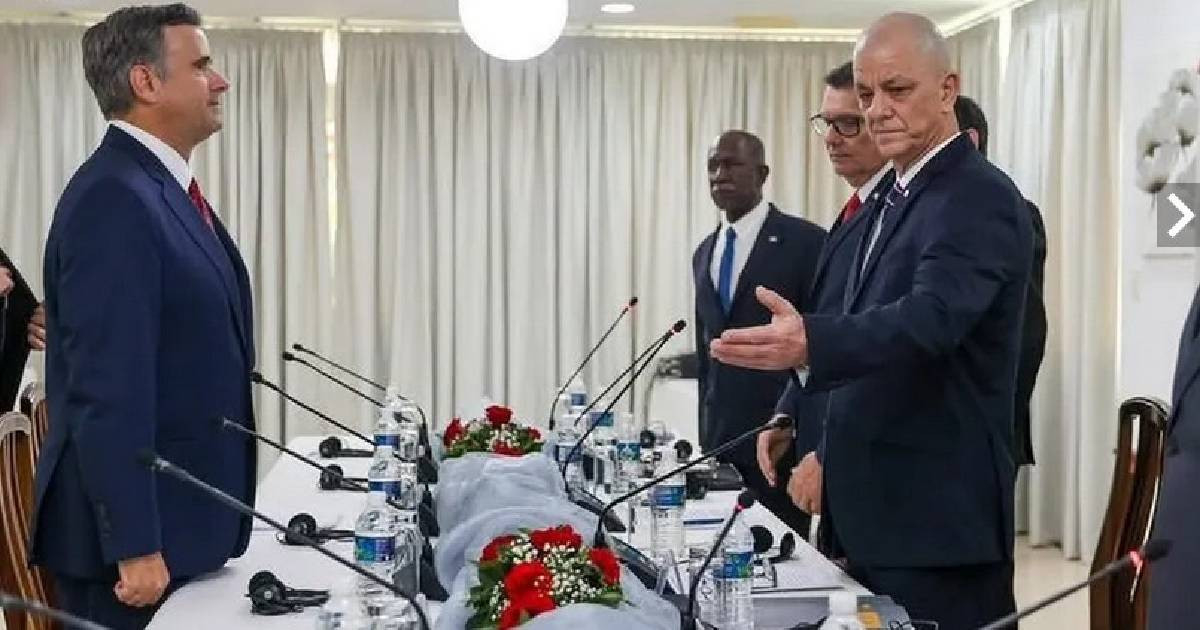
The Director of the Central Intelligence Agency (CIA), John Ratcliffe, made a significant visit to Havana on Thursday, delivering a personal message from President Donald Trump to the Cuban government. The United States is open to discussing economic and security cooperation, but Cuba must no longer serve as a sanctuary for adversaries of Washington within the Western Hemisphere.
A CIA official noted, "Director Ratcliffe and Cuban officials engaged in discussions about intelligence cooperation, economic stability, and security matters, all underscored by the message that Cuba can no longer be a haven for adversaries in the Western Hemisphere," as reported by The New York Post. This visit marked the first direct contact between high-ranking officials from both nations on Cuban soil since 2016, and Ratcliffe is the highest-ranking member of the Trump administration to visit the island.
The official statement from the CIA emphasized Ratcliffe's mission to convey that the "United States is ready to engage seriously on economic and security issues, but only if Cuba makes fundamental changes."
During his visit, Ratcliffe met with Raúl Guillermo Rodríguez Castro, also known as "Raulito" or "El Cangrejo," the grandson of former President Raúl Castro; the Minister of the Interior, Lázaro Álvarez Casas; and General Ramón Romero Curbelo, head of the Minint's Intelligence Directorate.
Energy Crisis Deepens
The visit came just a day after the Minister of Energy and Mines, Vicente de la O Levy, publicly admitted that Cuba was completely out of fuel. "We have absolutely no fuel oil or diesel. In Havana, blackouts today exceed 20 to 22 hours," De la O Levy stated.
The energy crisis worsened following the capture of former President Nicolás Maduro in January, which halted the supply of 25,000 to 30,000 barrels of Venezuelan oil per day to Cuba. A lone shipment of approximately 730,000 barrels from Russia arrived on March 31 but was depleted by early May.
President Trump acknowledged the severity of the situation on Friday while aboard Air Force One, returning from China. "They need help. You talk about a country in decline; they are truly a nation in decline. So, we'll see," he remarked.
U.S. Offers Aid Amid Diplomatic Tensions
CIA sources warned the Cuban government that "as demonstrated with Venezuela, President Donald Trump must be taken seriously," referring to Maduro's downfall. Simultaneously, the Department of State offered $100 million in direct humanitarian aid, to be distributed through the Catholic Church and other independent organizations, along with access to fast satellite internet.
The Department of State's spokesperson cautioned, "The decision lies with the Cuban regime to accept our offer of assistance or deny critical life-saving aid and ultimately be accountable to the Cuban people."
Cuba confirmed the meeting in an official statement, denying claims of hosting foreign military or intelligence bases. However, Washington cited a Chinese espionage base reportedly operational since at least 2019 and the recurrent use of Cuban ports by Russian warships as concrete examples.
Legal Proceedings Against Raúl Castro
Concurrently, federal prosecutors in Miami are advancing a criminal indictment against former President Raúl Castro, 94, for the 1996 shootdown of two planes belonging to the humanitarian organization Brothers to the Rescue, which resulted in the deaths of Armando Alejandre Jr., Carlos Costa, Mario de la Peña, and Pablo Morales. The charges could also include drug trafficking, led by South Florida's District Attorney, Jason A. Reding Quiñones.
Analyst Peter Kornbluh, co-author of a book on secret negotiations between the two countries, noted that "the seriousness of a high-level delegation indicates that dialogue between Washington and Havana continues and could still yield non-violent outcomes," though he warned that "the window of opportunity will not remain open indefinitely."
Frequently Asked Questions About U.S.-Cuba Relations
Why did John Ratcliffe visit Cuba?
John Ratcliffe visited Cuba to deliver a message from President Donald Trump, emphasizing the need for Cuba to cease being a refuge for U.S. adversaries in exchange for economic and security cooperation.
What are the consequences of Cuba's energy crisis?
Cuba's energy crisis has resulted in prolonged blackouts exceeding 20 hours in Havana due to a lack of fuel, exacerbated by the halt of Venezuelan oil shipments and insufficient alternative supplies.
What legal actions are being pursued against Raúl Castro?
Federal prosecutors in Miami are moving forward with a criminal indictment against Raúl Castro for the 1996 shootdown of humanitarian planes, potentially including charges of drug trafficking.