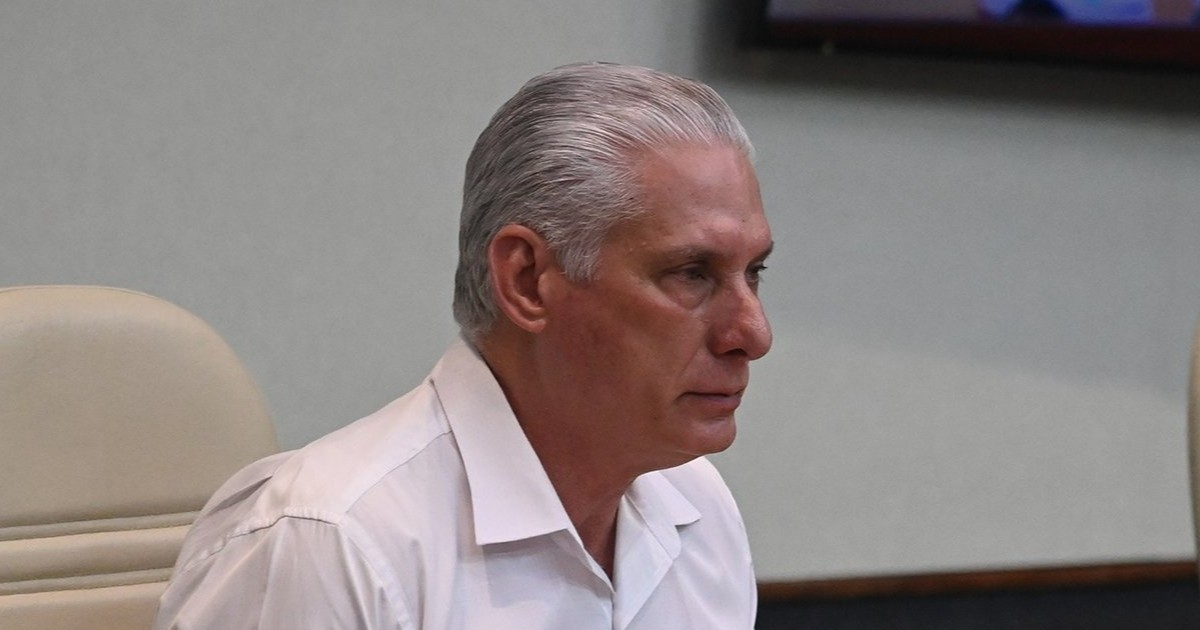
Miguel Díaz-Canel faced a torrent of mockery and criticism on social media this Thursday after he announced that Cuba would find "no obstacles or ingratitude" if the United States genuinely intends to provide $100 million in humanitarian aid to the Cuban people.
Just two days prior, Foreign Minister Bruno Rodríguez Parrilla had dismissed the offer as a "fiction" and "a $100 million lie," denying any formal proposal had been received. However, by Thursday, the Cuban government reversed its stance, expressing willingness to consider the offer's terms in less than two days.
Cuba's Priorities and Public Skepticism
In his post, Díaz-Canel outlined the country's priorities with a statement that quickly became a target for sarcasm: "The priorities are more than evident: fuel, food, and medicines."
He also boasted about Cuba's history of receiving international aid: "Our country's experience in receiving international aid, including from the U.S., is extensive and constructive. Any donor can attest to this reality."
This particular claim sparked a wave of derision. "The experience is extensive... in stealing donations," quipped one user. "I think it's the truest thing he's said: they have experience in receiving aid," another commented. "All that's missing is his Zelle," another jested.
Concerns Over Aid Distribution
Critics pointed to a familiar end for the aid: GAESA, the military-run business conglomerate controlling hotels, retail, and imports in Cuba. "It will all end up in GAESA," "If they get it, the Cuban people won't see a dime," and "International aid ends up being sold in dollars" were some of the common responses.
Senator Marco Rubio had disclosed the offer on May 8 from Rome, following a meeting with Pope Leo XIV at the Vatican. In an interview with NBC, Rubio was clear: "The only condition is that it must be distributed by non-governmental organizations. It cannot be humanitarian aid that the government steals for itself."
The State Department formalized the offer on May 13 through an official statement, specifying that the funds would be distributed through the Catholic Church and independent humanitarian organizations to deliberately exclude the Cuban government from the distribution chain.
Washington also revealed it had made "numerous private offers" to the regime, including free access to satellite internet via Starlink, all of which were rejected by Havana.
Energy Crisis Fuels Protests
The backdrop to the regime's shift is an unprecedented energy crisis in Cuba: the electricity generation deficit exceeded 2,204 MW during peak nighttime hours on Thursday, leading to blackouts lasting up to 22 hours in Havana. Energy Minister Vicente de la O Levy admitted that Cuba "has absolutely no fuel, no diesel, only accompanying gas."
Protests erupted overnight from Wednesday to Thursday in at least 12 Havana municipalities, featuring barricades, bonfires, and police repression, described by analysts as the most extensive mobilizations in the capital since the July 11, 2021 protests.
The Cuban Conflict Observatory recorded 1,133 protests in April 2026 alone, a 29.5% increase compared to April 2025.
Rubio summed up the situation bluntly: "The Cuban people need to know that there are $100 million in food and medicine available to them right now, and the only reason it's not reaching them is the Cuban regime."
Questions About U.S. Aid to Cuba
What is the condition for the U.S. aid to reach Cuba?
The aid must be distributed by non-governmental organizations, not the Cuban government, to prevent state misuse.
Why did the Cuban government change its stance on the U.S. aid offer?
The shift was likely influenced by Cuba's severe energy crisis, which has led to significant public unrest and protests.
How has the public reacted to Díaz-Canel's statements about the aid?
The public has largely responded with skepticism and sarcasm, questioning the government's ability to manage aid transparently.