John Ratcliffe, the Director of the Central Intelligence Agency (CIA), touched down in Havana this Thursday, leading a U.S. presidential delegation in what marks one of the highest-level interactions between Washington and Cuba's regime in several decades. The flight, identified as SAM554 and originating from Joint Base Andrews, was tracked in real time by specialized accounts even before the Cuban regime acknowledged the visit.
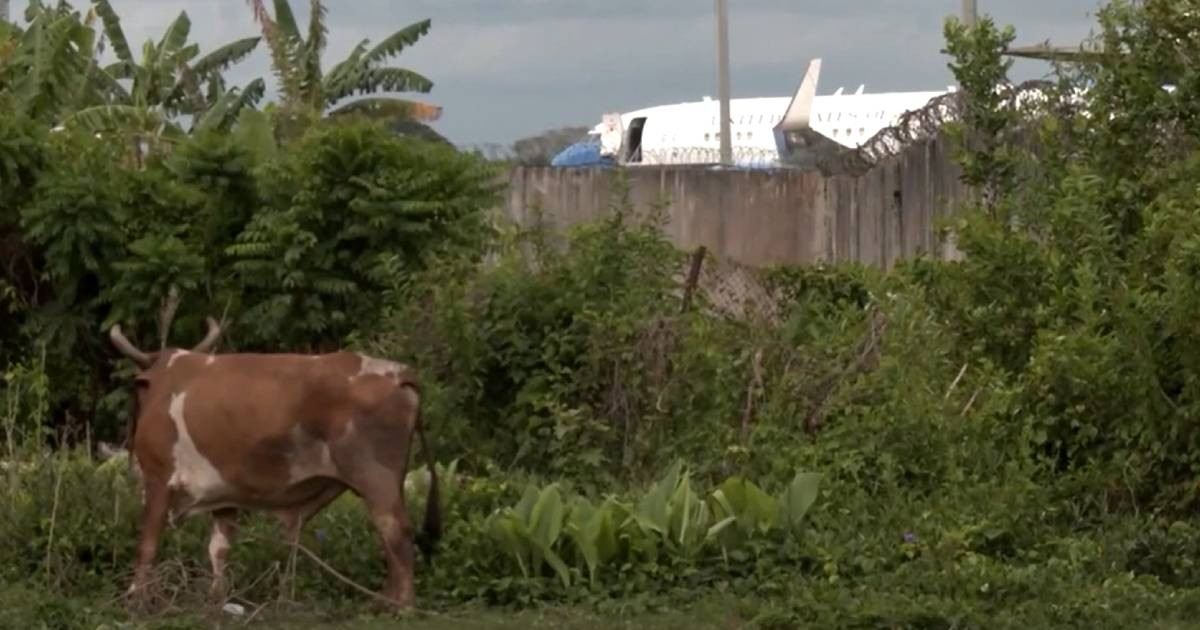
An unexpected image, however, captivated social media: as U.S. officials were boarding their plane to leave Cuba, a cow was spotted leisurely wandering near the José Martí International Airport, caught on camera by Reuters. This scene, quintessentially Cuban yet surreal, encapsulated for many the stark contrast between the powerful American delegation's visit and the everyday reality of the island.
Who Was Missing from the Meeting?
The meeting's intrigue wasn't just about its high status, but rather who Ratcliffe met with. So far, there's been no report of a meeting with Miguel Díaz-Canel, the designated leader of the country. Instead, Ratcliffe met with the Minister of the Interior, Lázaro Alberto Álvarez Casas, and Raúl Guillermo Rodríguez Castro, Raúl Castro’s grandson, known as “El Cangrejo.”
The official statement from the Communist Party of Cuba (PCC) attempted to assert control over the narrative. “Following a request from the U.S. government to receive a delegation led by CIA Director John Ratcliffe, the Directorate of the Revolution approved the visit and the meeting with its counterpart from the Ministry of the Interior,” the official note stated.
The phrasing was telling: Washington made the request, the so-called “Directorate of the Revolution” approved the visit, and the Ministry of the Interior hosted the Americans. Meanwhile, Díaz-Canel, who had just declared a willingness for dialogue on equal terms, was notably absent from the week's most significant political engagement.
The Power Dynamics in Play
For many analysts, the absence highlighted once again who truly holds power in Cuba. As cameras tracked every move of the American plane, the Cuban leader vanished from the spotlight.
This pattern is reminiscent of January 2026, when Ratcliffe traveled to Caracas following Nicolás Maduro’s capture and held talks with Delcy Rodríguez, the interim president of Venezuela. In Havana, parallels were swiftly drawn: the head of U.S. intelligence arrives, and the regime responds by deploying state security apparatus, bypassing the country's formal president.
Key Issues on the Table
A central topic of the meeting was Cuba's continued designation as a State Sponsor of Terrorism, a status reinstated by the Trump administration on January 20, 2025. The PCC maintained that Cuba “does not host, support, finance, or allow terrorist or extremist organizations,” while also denying the presence of foreign intelligence bases on its soil.
This stance, however, contradicts reports from the Center for Strategic and International Studies (CSIS), which have identified at least 12 Chinese-linked intelligence facilities in Cuba since 2019, including sites in Bejucal, Calabazar, El Salao, and El Wajay.
Mixed Signals from the U.S. and Cuba
The visit also occurred amidst mixed messages between Washington and Havana. On Tuesday, Donald Trump posted on Truth Social: “Cuba asks for help, and we're going to talk!” Just two days later, Cuban Foreign Minister Bruno Rodríguez Parrilla softened the regime's stance regarding the U.S. offer of $100 million in humanitarian aid, claiming Cuba is “willing to hear the characteristics of the offer,” after previously dismissing it as a “fable.”
That same Thursday, Marco Rubio toughened his rhetoric, stating, “It's impossible to change Cuba's economic course while the current leaders remain in power,” though he added, “We have to give them a chance.”
Since March, Washington has made any significant progress contingent on Díaz-Canel stepping down. The symbolism on Thursday was undeniable: the man whose tenure poses one of the main hurdles to an agreement wasn't even at the negotiation table.
And as diplomats, spies, and officials debated the island's political future, a cow watched the plane take off from the outskirts of Havana's airport. For many Cubans, the image spoke volumes about Cuba's situation, more so than any official statement could.
Cuba-U.S. Relations: Key Questions Answered
Why did the CIA Director visit Cuba?
The CIA Director visited Cuba as part of a U.S. presidential delegation, marking a high-level interaction aimed at discussing various bilateral issues, including Cuba's designation as a State Sponsor of Terrorism.
Who did the CIA Director meet with in Cuba?
John Ratcliffe met with the Cuban Minister of the Interior, Lázaro Alberto Álvarez Casas, and Raúl Guillermo Rodríguez Castro, rather than with the country's official leader, Miguel Díaz-Canel.
What was discussed during the meeting?
Discussions included Cuba's status as a State Sponsor of Terrorism and the U.S. offer of humanitarian aid, amidst broader bilateral concerns between Washington and Havana.