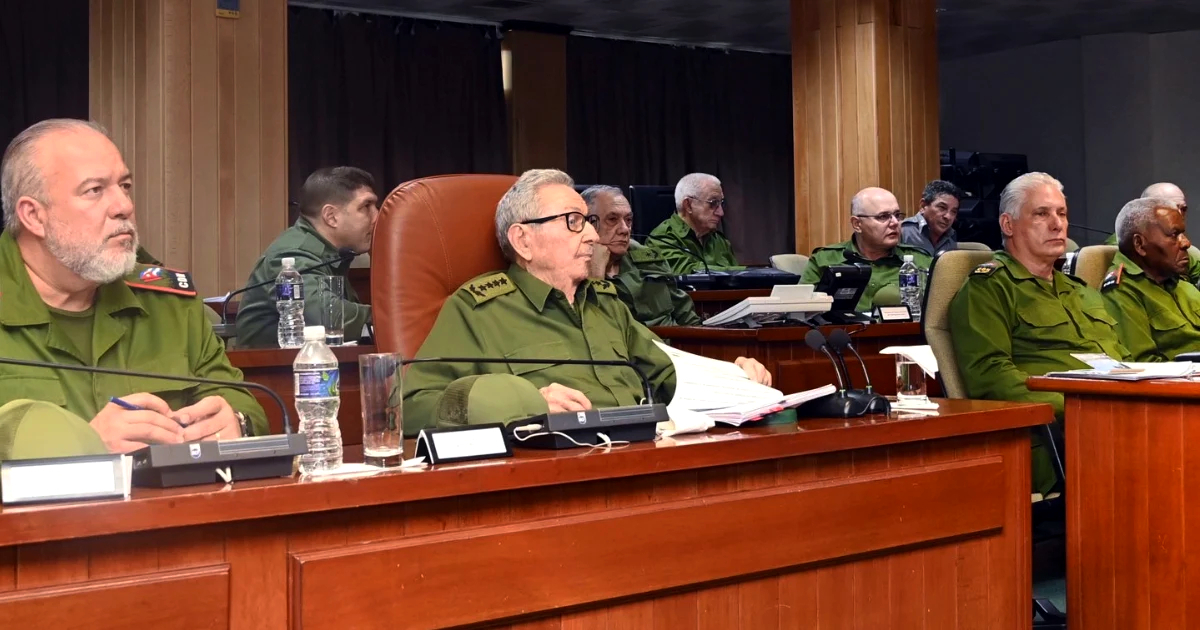
The Cuban regime announced on Thursday that it hosted a U.S. delegation led by CIA Director John Ratcliffe in Havana. The meeting was characterized as a step toward fostering "political dialogue between both nations," according to an official statement released by the Communist Party of Cuba.
The statement clarified that the U.S. government requested the meeting, and the so-called "Direction of the Revolution" agreed to host it. The discussions took place between Ratcliffe and representatives from Cuba's Ministry of the Interior (MININT), amidst what the regime itself described as a "complex" period in bilateral relations.
Focus on Terrorism Sponsorship List
The primary topic of conversation was the List of State Sponsors of Terrorism, which saw Cuba re-added by the Trump administration in February 2025. The statement emphasized that the exchanges "categorically demonstrated that Cuba does not pose a threat to U.S. national security, nor are there legitimate reasons to justify its inclusion on the list of countries allegedly sponsoring terrorism."
The Cuban authorities reiterated that the island "does not harbor, support, finance, or allow terrorist or extremist organizations" and confirmed the absence of foreign military or intelligence bases on its soil.
Prospects for Bilateral Cooperation
Both parties expressed a mutual interest in advancing bilateral cooperation between law enforcement agencies, aimed at enhancing the security of both nations, as well as regional and international stability, according to the official statement.
The visit coincided with a week of significant diplomatic activity. On Tuesday, former President Donald Trump posted on Truth Social: "Cuba asks for help, and we are going to talk!" The following day, Cuban President Miguel Díaz-Canel reaffirmed Cuba's consistent readiness for dialogue, amidst an unprecedented power generation deficit of 2,113 MW, with only 1,230 MW available against a demand of 3,250 MW.
This Thursday, Cuban Foreign Minister Bruno Rodríguez Parrilla notably softened Cuba's stance on a $100 million humanitarian aid offer from Washington, indicating that Cuba is "willing to listen to the characteristics of the offer." This marks a significant shift from earlier in the week when the proposal was dismissed as a "100 million dollar lie."
Background and Context
Ratcliffe's visit follows a previous engagement on April 10, when a State Department delegation arrived in Havana on the first official U.S. flight since 2016. The delegation met with Cuban deputy ministers to discuss the release of political prisoners, the potential for internet expansion via Starlink, and the presence of foreign groups in Cuba.
Ratcliffe's presence in Havana signifies an escalation in the level of diplomatic engagement. He previously led a similar mission in January 2026 to Caracas, where he met with Venezuelan officials following the capture of Nicolás Maduro, highlighting the strategic importance Washington places on these interactions.
Secretary of State Marco Rubio was blunt in his assessment of the situation on Wednesday, stating in a Fox News interview, "Cuba's economic direction cannot change while the current leaders remain in power. That's what needs to change because these individuals have proven themselves incapable." This statement underscores Washington's skepticism about achieving significant outcomes with the current regime.
Key Insights into U.S.-Cuba Relations
Why did the CIA Director visit Cuba?
CIA Director John Ratcliffe visited Cuba to engage in discussions aimed at promoting political dialogue between the U.S. and Cuba, focusing on issues such as the List of State Sponsors of Terrorism.
What was the main focus of the meeting between the U.S. and Cuba?
The primary focus was the List of State Sponsors of Terrorism, with discussions aimed at demonstrating that Cuba does not pose a threat to U.S. national security and addressing its controversial inclusion on the list.
What changes in Cuba's stance were noted during the visit?
Cuban Foreign Minister Bruno Rodríguez Parrilla showed openness to discussing a $100 million humanitarian aid offer from the U.S., marking a shift from previous dismissive remarks.